The digital world is changing fast. Developers and businesses are moving away from old, fixed platforms. They’re now using API-First Websites. This new way lets teams keep the front-end design separate from the back-end data storage.
By choosing a Headless CMS, companies can share content on any device or channel. This change is key for Building Faster Sites that work well for everyone.
This setup also makes sites more secure. You can make More Secure Sites by cutting down on attack points. This guide will help you use these tools to update your online presence for the future.
Key Takeaways
- Decoupling the front-end from the back-end improves overall performance.
- API-first architecture provides greater flexibility for multi-channel content delivery.
- Using a headless system significantly reduces possible security risks.
- Modern web infrastructure allows teams to adapt quickly to changing user needs.
- This approach is ideal for developers looking to scale their digital projects efficiently.
Understanding API-First Architecture
To build a digital presence that lasts, you need to know about API-first architecture. Old content management systems keep everything in one place. This makes it hard to change for new devices or user needs.
Now, we focus on systems that grow with your business. This change lets teams work better and avoid old ways.
What is API-First Development?
API-first development puts making strong interfaces first. It’s not just about the website itself. Developers make sure different parts talk well through APIs. This strategic approach makes the system flexible and easy to test.
By seeing content as a service, developers prepare for future changes. This is a big change from old systems. It helps teams work faster because they can do frontend and backend work together.
Key Components of API-First Architecture
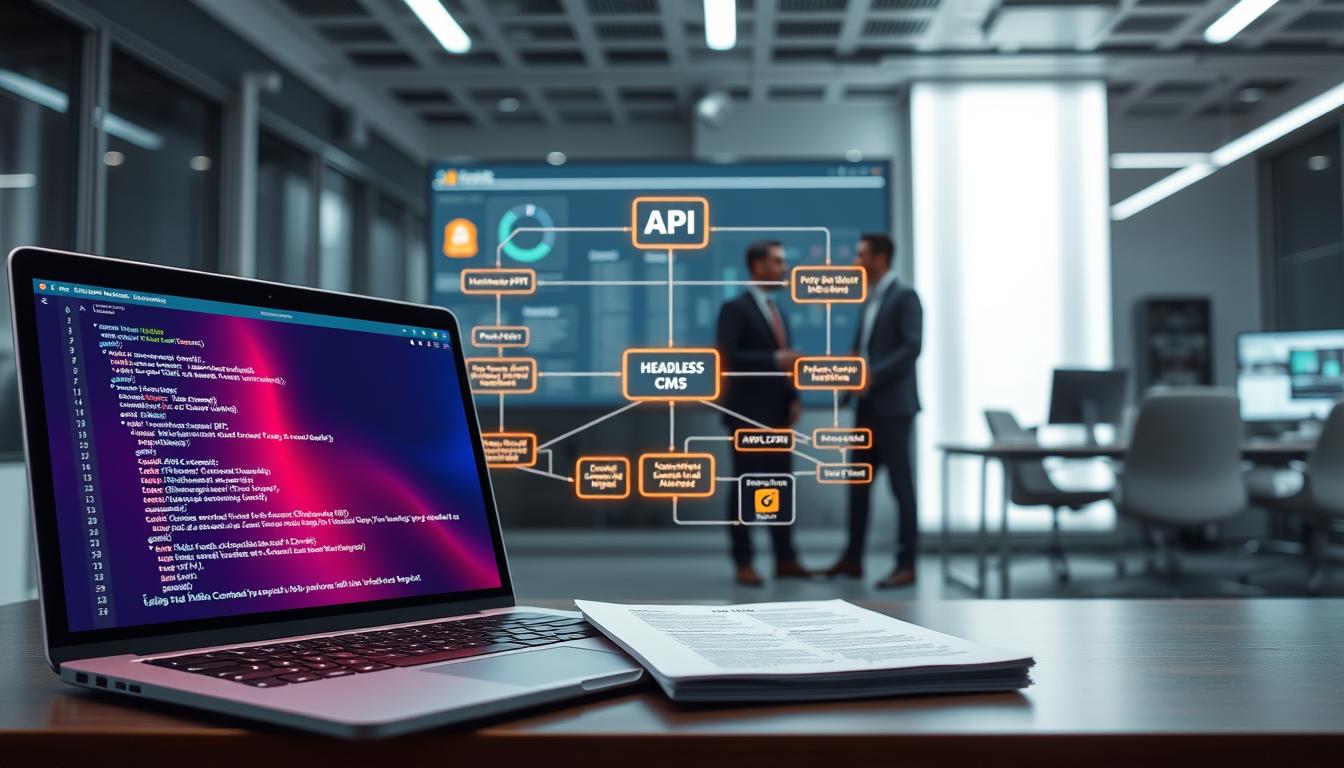
To do well with this model, you need to know its main parts. It has a headless CMS, an API layer, and a frontend framework. These parts work together to share content easily on any platform.
The API connects the storage and user interface. This scalable architecture lets you change parts as needed. You’re not stuck with one way to show your content.
Benefits of an API-First Approach
This approach has big advantages for teams. You can update your design without changing your data. This means you can bring new features to market faster.
Also, the scalable architecture means your site can handle more traffic without slowing down. Here’s a table showing the main differences between old and new systems.
| Feature | Traditional CMS | API-First CMS |
|---|---|---|
| Content Storage | Bundled with design | Decoupled/Modular |
| Flexibility | Limited | High |
| Scalability | Low | High |
| Integration | Difficult | Seamless |
Headless CMS: The Heart of API-First Websites
A headless CMS is at the heart of every top API-first website. It’s a powerful tool that stores content without showing how it looks. This makes it easy to manage content for different platforms.
With a headless CMS, you can share content across websites, apps, and even IoT devices. This revolutionary method lets marketers manage content while developers build custom interfaces. It’s a game-changer for content delivery.
What is Headless CMS?
A Headless CMS is a backend-only system for managing content. It’s a content repository that doesn’t have a frontend. This means the “head” (frontend) is separate from the “body” (backend).
Because it lacks a frontend, it uses APIs to deliver content. This lets your team share data on any device or platform. It ensures a consistent brand experience everywhere.
Advantages of Using a Headless CMS
The main advantage is unmatched flexibility. Developers can use any programming language or theme. This makes development much faster.
Also, a Headless CMS makes omnichannel publishing easy. Update content once and it goes live on all platforms. This efficiency saves a lot of time for your team.
Popular Headless CMS Options
Choosing the right platform depends on your needs and team size. Many rely on these top solutions for their digital projects:
- Contentful: A cloud-native platform known for its great API and scalability.
- Strapi: An open-source option that lets developers control their data structure.
- Sanity: A flexible tool that treats content as data, ideal for complex projects.
Enhancing Website Performance with API-First
Building faster sites is key for a good user experience today. When your site loads quickly, people are more likely to stay and look around. Performance is not just a technical metric; it is a core component of your brand’s reputation.


Faster Load Times and Efficiency
Old systems often slow down because of heavy server-side processing. An API-first approach sends lightweight data directly to the frontend. This means only the needed info is sent, making your site improved performance on all devices.
With an API-first setup, the frontend and backend work separately. This lets developers make each part better. Your site loads scripts faster and responds quicker. This means your site waits less for data and serves your audience better.
Streamlined Content Delivery
Optimizing your site is easier when content management and presentation are separate. A headless CMS makes it simple to share content on a global Content Delivery Network (CDN). This puts your assets closer to users, cutting down on wait times and speeding up your site.
“Speed is the most important feature of a modern website. If your site takes more than three seconds to load, you have already lost a significant portion of your possible traffic.”
Case Studies of Performance Boosts
Many companies have seen big improvements with an API-first setup. E-commerce sites often see a big drop in bounce rates. These examples show that building faster sites leads to more sales and better rankings on search engines.
| Metric | Traditional CMS | API-First CMS |
|---|---|---|
| Initial Load Time | 2.5 Seconds | 0.8 Seconds |
| Server Response | Moderate | Very Fast |
| Scalability | Limited | High |
| Overall Efficiency | Standard | Optimized |
The data clearly shows that website optimization is easier with modern, decoupled systems. By focusing on improved performance, businesses can make a digital experience that’s fast, responsive, and reliable for everyone.
Security Advantages of Headless CMS
In today’s digital world, making more secure sites is a must, not a choice. Companies face many threats, so picking a safe platform is key. A headless CMS is special because it keeps the content management part hidden from the public.
Enhanced Data Protection
This setup greatly reduces the chance of attacks. The backend is separate, so your data is hidden from the internet. Even if the frontend gets hit, your important data stays safe.
“Security is not a product, but a process that requires constant vigilance and the right architectural foundation.”
This design also means you can update security anytime, not just during set times. You can fix problems right away without messing up the user experience. This quick response is key to keeping your online presence strong.
Role of APIs in Security
APIs are like the guards of your content. They use strong checks like OAuth or API keys to make sure only the right people get in. This keeps unwanted visitors out of your backend.
Using a headless CMS lets you watch how data moves in your online world. You can spot and stop bad activity early. This is critical for any company wanting to keep its online space safe.
Compliance and Regulations
Following rules like GDPR or HIPAA means your data must be very secure. The way a headless CMS works makes it easier to check and protect your data. You can set up special security rules at the API level to meet all the rules.
- Centralized Access Control: Manage who can do what through secure API gateways.
- Reduced Exposure: Keep your important databases safe from the internet.
- Rapid Patching: Fix security issues fast to stay ahead of threats.
By using these features, businesses can safely move through the digital world. A headless CMS gives the flexibility and safety needed to succeed today.
The Role of Frontend Frameworks in API-First Development
Modern web development needs a good mix of frontend frameworks and headless CMS. This setup lets developers pick the best tools for their projects. This choice is key to making digital experiences better.
Popular Frontend Technologies
Today, we have strong tools for making web pages interactive. React and Vue.js are leaders because they use components. This makes pages update quickly without needing to reload.
Next.js is also popular for its server-side rendering. It helps sites load fast and grow with more users. The right framework depends on your team’s skills and project needs.
Matching Frontend with Headless CMS
Connecting frontend to a headless CMS is easy with modern APIs. The CMS stores content, and the frontend gets it through APIs. This setup keeps content the same on all devices.
Pairing frontend with a headless CMS boosts Improved Performance. It lets developers fetch only needed content. This makes browsing faster and smoother.
Building a Responsive User Experience
A good user experience needs more than just good design. It must be interactive and work well on any screen. A headless setup lets you update the frontend without changing content workflows.
The main goals are Consistency and speed. Testing frontend against real API responses finds problems early. This makes your product strong and fast for users.
Integrating Third-Party Services
Integrating third-party services is key to a unified and high-performing digital experience. Modern web projects often need to connect to CRMs, PIMs, or e-commerce engines. This ensures they work at their best.
API-first platforms make these connections easier. They provide standardized endpoints. This lets different systems talk to each other smoothly, keeping your data flowing across your digital ecosystem.
Benefits of API Integrations
API integrations let you extend platform capabilities without starting from scratch. By linking specialized tools, you can focus on your main business tasks. You can outsource specific tasks to experts.
This modular approach brings many benefits:
- Increased Agility: You can change tools as your business needs change, without rebuilding your site.
- Enhanced Functionality: You can add advanced features like AI-driven search or personalized marketing automation.
- Improved Data Consistency: You can sync information across platforms. This ensures your team always sees the most accurate data.
Examples of Useful Integrations
Platforms like the Contentful Marketplace offer a wide range of pre-built integrations. They make connecting your favorite tools easy. Whether you need to manage complex product data or process global payments, there’s likely an API ready to help.
“The future of web development lies in the ability to compose a digital experience from the best-of-breed services available today.”
Here are some common essential integrations:
- E-commerce Engines: Tools like Shopify or BigCommerce handle transactions and inventory.
- Analytics Platforms: Services like Google Analytics or Mixpanel track user behavior in real-time.
- Customer Relationship Management: Systems like Salesforce or HubSpot manage leads and customer interactions.
Best Practices for Integration
While integrations are powerful, they need careful management. This ensures system stability and data integrity. Always use secure authentication methods like OAuth to protect your sensitive information.
Follow these guidelines for strong integrations:
- Monitor Performance: Keep an eye on API response times to avoid slowing down your site.
- Implement Error Handling: Build fallbacks so your site stays functional even if an external service is down.
- Maintain Documentation: Keep detailed records of your API connections. This makes troubleshooting and updates easier.
Scaling with API-First Websites
Growing your online presence needs a strong base that can grow fast without breaking. Many businesses face issues when their traffic increases. This is because their old systems can’t adapt quickly. By going for API-First Websites, you make sure your content stays flexible, not stuck.
This method views your content as a service, making it easy to share across different devices. You can change your site’s look without affecting the data. This flexibility is key to a Scalable Architecture.
Future-Proofing Your Website
Future-proofing means building systems that last. Old CMS platforms are often made for a single site version. But, an API-first model grows with your business.
Decoupling your content means avoiding the problems of platform changes. You can update your site’s look or add new channels without redoing your database. This modular design keeps your digital world up-to-date for years.
Managing Increased Traffic
Handling more visitors is a big challenge for growing brands. A Scalable Architecture lets you spread content delivery worldwide easily. Your content is served via APIs, making it fast and reliable.
This setup reduces server load and keeps your site fast during busy times. You don’t have to worry about your site crashing. Instead, it grows to meet demand instantly.
Case Studies of Successful Scaling
Many big companies have moved to API-First Websites to handle their large user bases. Netflix and Spotify are examples. They use this setup to serve content to millions without slowing down.
| Feature | Traditional CMS | API-First CMS |
|---|---|---|
| Scaling Method | Vertical (Server Upgrade) | Horizontal (Cloud/CDN) |
| Content Focus | Project-based | Product-based |
| Flexibility | Limited | High |
| Maintenance | Complex | Streamlined |
Improving Collaboration Between Teams
When frontend and backend tasks are separated, teams can innovate faster. Content editors and developers can work together without waiting. This setup is the base for Accelerated Development and keeps projects moving.
Bridging Development and Content Creation
The main challenge in web projects is the code and content dependency. In an API-first setup, teams plan content models and API schemas early. This makes a shared language for everyone to understand the project.
Developers can build the infrastructure while content creators fill the CMS. This parallel workflow makes the final product ready for launch sooner than before.
Tools for Collaboration
Success comes from using the right digital workspace for clear communication. Teams use project management and communication platforms to stay in sync. Here are some tools to consider:
- Jira or Trello: For tracking development tasks and content status.
- Slack or Microsoft Teams: For real-time communication between departments.
- Headless CMS Dashboards: For easy content management for non-technical users.
- Postman: For testing API endpoints and ensuring clear documentation for all.
Agile Development Practices
Agile methodologies are key for keeping pace in an API-first world. Breaking work into smaller sprints lets teams iterate on features fast. This supports Accelerated Development with constant feedback.
Daily stand-ups help spot issues early. Regular meetings between developers and content teams ensure the technical implementation meets the creative vision. This leads to better digital products and a united team.
The Impact of SEO on API-First Websites
Switching to a modern architecture doesn’t mean losing your search engine ranking. The core principles of ranking stay the same. With the right technical setup, you can create SEO-Friendly Websites that rank well.

SEO Strategies for Headless CMS
A Headless CMS separates content from presentation. You must ensure your frontend framework displays metadata correctly. This includes title tags and meta descriptions for search engines.
Using Server-Side Rendering (SSR) or Static Site Generation (SSG) is key. It makes sure search bots see the full HTML.
“Great content is only as valuable as its ability to be discovered by the people who need it most.”
Structured data is also essential. It helps search engines understand your content’s context. This can lead to rich snippets, boosting your click-through rates.
Managing Content for Better Visibility
Good content management needs a structured approach to URLs and internal linking. With a Headless CMS, you can create clean, descriptive URLs. This makes it easier for users and crawlers to navigate.
Keeping your content consistent helps search engines trust your site. Focus on these areas to stay visible:
- Canonical tags: Prevent duplicate content issues by defining the primary version of a page.
- Image optimization: Use descriptive alt text and compressed file sizes to improve load times.
- Internal linking: Create a logical flow between related articles to boost authority.
Measuring SEO Success
To check if your Headless CMS is working, track the right metrics. Modern analytics tools help monitor search engine interactions with your API-driven content. Watch for crawl errors and indexation status in your search console.
Building SEO-Friendly Websites is a continuous process. Keep an eye on organic traffic and keyword rankings. This way, you can make informed decisions to improve your site’s reach. Always optimize to stay competitive in the digital world.
Creating a Seamless User Experience
API-first architecture lets you create personalized experiences for your audience. It separates the backend from the frontend. This way, teams can focus on making content feel right on every device.
This flexibility is key for building SEO-Friendly Websites that rank well and keep visitors interested.
Importance of User Feedback
Listening to your users is the best way to improve your digital presence. API-first systems are modular. This means you can update parts of your site without rebuilding it.
This makes it easy to make changes based on how people use your site. When you get feedback, you can tweak the interface to make it smoother. This keeps your platform relevant and useful.
UX Design in an API-First Context
Good user experience starts with structured content. Breaking information into small blocks like author and title gives you control over how it looks. This lets designers create personalized experiences for different groups.
Designers can use these blocks to keep things consistent across devices. When content is structured, it’s easier to manage and grow. This is important for creating cohesive brand experiences that users trust.
Testing and Optimization Strategies
To make sure your site works well, you need to test it a lot. Look for places where users might leave. Use A/B testing on API endpoints to see what content works best.
Optimization is a never-ending task that needs constant checking. By watching how users interact with your data, you can improve your layout. The table below shows how API-first UX design differs from traditional approaches.
| Feature | Traditional UX | API-First UX |
|---|---|---|
| Content Structure | Monolithic/Fixed | Modular/Flexible |
| Personalization | Limited | Highly Scalable |
| SEO Potencial | Standard | SEO-Friendly Websites |
| Iteration Speed | Slow | Fast/Agile |
Challenges of API-First Development
Switching to an API-first model offers big benefits but also brings unique challenges. The promise of more secure sites is appealing, but it requires careful planning. The main hurdle is often not the technology, but how teams work together and manage data.
Common Hurdles in Implementation
Managing API versioning is a big challenge as your project grows. Without a clear plan, updates can break connections, causing downtime. Developers also face issues with data syncing across platforms, which is harder with a decoupled CMS.
A decoupled CMS is like a headless system but with an optional presentation layer. This can make the architecture complex if not managed well. Teams need to learn new skills for a scalable architecture. While these challenges are common, they can be overcome with the right strategy.
Solutions to Overcome Challenges
To tackle these issues, focus on detailed documentation for each endpoint. Good documentation helps everyone understand the system, reducing mistakes. Using strong CI/CD pipelines also helps find integration problems early, keeping your more secure sites stable.
“The secret to building great software is to embrace the complexity, not fear it. Every challenge is a chance to improve your process.”
Also, think about using modular testing to check each part works alone. This is key for a scalable architecture that handles more traffic well. Breaking down big tasks into smaller ones helps your team stay focused, even when facing technical hurdles.
Future Trends in API-First Solutions
The web development world is moving towards smarter, automated systems. AI-driven API management is becoming more common, helping predict and prevent problems. These tools will be essential for building robust digital experiences.
Edge computing is another trend that will change how we handle API requests. It processes data closer to users, reducing latency and improving site speed. Adopting these advancements will keep your organization competitive in the digital market.
Measuring Success: Metrics for API-First Websites
Adopting an API-first approach changes how you measure success. APIs connect your backend systems to the frontend, making them key to your digital health. By focusing on the right data, you can ensure API-first websites deliver consistent value to your users.

Key Performance Indicators to Track
Going beyond basic traffic numbers shows how your architecture performs. Focus on metrics that highlight data flow efficiency and your team’s agility.
- API Response Time: Measures how quickly your backend delivers data to the frontend.
- Content Reuse Rate: Tracks how often a single piece of content is served across different platforms.
- Deployment Frequency: Indicates how often your team pushes updates, reflecting overall agility.
- Error Rates: Monitors the stability of your API endpoints during peak traffic.
Tools for Performance Measurement
To achieve website optimization, you need the right monitoring stack. These tools provide the visibility needed to maintain improved performance across all digital touchpoints.
| Tool Category | Primary Function | Benefit |
|---|---|---|
| APM Solutions | Real-time monitoring | Identifies bottlenecks |
| Log Analyzers | Data aggregation | Tracks system health |
| Synthetic Testing | Simulated user paths | Ensures reliability |
Continuous Improvement Techniques
Data-driven insights are only useful if you act on them. Regularly reviewing your KPIs helps identify areas for improvement in your API-first websites.
Encourage your team to conduct post-deployment reviews. Discuss what worked and what needs fixing. This cycle of feedback is key for website optimization and improving the gap between backend logic and frontend user experience. Consistent monitoring keeps your digital infrastructure robust, scalable, and ready for future growth.
Conclusion: The Future of Web Development with API-First
Modern digital experiences need a new way to manage content and code. Composable content platforms let you use parts from different places to make unique user paths. This is key for Building Faster Sites that meet today’s high standards.
Embracing Change in Web Design
Switching to an API-first mindset changes how developers and marketers work together. You get to pick the best tools for your needs. This makes your development faster, keeping your brand ahead.
Final Thoughts on API-First Websites
Going to headless architecture is more than just a tech update. It’s a smart move for long-term flexibility. By separating your backend from frontend, your digital presence stays strong and SEO-Friendly Websites are easier to keep up.
Encouraging Adoption of Headless CMS
Begin by moving one service or page to a headless setup. You’ll soon see the benefits of a modular system. Join the growing community of developers using Contentful, Strapi, or Sanity to build the web’s future. Your users will love the speed and reliability of your new site.