As we look ahead to 2026, the world of digital marketing is changing fast. With AI in search, higher ad costs, and less time to grab attention, companies face a big choice. Should they aim for lasting visibility or go for quick leads?
The argument between SEO and SEM has been going on for a while. Each has its own benefits. SEO is about getting better rankings in search results for free. On the other hand, SEM is about paying for ads on search engines.
For businesses looking to grow online, knowing the differences between SEO and SEM is key. In this article, we’ll dive into what makes each strategy strong and weak. This will help you choose wisely.
Key Takeaways
- Understanding the difference between SEO and SEM is crucial for online growth.
- Businesses must decide between long-term visibility and instant leads.
- The choice between SEO and SEM depends on your marketing goals.
- Both strategies have their strengths and weaknesses.
- A well-informed decision can drive business success.
Understanding SEO: The Foundation of Online Visibility
For a strong online presence, knowing SEO is key. SEO, or Search Engine Optimization, helps websites rank higher in search results. This boosts the number of visitors to your site.
What is SEO?
SEO means Search Engine Optimization. It’s a digital marketing strategy. It makes websites more visible and ranked higher on search engines.
Key Components of SEO
SEO has important parts to understand. These are:
- Keyword Research: Finding keywords your audience uses.
- On-Page Optimization: Making your website better with meta tags, titles, and content.
- Technical SEO: Making sure your site works well, like speed and mobile-friendliness.
- Link Building: Getting good backlinks from other sites to boost your site’s trust.
Future Trends in SEO
SEO trends are always changing. Some new trends include:
- Voice Search Optimization: Important for voice assistants.
- Artificial Intelligence (AI): AI changes how sites are ranked, so it’s key to understand it.
- User Experience (UX): Search engines now focus more on how easy your site is to use.
| SEO Aspect | Description | Importance Level |
|---|---|---|
| Keyword Research | Identifying relevant keywords for content optimization | High |
| On-Page Optimization | Optimizing website elements like meta tags and titles | High |
| Technical SEO | Improving website technicalities like speed and mobile-friendliness | High |
| Link Building | Building high-quality backlinks to enhance credibility | Medium |
| Voice Search Optimization | Optimizing for voice search queries | Medium |
| Artificial Intelligence (AI) | Understanding AI’s impact on search engine rankings | High |
| User Experience (UX) | Ensuring a user-friendly and accessible website | High |
By using these SEO strategies, businesses can boost their online visibility. This leads to more visitors to their websites.
Introduction to SEM: Paid Advertising Explained
SEM, or Search Engine Marketing, is a direct way to market your business. It uses paid ads on search engines. This method helps businesses quickly reach their target audience by showing up in search results for specific keywords.
What is SEM?
Search Engine Marketing (SEM) promotes websites by making them more visible in search engine results. SEM is key for businesses needing fast visibility and quick website traffic.


How SEM Works
SEM lets businesses bid on keywords related to their products or services. When users search for these keywords, the business’s ad might show up. The ad’s position depends on the bid, ad relevance, and landing page quality.
The process involves several key steps:
- Keyword research to identify relevant terms
- Creating compelling ad copy
- Setting up and managing ad campaigns
- Monitoring and optimizing ad performance
Advantages of SEM
One big plus of SEM is its ability to offer immediate visibility and targeted ads. Unlike SEO, which takes months, SEM can bring traffic fast. It also lets businesses target their ideal customer by demographics, location, and search behavior.
SEM also gives measurable ROI. Businesses can track their ad performance in real-time. This helps them make changes to improve their campaigns.
Comparing SEO and SEM: Key Differences
To boost your online presence, knowing the differences between SEO and SEM is key. Both aim to improve your site’s search engine ranking. Yet, they work differently and offer unique advantages.
Cost Analysis: SEO vs SEM
SEO and SEM have different cost models. SEO needs an upfront investment in website optimization, quality content, and backlinks. SEM, on the other hand, has ongoing costs for paid ads, where you bid on keywords and pay per click.
SEO costs include:
- Content creation
- Technical optimization
- Link building
SEM costs are:
- Keyword bidding
- Ad creation
- Click charges
A digital marketing expert notes, “SEO’s cost-effectiveness depends on your goals and budget. It offers long-term savings. SEM provides quick visibility.”
“Understanding SEO and SEM’s costs is crucial for a successful online marketing strategy.”
Time to Results: SEO vs SEM
SEO and SEM differ in when you see results. SEO is a long-term effort that takes time to show results. SEM, by contrast, offers quick visibility with your ads appearing soon after launch.
A study found, “SEO results can take 3 to 6 months, while SEM can drive traffic in hours.”
Long-term vs Short-term Benefits
SEO’s benefits last longer, as a well-optimized site attracts organic traffic over time. SEM offers quick results but needs constant ad spending to stay visible.
Long-term SEO benefits include:
- Sustainable organic traffic
- Increased brand credibility
- Better ROI over time
Short-term SEM benefits are:
- Immediate visibility
- Targeted advertising
- Quick traffic generation
In summary, knowing the differences between SEO and SEM is vital for a good online marketing plan. By looking at costs, time to results, and long-term benefits, businesses can choose the best strategy for them.
When to Use SEO for Your Business Growth
For businesses aiming to grow online, knowing when to use SEO is crucial. SEO is a key strategy for lasting success.
Ideal Scenarios for SEO
SEO is great for businesses that need organic traffic to grow. It’s perfect for launching a new site, expanding your offerings, or rebranding.
An online store can benefit a lot from SEO. By optimizing product pages and content, it can attract more customers.
Industries That Benefit Most from SEO
Some industries get a lot from SEO. These include:
- E-commerce businesses wanting to rank higher in searches.
- Local businesses aiming to attract nearby customers with local SEO.
- Content creators and bloggers wanting more readers.
Let’s look at how different industries fare with SEO:
| Industry | SEO Potential | Key Strategies |
|---|---|---|
| E-commerce | High | Product page optimization, content marketing |
| Local Businesses | High | Local SEO, Google My Business optimization |
| Content Creators | Medium to High | Keyword research, on-page optimization |
SEO Strategies to Implement
To boost online growth, consider these SEO strategies:
- Keyword Research: Find out what your audience is searching for.
- On-Page Optimization: Make sure your site is search engine friendly.
- Content Creation: Create valuable content for your audience.
- Link Building: Get high-quality backlinks to your site.
Using these strategies can help improve your search rankings. This drives more organic traffic and helps you reach your online goals.
When to Consider SEM for Your Marketing Strategy
For businesses looking for a quick online boost, SEM is a good choice. It gives fast visibility and targeted ads. This makes it perfect for certain situations and industries.
Ideal Scenarios for SEM
SEM works well for businesses with urgent promotions, new products, or events. It’s also great for companies in tough markets where getting noticed organically is hard.
Key scenarios where SEM excels include:
- Promoting limited-time offers or sales
- Launching new products or services
- Entering competitive markets
- Enhancing brand visibility during events
Industries that Thrive with SEM
Some industries really benefit from SEM because of their competitive nature or need for quick customer gain. These include:
| Industry | Benefits of SEM |
|---|---|
| E-commerce | Immediate product visibility, targeted customer reach |
| Travel and Hospitality | Promoting offers, last-minute deals |
| Finance and Insurance | Targeted advertising for specific services |
SEM Strategies to Consider
To get the most out of SEM, consider these strategies:
- Keyword Research: Find keywords that people are searching for.
- Ad Copy Optimization: Make ad copy that speaks to your audience.
- Landing Page Optimization: Make sure landing pages are relevant and easy to use.
- Bid Management: Manage bids to get the best return on investment.
By knowing when to use SEM and using these strategies, businesses can boost their online presence. They can also meet their marketing goals.
The Importance of Keyword Research in SEO and SEM
Keyword research is key in digital marketing for SEO and SEM. It helps businesses find the right keywords. This boosts their online presence and reaches the right audience.
Different Approaches in SEO and SEM
SEO and SEM use keyword research in different ways. SEO focuses on organic ranking through content optimization. SEM, on the other hand, uses paid ads to get immediate traffic.
SEO Keyword Strategy: It aims for long-term growth with quality content.
SEM Keyword Strategy: It’s about quick, paid ads to increase traffic and sales.

Tools for Effective Keyword Research
Tools like Google Keyword Planner, Ahrefs, SEMrush, and Moz Keyword Explorer help with keyword research. They give insights into keyword volume, competition, and related terms. This helps businesses make smart choices.
- Google Keyword Planner: Great for finding keywords and estimating search volume.
- Ahrefs: Offers detailed keyword research and competitor analysis.
- SEMrush: Provides SEO audits and keyword strategy insights.
- Moz Keyword Explorer: Helps find and prioritize keywords based on relevance and difficulty.
Long-tail vs Short-tail Keywords
The choice between long-tail and short-tail keywords is important. Short-tail keywords are broad and competitive. Long-tail keywords are specific and less competitive. A good strategy uses both.
Short-tail keywords boost brand visibility. Long-tail keywords attract targeted traffic with better conversion rates.
| Keyword Type | Characteristics | Benefits |
|---|---|---|
| Short-tail | Broad, highly competitive | High brand visibility |
| Long-tail | Specific, less competitive | Targeted traffic, higher conversion rates |
Integrating SEO and SEM for Maximum Impact
For businesses aiming to dominate the digital space, integrating SEO and SEM is a game-changer. By combining the strengths of both strategies, companies can achieve a more significant online presence and drive more conversions.
Benefits of Combining SEO and SEM
One of the primary benefits of integrating SEO and SEM is the ability to dominate search engine results pages (SERPs). SEO focuses on organic rankings, while SEM allows for paid advertising. This ensures a business appears in both organic and paid listings. This dual presence can significantly enhance visibility and credibility.
Increased Visibility: By appearing in both organic and paid search results, businesses can increase their online visibility, driving more traffic to their website.
Data-Driven Insights: Combining SEO and SEM provides valuable insights into consumer behavior and preferences. This helps businesses refine their marketing strategies.
Developing a Cohesive Strategy
To effectively integrate SEO and SEM, businesses must develop a cohesive strategy that aligns both approaches. This involves:
- Conducting thorough keyword research to identify relevant terms for both SEO and SEM campaigns.
- Creating high-quality, engaging content that supports both organic and paid search efforts.
- Monitoring and adjusting campaigns based on performance data to optimize results.
Case Studies of Successful Integration
Several businesses have successfully integrated SEO and SEM to achieve remarkable results. For instance, a leading e-commerce brand saw a 30% increase in conversions after combining their SEO efforts with targeted SEM campaigns.
“The integration of SEO and SEM has been a turning point for our online marketing strategy. We’ve seen a significant boost in both visibility and conversions.” –
By understanding the benefits and implementing a cohesive strategy, businesses can maximize their online impact and achieve sustainable growth.
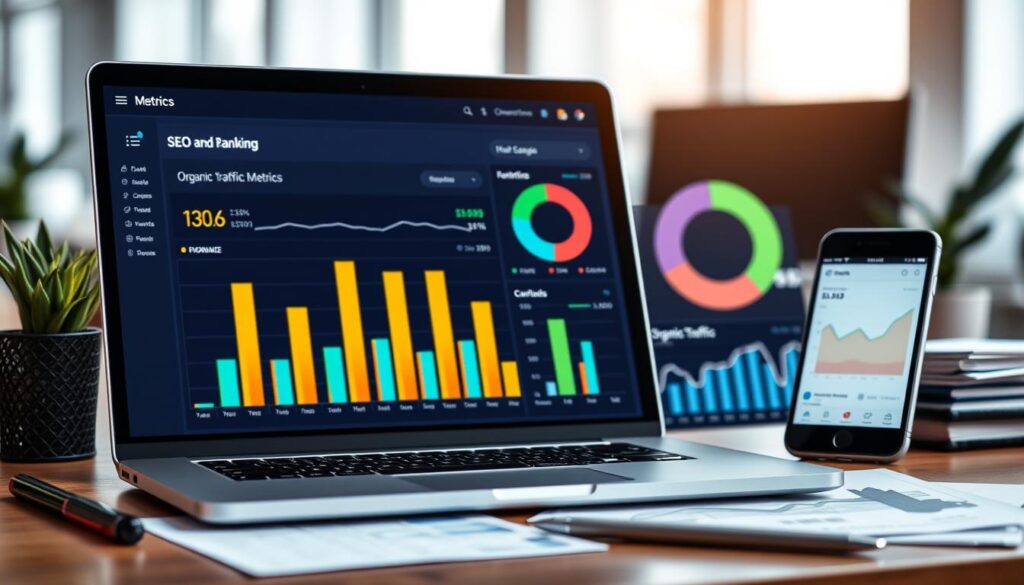
Measuring Success: Metrics That Matter
In digital marketing, success is about the right metrics. To see if your online strategies work, track important metrics. This is true for SEO and SEM.
Key Metrics for SEO
For SEO, key metrics are:
- Organic Traffic: Visitors from search engines.
- Keyword Rankings: Your site’s search engine ranking for keywords.
- Conversion Rates: Visitors who take a desired action.
Key Metrics for SEM
For SEM, important metrics are:
- Click-Through Rate (CTR): Ad viewers who click on it.
- Cost Per Click (CPC): Cost per ad click.
- Conversion Rate: Like SEO, it’s about users who take action after clicking.
- Return on Ad Spend (ROAS): Revenue from ads divided by cost.
Tools for Tracking Performance
Many tools help track these metrics:
- Google Analytics: Great for website traffic and conversion rates.
- SEMrush: Good for SEO audits and keyword tracking.
- Google Ads: Offers insights into ad performance.
By using these metrics and tools, you can improve your online strategies.
Making the Right Choice for 2026: SEO or SEM?
In 2026, businesses face a big decision: SEO or SEM. This choice depends on your budget, who you want to reach, and what you hope to achieve online.
Budget Considerations
SEO and SEM have different costs. SEO needs money upfront for content and optimization. But it can save money in the long run. SEM, though, costs more because you need to keep paying for ads. It gives you quick visibility but is pricier.
Understanding Your Audience
Knowing your audience is key. SEO works well if people are searching for what you offer. SEM is better for reaching more people fast.
Final Recommendations
Choosing between SEO and SEM depends on your goals. Think about using both to boost your online presence. This way, you can grow steadily and keep up with 2026 trends.