

Choosing the right server location is a critical decision for any digital business. It affects how fast your content loads for your audience.
When targeting North America, Europe, or the Gulf, server placement is key. Latency is the enemy of user engagement. Being close to your audience ensures a smooth experience.
But there’s more than just speed to consider. You also have to think about legal rules and data laws. This guide will help you make a reliable and secure digital presence. By understanding these regional differences, you can set up for success.
Table of Contents:
Key Takeaways
- Being close to your audience cuts down latency and boosts load times.
- Data privacy laws change by region, affecting your compliance.
- Smart server placement makes your site reliable for users worldwide.
- Costs for infrastructure vary by provider and demand in each region.
- It’s important to balance speed with legal needs for global growth.
Understanding Web Hosting Locations
Your choice of hosting location is key to your online presence. When you compare hosting locations, you decide how far your data travels to reach visitors. This distance greatly affects your website’s daily performance.
Importance of Hosting Location
The location of your server affects your connection’s speed and reliability. Companies like Equinix have facilities in major cities worldwide. This ensures your content is close to your audience.
When choosing, consider these factors:
- Proximity: Servers near users reduce data travel distance.
- Connectivity: Good data centers have better internet connections.
- Reliability: Modern centers offer better uptime and recovery.
Impact on Website Performance
Latency can kill user engagement. Every delay can make users leave before your site loads. A good hosting location comparison shows servers near users reduce load times.
Being in a major hub means faster data transmission. This seamless experience keeps users engaged and boosts search rankings. Fast performance is essential for business success.
Legal Considerations
Legal issues also matter, like where your data is stored. Laws on data privacy vary by country. For example, EU data storage must follow GDPR, while US hosting has its own rules.
Make sure your provider meets your business and customer laws. Ignoring legal requirements can risk your security and safety. Security and legal safety are critical when choosing a host.
Benefits of US Hosting
The United States is a top pick for hosting your digital stuff. It offers a mix of power and global reach. This makes your business stand out online.
Speed and Connectivity
The US has a fast network backbone. Places like Equinix offer key services for quick data flow. This means your site loads fast for people everywhere.
“Strategic interconnection is the heartbeat of a modern, high-performance digital infrastructure.”
Good connectivity means your site stays connected to your audience. Picking a US-based provider means your traffic goes through the best paths. This is why many see the US as the best hosting location for growing brands.
Advanced Infrastructure
American data centers have top-notch hardware and designs. They handle big traffic spikes without losing stability. Whether you have a small blog or a busy e-commerce site, the hardware supports you.
- Redundant power supplies to prevent downtime.
- State-of-the-art cooling systems for hardware longevity.
- High-capacity fiber optic backbones for seamless data transfer.
This solid infrastructure keeps your site up and running, even when it’s busy. Choosing the US for hosting is a smart move for any business looking to grow. It’s why the US is the best hosting location for many companies.
Customer Support Availability
The US also has a strong support system for hosting. Most big providers offer 24/7 help. This ensures you get help anytime you need it.
You’ll get support from professional, English-speaking teams. They know the latest web tech. This makes managing your hosting easier and more efficient. The US’s great infrastructure and support make it a top choice for hosting.
Advantages of EU Hosting
When you look at US vs EU hosting, the rules about data storage are key. Speed is important, but the laws about data handling are even more so. They affect your business’s future a lot.
European data centers focus a lot on digital sovereignty. Choosing Europe means your company can handle sensitive data in a stable way.
Data Protection Regulations
The European Union has strict data protection laws. The General Data Protection Regulation (GDPR) puts user rights first in digital interactions.
Companies that want to follow the rules often choose Europe. This avoids legal problems. It also shows they care about privacy, which builds trust with customers.
“Privacy is not an option, and it should not be the price we pay for just accepting free services.”
Enhanced Privacy Laws
The EU works hard to protect its digital world. It makes sure your data is safe under laws that put people first.
When you think about US vs EU hosting, remember. European providers are open about how they handle data. This openness is a big plus for brands that want to be seen as trustworthy.
Geographical Diversity
The EU is making itself a stable place for data centers. It focuses on energy security and democracy. This makes European data centers a solid choice for businesses looking to grow globally.
By using data centers in different places, you avoid problems caused by local issues. The choice between US vs EU hosting should match your needs for safety, following the rules, and reliability.
Middle East Hosting Explained
A new era of connectivity is starting in the Gulf region, changing the hosting industry. As digital changes speed up, companies see the Middle East hosting benefits are key for local markets.
Regional Growth in Technology
The region is moving fast toward a digital economy. Big projects like the India-Middle East-Europe Economic Corridor (IMEC) will change data exchange.
This corridor uses advanced undersea cables for fast and reliable data. It also includes hydrogen pipelines for energy, focusing on sustainable infrastructure for tech growth.
Local Data Centres
Local data centers are key in this tech shift. They support high-traffic websites and complex apps.
Keeping data near users cuts down on latency. This move to local infrastructure is a big Middle East hosting benefit. It makes the digital world more stable and quick.
Cultural and Language Considerations
Success here needs more than speed; it needs understanding local culture. Hosting providers that support Arabic and offer local content systems have an edge.
Cultural sensitivity in data handling builds trust with locals. Using these Middle East hosting benefits lets brands offer a tailored experience. This connects with users in the Gulf and beyond.
Performance Metrics to Consider
When you compare hosting locations, look beyond the cost. Speed is key, and where your server is located affects it. By focusing on technical metrics, your site can stay competitive online.
Latency and Load Times
Latency is how long data takes to get from your server to a user’s device. Being closer to your visitors means faster data transfer. Reducing latency keeps your site fast and engaging.
Load times are affected by latency and server power. A distant server can cause delays. Choosing the right location is critical for fast load times.
Server Uptime Guarantees
Reliability is key for a successful online presence. Look for providers with a high uptime guarantee, like 99.9%. This ensures your site is always available.
Downtime can harm your reputation and search rankings. Always check the SLA to know what happens if your site goes down. Uptime is essential for businesses that need constant traffic.
User Experience
Your hosting choice affects your site’s visitors. A fast, reliable site keeps visitors engaged. Slow sites lead to high bounce rates.
By focusing on speed and reliability, you build trust with your audience. A well-optimized site boosts conversions and customer satisfaction. Use the table below to see how different factors impact your goals.
| Metric | Impact on User | Business Goal |
|---|---|---|
| Latency | Speed of interaction | Improve engagement |
| Uptime | Site availability | Ensure reliability |
| Load Time | Page rendering speed | Boost conversions |
| Throughput | Data transfer capacity | Support high traffic |
Legal Compliance and Regulations
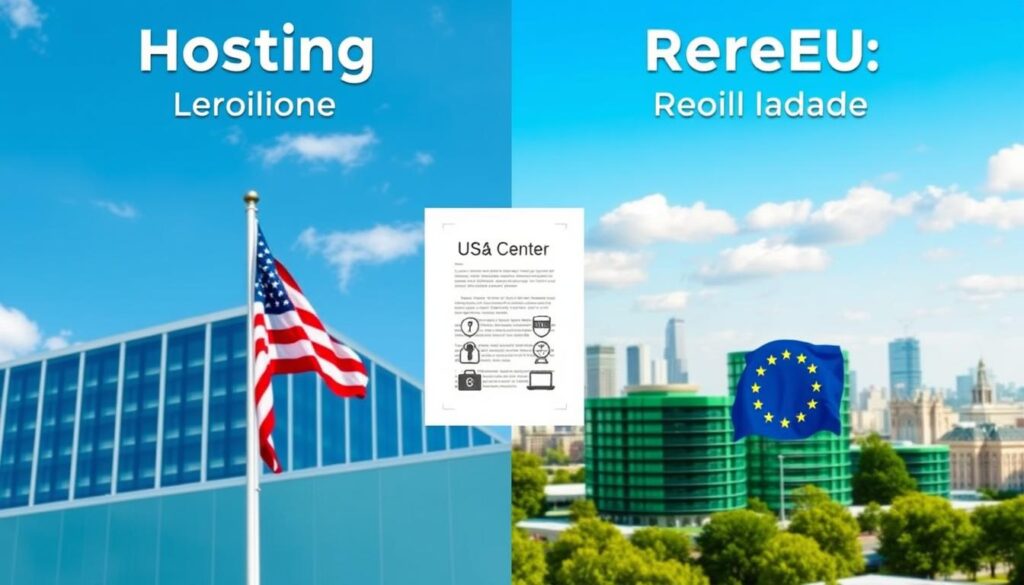
When you compare US vs EU hosting, the rules matter a lot. It’s not just about how fast your site loads. It’s also about following the laws where your users live. Not following these laws can cost you a lot and hurt your reputation.
GDPR and EU Hosting
The European Union has very strict data protection laws. The General Data Protection Regulation (GDPR) requires businesses to handle personal data carefully and openly. If you host your site in the EU, you must follow these stringent requirements.
Being compliant means getting clear consent from users and letting them access or delete their data. Many companies choose EU servers to show they care about user privacy. This builds trust with European customers.
US Hosting Laws and Regulations
In the United States, data hosting laws are different from Europe’s. There’s no single federal privacy law like the GDPR. But, there are many sector-specific and state laws, like the CCPA, that control data use. When looking at US vs EU hosting, remember that US providers must follow the CLOUD Act.
This act lets US law enforcement get data from US providers, even if it’s stored elsewhere. Businesses need to think about these laws and their own needs. Transparency about how you handle data is key to keeping users safe and informed.
Middle Eastern Compliance Issues
The Middle East’s hosting scene is changing fast, thanks to new digital investments. But, businesses must watch the geopolitical situation. The EU is working to protect its interests in the region, which can affect data services.
Choosing between US vs EU hosting or Middle Eastern options means checking local laws carefully. Always talk to a lawyer to make sure your hosting meets your audience’s needs. Keeping up with global changes is the best way to safeguard your online presence.
Target Audience Considerations
Choosing the right data center location is key to a smooth online experience. Aligning your servers with your audience boosts engagement and trust. This ensures your content reaches users quickly.
Regional User Preferences
People worldwide have different expectations for website speed and reliability. For example, Americans expect fast load times, which means servers need to be local. Proximity is essential for meeting these standards and keeping users engaged.
Choosing a server near your main market reduces data travel distance. This simple step greatly enhances user experience. It shows you value your audience’s time and convenience.
Local SEO Strategies
Search engines like Google favor sites that offer relevant local results. The right data center location signals to search algorithms that your site targets a specific area. This can help you rank higher in local searches.
- Improved crawl rates for regional domains.
- Better alignment with local search intent.
- Increased trust from regional search engine users.
Cultural Sensitivity in Content
Technical setup is just one part of connecting with a global audience. You also need to make sure your content fits the cultural and linguistic needs of your target audience. A thoughtful approach to localization makes your brand more relatable and genuine.
Think about how your messages translate in different regions to avoid confusion. When your hosting is set up for the right area, your localized content performs better. This mix of technology and culture builds a strong bond with your visitors.
| Strategy Component | Primary Benefit | Impact Level |
|---|---|---|
| Data Center Proximity | Reduced Latency | High |
| Local SEO Optimization | Higher Visibility | Medium |
| Cultural Localization | User Engagement | High |
Cost Implications of Hosting Locations
Choosing a server location can have hidden costs. A low monthly price might not show the full picture of your financial commitment. It’s important for business owners to consider the total cost to keep their budget stable as they grow.
Comparing Pricing Models
Hosting providers offer different pricing models. Some charge a flat rate each month, while others bill based on usage. Flat-rate models are good for small businesses with set budgets. But, usage-based models can save money when it’s slow, but costs can rise during busy times.
Prices also vary by region. In the United States, prices are often competitive. But, in emerging markets, prices might be higher due to the unique infrastructure.
Hidden Costs of International Hosting
Hosting internationally can add extra expenses. Currency changes can make your bill unpredictable. Also, taxes and fees for local compliance can surprise businesses.
Data transfer fees are another thing to watch. Projects like the IMEC initiative aim to improve global connectivity. But, for now, moving data across borders can lead to significant surcharges.
Long-term Value Analysis
Choosing the cheapest option might not be the best in the long run. A server near your audience can improve performance. This can lead to more sales and happier customers, making the higher cost worth it.
Scalability is also key. Make sure your provider can grow with you without a big move. Investing in a scalable system now can save you money later.
| Cost Factor | US Hosting | EU Hosting | Middle East Hosting |
|---|---|---|---|
| Base Subscription | Highly Competitive | Moderate | Premium |
| Data Transfer Fees | Low | Low to Moderate | Variable |
| Regulatory Compliance | Standard | High (GDPR) | Regional Specific |
| Currency Risk | None (USD) | Moderate (EUR) | High |
Technical Support Availability
Reliable technical support is key to any hosting success, no matter the server location. The quality of the support team is as important as the hardware. The Middle East hosting benefits include better, local support teams.

24/7 Support in US Hosting
The US is known for top-notch 24/7 tech support. Big providers offer help all day, every day. You can get help through live chat, phone, or tickets, keeping your business running.
EU Support Services
In Europe, providers focus on multilingual support for a wide range of users. They know local data laws well, adding to your business’s security. You get professional service that respects privacy.
Middle Eastern Support Landscape
The Middle East hosting benefits are growing as local data centers invest in people. Many offer support in Arabic and English, helping local businesses. This local support means quicker issue fixes, without language or time zone problems.
| Region | Support Availability | Language Options | Primary Advantage |
|---|---|---|---|
| United States | 24/7 | English | High Scalability |
| European Union | Business Hours/24/7 | Multilingual | Regulatory Expertise |
| Middle East | Growing 24/7 | Arabic/English | Localized Knowledge |
Reliability and Security Factors
When choosing a hosting option, the safety of your servers is key. You need to find a balance between performance and the physical environment. Think about how regional stability affects your digital assets’ safety.
Data Breaches and Hosting Security
Security threats go beyond simple hacking. In places like the Middle East, US military presence can lead to instability. Protecting your data means picking a location away from such risks.
A secure hosting environment must guard against physical and digital threats. Providers should have strict access controls and advanced surveillance. Make sure they use modern encryption to keep your files safe.
Evaluating Hosting Providers’ Security
When choosing a data center location, look for providers with recognized security certifications. ISO 27001 or SOC 2 shows they follow strict safety protocols. You should trust that your provider values your security highly.
Ask hosts about their security measures, like fire suppression systems and biometric entry. A transparent provider will share their security audit results. Trust is earned through consistent performance and clear communication.
Disaster Recovery Options
Even secure facilities can face unexpected challenges. A good hosting partner must have solid disaster recovery plans. This includes regular backups stored in different locations to ensure data integrity.
Confirm your provider has a clear plan for restoring services after a disaster. A strong recovery strategy is key to a successful data center location selection. By planning for the worst, your business stays strong no matter what.
Scalability Options
Choosing the right hosting location today is key for future growth. As your online presence grows, your setup must handle more traffic and data. It should do this without losing speed or reliability.
Growing Businesses and Hosting Needs
Startups often focus on cost and basic needs at first. But, successful businesses soon see their hosting needs change. They might start with a shared plan but quickly need dedicated resources or cloud solutions.
Planning for scalability now avoids expensive changes later. If you plan to enter new markets, your hosting must be flexible. This ensures your site stays fast, even when traffic spikes.
How Locations Affect Scalability
The server’s location affects scalability. Some areas have better infrastructure for adding new hardware or features. If your provider is limited in a region, scaling can be hard without switching providers.
“Scalability is not just about adding more power; it is about building a system that can grow intelligently across borders while maintaining a consistent user experience.”
Also, regional laws can affect your ability to scale. For example, scaling in the EU means following strict data privacy laws. Make sure your chosen region supports your growth plans.
Migrating Between Hosting Regions
At some point, your business might outgrow its hosting region. Moving to a new market is complex and needs careful planning. You must consider data laws, latency, and content delivery networks.
Many providers offer seamless migration tools to help with this move. Choosing a global provider makes moving data between regions easier. This is key for maintaining a great user experience as you expand.
| Scaling Factor | US Hosting | EU Hosting | Middle East Hosting |
|---|---|---|---|
| Infrastructure Growth | High Availability | Strict Compliance | Rapidly Expanding |
| Resource Upgrades | Very Flexible | Moderate | Developing |
| Migration Ease | High | Moderate | Low to Moderate |
| Market Reach | Global | Regional/Global | Emerging |
Local vs. Global Business Strategies
Choosing where to host your data is a big decision. It affects how your customers see your brand. It’s not just about tech; it’s a strategic business decision.
Whether you focus on one area or the world, your hosting must match your goals. Knowing the differences helps you stay ahead in today’s connected market.
When to Choose Local Hosting
Local hosting is best when most of your customers are in one area. It reduces latency and makes pages load faster.
It’s also good for businesses that need to follow local data laws. Hosting locally means better control over these laws and a more personal experience for local customers.

Global Reach with Local Presence
You can expand your reach without losing local speed. New projects like the India-Middle East-Europe Economic Corridor (IMEC) are changing data travel.
These projects use advanced cables and better connections. They help businesses have a strong local presence and serve international clients efficiently.
Dual Hosting Solutions
Many companies use a dual hosting strategy. They use local servers for local traffic and a global CDN for international requests.
This approach keeps your site fast everywhere. It gives you the flexibility to grow into new markets.
| Strategy | Primary Benefit | Best For | Complexity |
|---|---|---|---|
| Local Hosting | Lowest Latency | Regional Startups | Low |
| Global Hosting | Broad Reach | International Brands | Medium |
| Dual Hosting | Maximum Performance | Scaling Enterprises | High |
Environmental Impact of Hosting Choices
Sustainability is key for companies today. As they grow, they must check if their digital setup matches their green goals. Picking the right hosting is now about cutting down your overall carbon footprint.
Eco-Friendly Hosting Solutions
Modern data centers use new cooling tech to cut down on energy. They use better airflow and liquid cooling to save power. Energy-efficient hardware is also key to lowering power use.
When picking a hosting partner, look for those who share their energy use. Companies that publish green reports show they care about the planet. Choosing a high-efficiency provider keeps your online presence green.
Renewable Energy Options
The hosting world is moving to clean energy. Top providers now use wind, solar, and hydroelectric energy for their data centers. This move helps reduce our reliance on fossil fuels.
Some providers offer carbon-neutral hosting. This lets businesses offset their emissions. By supporting new green projects, your company can stay green while growing worldwide.
Sustainability in the US, EU, and Middle East
Sustainability efforts differ by region. Europe’s Global Gateway strategy aims to invest €300 billion in green projects. This big push is to support green digital growth across the globe.
In the US, tax breaks help build solar data centers. The Middle East is also boosting its tech with green energy. No matter where you are, making your hosting green is wise for any business.
Conclusion: Making the Best Choice
Choosing the right hosting environment is key. It balances speed, legal rules, and cost. Your choice affects how people see your brand every day.
Summary of Essential Factors
Deciding between US, EU, and Middle East hosting starts with your main users. Weigh local data centers against global reach. Focus on performance to give users a smooth experience, no matter where they are.
Aligning Needs with Business Goals
Every company has its own data and growth challenges. Find the best hosting based on your rules and tech needs. Services like Amazon Web Services or Google Cloud can help meet these needs.
Moving Forward with Confidence
Check your current traffic to see where your audience is. This helps pick the best infrastructure for growth. Test latency from target regions to keep your site fast and reliable for all.