Google’s parent company Alphabet Inc. has become one of the world’s most valuable companies, with its stock performance consistently outpacing the broader market. For investors considering adding Google stock to their portfolio, understanding the company’s business model, financial health, and future prospects is essential. This comprehensive guide explores everything you need to know about investing in Google stock, from its unique share structure to analyst predictions and long-term growth potential.
Table of Contents:
Company Overview and Stock Structure
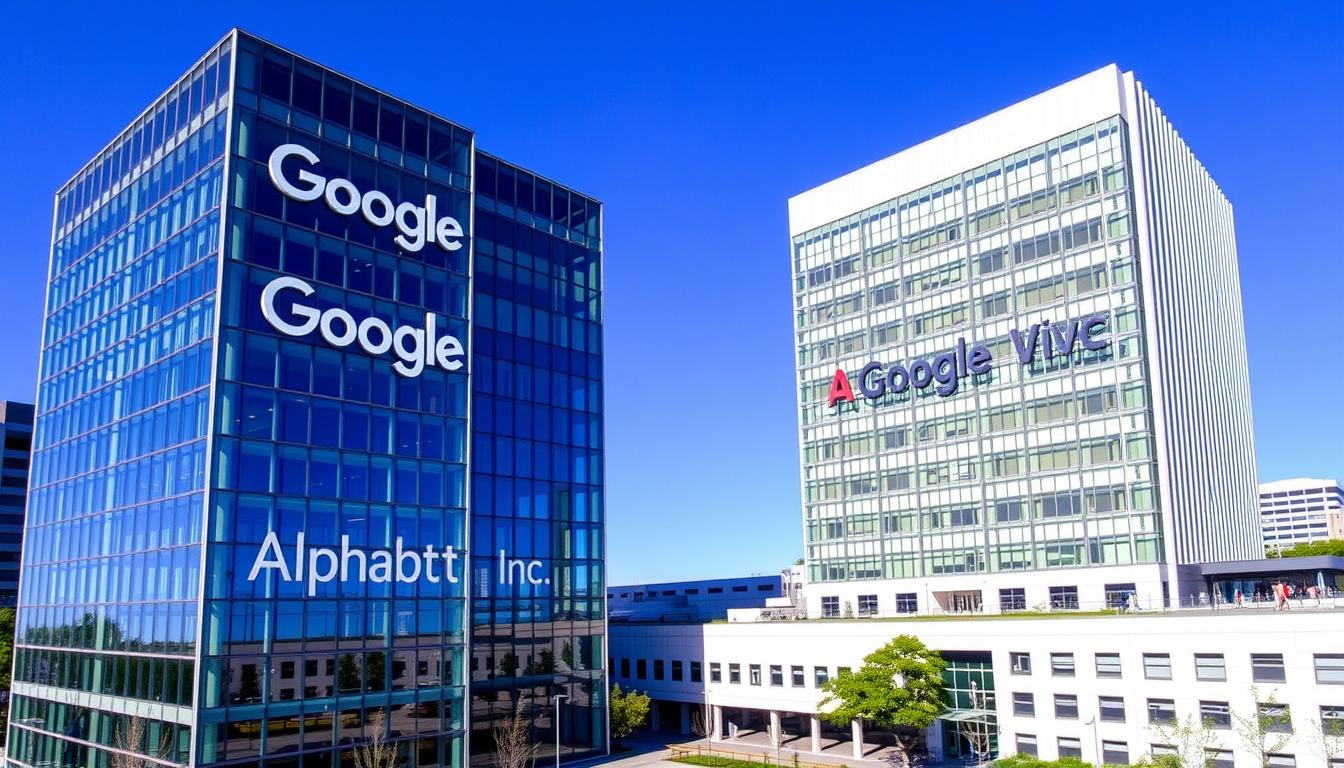
Alphabet Inc. headquarters in Mountain View, California
Alphabet Inc. was formed in 2015 as a restructuring of Google, creating a parent company that houses Google along with several other businesses. The company operates through three main segments: Google Services, Google Cloud, and Other Bets. Google Services generates the majority of revenue through advertising on platforms like Search, YouTube, and partner websites. Google Cloud provides infrastructure and platform services, while Other Bets encompasses ambitious long-term projects like Waymo (self-driving cars) and Verily (life sciences).
Understanding Alphabet’s Share Classes
| Share Class | Ticker Symbol | Voting Rights | Ownership |
| Class A | GOOGL | 1 vote per share | Publicly traded |
| Class B | Not publicly traded | 10 votes per share | Founders and insiders |
| Class C | GOOG | No voting rights | Publicly traded |
This multi-class structure allows founders Larry Page and Sergey Brin, along with former CEO Eric Schmidt, to maintain control of the company through their ownership of Class B shares, despite owning a minority of the total outstanding shares. For retail investors, the choice between GOOGL (Class A) and GOOG (Class C) primarily comes down to whether voting rights are important to your investment strategy.
Stay Updated on Google Stock
Get real-time alerts and expert analysis on Alphabet’s stock performance delivered to your inbox.
Historical Performance and Key Milestones

Google stock performance over the past decade compared to S&P 500
Since its IPO in 2004 at $85 per share (adjusted for subsequent splits), Google stock has delivered exceptional returns to long-term investors. The company executed a 20-for-1 stock split in July 2022, making shares more accessible to retail investors. Over the past five years, Alphabet shares have significantly outperformed the broader market, with returns exceeding 200% compared to the S&P 500’s approximately 85% gain.
Key Milestones Impacting Google Stock
- 2004: Initial public offering at $85 per share
- 2015: Restructuring to form Alphabet Inc. as the parent company
- 2018: EU antitrust fine of $5 billion temporarily impacts stock
- 2020: COVID-19 causes temporary advertising revenue decline
- 2021: Record revenue growth as digital advertising rebounds
- 2022: 20-for-1 stock split implemented
- 2023: Major AI initiatives announced, boosting investor confidence
- 2024: Cloud segment achieves profitability, enhancing stock value
- 2025: Warren Buffett’s Berkshire Hathaway invests over $4 billion
The stock has shown resilience through market downturns, though it’s not immune to broader economic conditions. During the 2022 tech sector correction, Alphabet shares experienced a significant pullback before recovering strongly in 2023-2025, driven by AI advancements and cloud computing growth.

Google stock price reactions to major company announcements (2020-2025)
Current Financial Metrics and Market Position
Alphabet maintains an exceptionally strong financial position with robust revenue growth, high profit margins, and a fortress balance sheet. The company consistently generates substantial free cash flow, allowing it to invest in future growth initiatives while returning capital to shareholders through buybacks and its recently introduced dividend.
Key Financial Metrics (As of Q3 2025)
| Metric | Value | Year-over-Year Change |
| Market Capitalization | $3.62 Trillion | +44% |
| Revenue (TTM) | $385.48 Billion | +15% |
| Net Income (TTM) | $124.25 Billion | +28% |
| Earnings Per Share (TTM) | $10.13 | +30% |
| Price-to-Earnings Ratio | 29.58 | +10% |
| Forward P/E Ratio | 27.03 | +8% |
| Cash and Investments | $98.5 Billion | +12% |
| Debt-to-Equity Ratio | 11.42% | -2% |
Alphabet’s financial discipline is evident in its consistently high profit margins, with a profit margin of 32.23% and return on equity of 35.45%. The company’s strong balance sheet features minimal debt relative to its cash position, providing significant financial flexibility for investments, acquisitions, and shareholder returns.
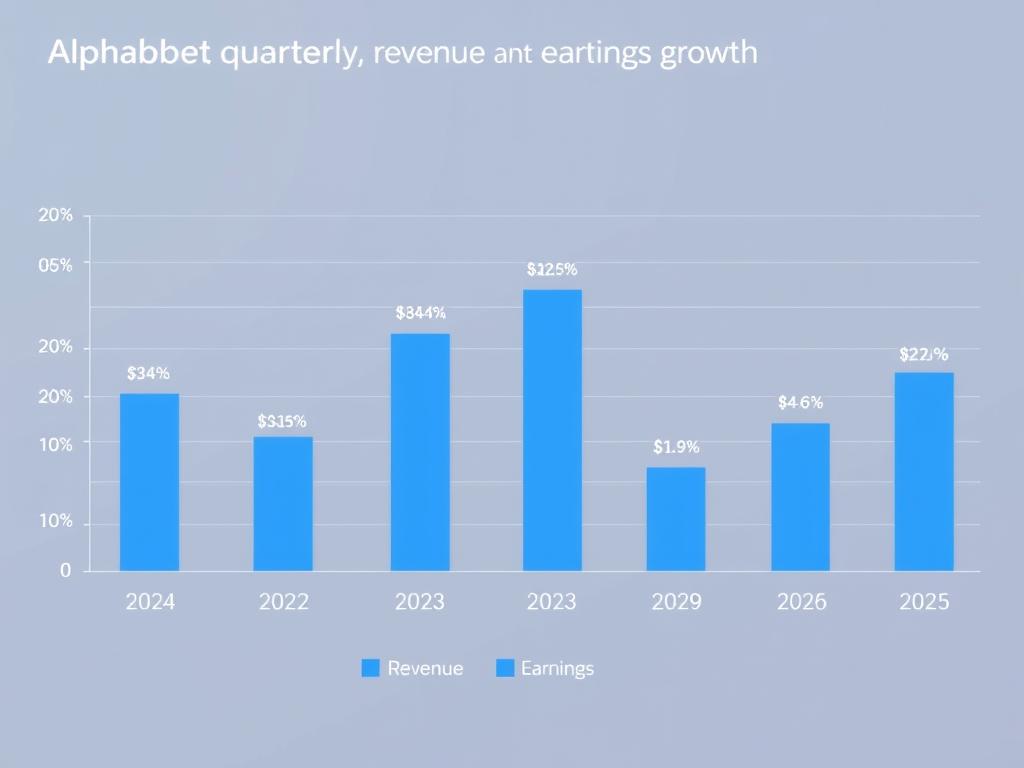
Alphabet’s quarterly revenue and earnings growth (2023-2025)
Compare Google Stock to Competitors
Access our interactive tool to compare Alphabet’s financial metrics with other tech giants like Meta, Amazon, and Microsoft.
Major Revenue Drivers

Breakdown of Alphabet’s revenue sources (Q3 2025)
Google Services
Google Services remains the primary revenue engine for Alphabet, contributing approximately 80% of total revenue. This segment includes:
Google Search & Advertising
Google’s search engine dominates the global market with over 90% share, generating revenue through its advertising platform. Search advertising continues to grow despite its maturity, driven by improvements in ad targeting and format innovations. The integration of AI into search results is expected to further enhance ad effectiveness and user engagement.
YouTube
YouTube has evolved into a major revenue contributor, with both advertising and subscription services (YouTube Premium, YouTube TV) showing strong growth. With over 2 billion monthly active users, YouTube’s advertising revenue now exceeds $30 billion annually. The platform’s expansion into short-form content with YouTube Shorts has successfully countered competition from TikTok.
Google Cloud
Google Cloud has emerged as a significant growth driver, now contributing approximately 10% of total revenue. After years of heavy investment, the cloud segment achieved profitability in 2024 and continues to gain market share against AWS and Microsoft Azure. Google’s AI infrastructure and services have become a key differentiator, particularly following the launch of Gemini models that have attracted enterprise customers seeking advanced AI capabilities.

Google Cloud revenue growth and market share (2020-2025)
Other Bets
While contributing less than 1% of revenue, Alphabet’s “Other Bets” represent potential future growth engines. These include:
- Waymo – Self-driving technology advancing toward commercialization
- Verily – Life sciences research and healthcare solutions
- Wing – Drone delivery services expanding to new markets
- Calico – Research focused on extending human lifespan
- Fiber – High-speed internet service in select markets
While these ventures currently operate at a loss, they represent Alphabet’s investment in potential future revenue streams that could eventually become substantial businesses in their own right.
“Google’s diversification beyond advertising into cloud computing and AI services represents the company’s most successful expansion since the acquisition of YouTube, providing investors with exposure to multiple high-growth technology markets.”
Competitive Landscape and Market Challenges
Despite its dominant position, Alphabet faces significant competition across its various business segments. Understanding these competitive dynamics is crucial for evaluating Google stock’s long-term prospects.

Competitive positioning of Google versus major tech rivals
Search and Advertising
Google maintains its dominance in search with over 90% global market share, but faces growing challenges:
Traditional Competitors
Microsoft’s Bing has gained modest market share through AI integration and its partnership with OpenAI. Meanwhile, specialized search engines like Amazon (for products) and TripAdvisor (for travel) continue to capture specific verticals of search traffic and associated advertising revenue.
Emerging Threats
AI-powered search alternatives and voice assistants represent longer-term challenges to Google’s search dominance. Apple’s increasing focus on privacy has also impacted Google’s ability to track users and deliver targeted advertising across iOS devices.
Cloud Computing
In the cloud market, Google Cloud remains in third place behind AWS and Microsoft Azure but has been gaining market share:
| Cloud Provider | Market Share | Key Strengths | Growth Rate |
| AWS (Amazon) | 32% | First-mover advantage, breadth of services | +18% |
| Azure (Microsoft) | 24% | Enterprise relationships, Windows integration | +26% |
| Google Cloud | 11% | AI capabilities, data analytics | +32% |
| Others | 33% | Specialized services, regional focus | +8% |
Regulatory Challenges
Alphabet continues to face regulatory scrutiny across multiple jurisdictions:
- Antitrust Concerns – Ongoing investigations and lawsuits regarding Google’s dominance in search and digital advertising
- Privacy Regulations – Increasing global privacy laws impacting data collection and ad targeting capabilities
- Content Moderation – Pressure to better monitor content on YouTube and other platforms
- AI Governance – Emerging regulations around AI development and deployment
These regulatory challenges represent a significant risk factor for investors, as adverse rulings could potentially impact Google’s business model and growth trajectory.
Competitive Advantages
- Dominant search market share (90%+)
- Unmatched data collection capabilities
- Leading AI research and implementation
- Diverse revenue streams beyond advertising
- Strong brand recognition and user trust
Competitive Challenges
- Increasing regulatory scrutiny worldwide
- Rising competition in cloud services
- Emerging AI-powered search alternatives
- Privacy changes impacting ad targeting
- High expectations for growth and innovation
Track Regulatory Developments
Stay informed about regulatory decisions that could impact Google stock with our specialized tech regulation newsletter.
Future Outlook and Growth Opportunities
Alphabet’s future growth prospects are closely tied to several key technological and market trends that the company is well-positioned to capitalize on.

Google’s major growth opportunities in emerging technologies
Artificial Intelligence
AI represents perhaps the most significant growth opportunity for Alphabet. The company’s Gemini models have demonstrated competitive capabilities against offerings from OpenAI and Anthropic. Google is integrating AI across its product ecosystem:
- Search Enhancement – AI-powered search results improving user experience and ad relevance
- Cloud AI Services – Enterprise AI solutions driving cloud revenue growth
- YouTube Recommendations – Advanced AI improving content discovery and engagement
- Workspace AI – Productivity enhancements across Google’s suite of office tools
- Android AI – On-device AI capabilities enhancing mobile experience
Cloud Computing Expansion
Google Cloud continues to gain market share, with several factors potentially accelerating this growth:
Enterprise AI Adoption
As businesses increasingly implement AI solutions, Google’s expertise in this area positions its cloud services favorably. The company’s recent multi-million dollar deal with NATO for AI-enabled sovereign cloud services demonstrates its growing appeal to large organizations with complex requirements.
Multi-Cloud Strategies
As more enterprises adopt multi-cloud approaches, Google Cloud stands to benefit as a secondary provider alongside AWS or Azure. Google’s strengths in data analytics, machine learning, and open-source technologies make it an attractive complementary cloud platform.
Other Growth Vectors

Waymo autonomous vehicle technology represents significant future potential
Beyond its core businesses, Alphabet continues to invest in potential future growth areas:
- Autonomous Driving – Waymo expanding commercial operations in more cities
- Healthcare Technology – Verily partnerships with major healthcare providers
- Quantum Computing – Long-term research with potential to revolutionize computing
- Augmented Reality – Ongoing development of AR technologies and applications
- Sustainable Energy – Investments in renewable energy and grid optimization
While these ventures may not contribute significantly to near-term revenue, they represent Alphabet’s strategy of investing in technologies that could drive long-term growth and diversification beyond its current business model.
“Google’s approach to AI development and deployment across its ecosystem represents one of the most comprehensive AI strategies among major tech companies, with potential to enhance existing revenue streams while creating entirely new ones.”
Investment Considerations and Risks
Investors considering Google stock should weigh several key factors that could impact its future performance.

Balancing potential rewards and risks when investing in Google stock
Investment Thesis
- Digital Advertising Growth – Despite its maturity, online advertising continues to grow as more ad spending shifts from traditional media
- Cloud Market Expansion – Google Cloud’s improving market position in a rapidly growing sector
- AI Leadership – Strong position in AI research and commercialization
- Financial Strength – Exceptional cash generation and balance sheet providing stability and flexibility
- Reasonable Valuation – Despite recent gains, forward P/E ratio remains reasonable relative to growth prospects
Key Risk Factors
Regulatory Risk: Perhaps the most significant risk factor for Alphabet is the potential for adverse regulatory actions that could impact its business model or require structural changes to the company.
Competitive Threats
Emerging AI-powered alternatives to traditional search could potentially disrupt Google’s core business. Companies like OpenAI, Anthropic, and Microsoft are investing heavily in technologies that could change how users access information online. Additionally, competition in cloud services remains intense, with AWS and Azure continuing to innovate and expand their offerings.
Economic Sensitivity
While Google has shown resilience during economic downturns, its advertising revenue is not immune to broader economic conditions. During recessions, advertising budgets are often among the first expenses companies reduce. The company’s increasing diversification helps mitigate this risk, but advertising still represents the majority of revenue.
Valuation Considerations

Google stock valuation metrics compared to tech sector averages
With a forward P/E ratio of approximately 27, Google stock trades at a premium to the broader market but at a discount to many high-growth tech companies. This valuation reflects the market’s confidence in Alphabet’s continued growth and profitability, balanced against competitive and regulatory risks.
| Valuation Metric | Google (GOOGL) | Tech Sector Average | S&P 500 Average |
| Forward P/E | 27.03 | 32.15 | 21.40 |
| Price/Sales (TTM) | 9.53 | 7.80 | 2.95 |
| EV/EBITDA | 20.68 | 22.40 | 15.20 |
| PEG Ratio | 1.69 | 1.85 | 1.75 |
Dividend and Capital Return
Alphabet initiated its first dividend in 2024, signaling a new phase in the company’s capital allocation strategy. While the current yield of 0.28% is modest, the company has significant capacity to increase dividends over time. Share repurchases remain the primary method of returning capital to shareholders, with the company consistently buying back shares to reduce the outstanding count.
Should investors choose GOOGL or GOOG shares?
The primary difference between GOOGL (Class A) and GOOG (Class C) shares is voting rights. GOOGL shares come with one vote per share, while GOOG shares have no voting rights. Historically, GOOGL shares have traded at a small premium to GOOG, reflecting the value of voting rights. For most retail investors, the choice has minimal practical impact, as the founders maintain control through their Class B shares regardless of public shareholders’ votes.
Analyze Google Stock in Your Portfolio
See how adding Google stock would affect your portfolio’s risk and return profile with our free portfolio analysis tool.
Analyst Opinions and Price Targets
Wall Street analysts maintain a generally positive outlook on Google stock, with the consensus reflecting a “Buy” rating. The average price target stands at $322.52, with a range from $185.00 (low) to $380.00 (high).
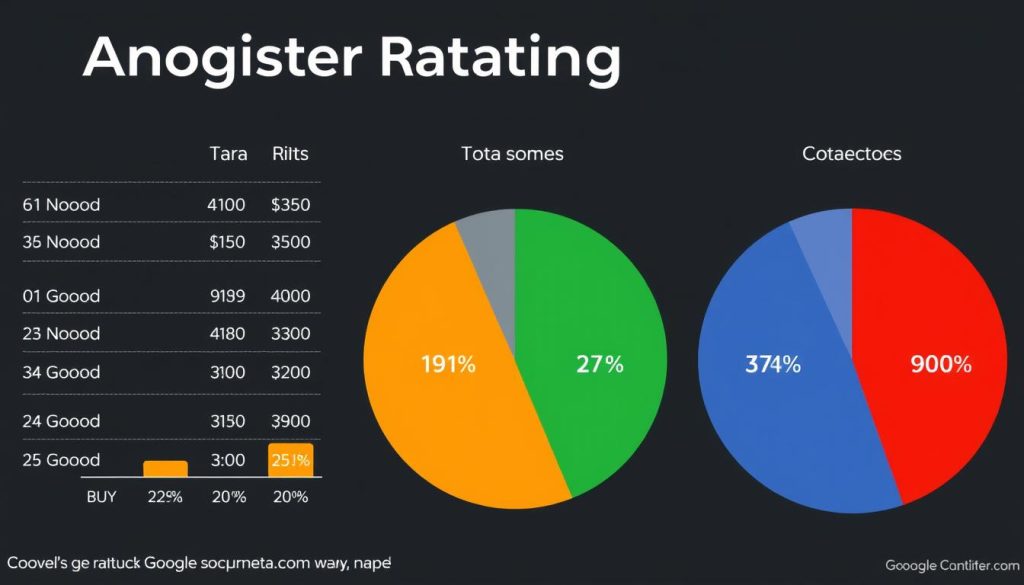
Distribution of analyst recommendations for Google stock
Recent Analyst Actions
| Date | Firm | Action | Rating | Price Target |
| November 18, 2025 | Loop Capital | Upgrade | Buy | $320 (from $260) |
| October 30, 2025 | Scotiabank | Maintains | Sector Outperform | $336 (from $310) |
| October 15, 2025 | Wedbush | Initiates | Outperform | $350 |
| October 10, 2025 | TD Cowen | Reiterates | Buy | $345 |
| September 25, 2025 | Goldman Sachs | Raises | Buy | $380 (from $340) |
Key Analyst Themes
Several common themes emerge from recent analyst reports:
- AI Integration – Positive reception of Gemini 3 model and AI integration across Google’s product ecosystem
- Cloud Momentum – Accelerating growth and improving profitability in Google Cloud
- Advertising Resilience – Core advertising business showing continued strength despite maturity
- Regulatory Concerns – Ongoing monitoring of antitrust cases and potential impacts
- Capital Return – Positive view of dividend initiation and continued share repurchases
“Alphabet’s combination of dominant market positions in high-growth sectors, exceptional financial performance, and reasonable valuation relative to peers makes it one of the most compelling large-cap tech investments available today.”

Warren Buffett recently revealed a $4.3 billion investment in Alphabet
The recent investment by Warren Buffett’s Berkshire Hathaway has been viewed as a significant vote of confidence in Alphabet’s business model and future prospects. Buffett, who has historically been cautious about technology investments, has acknowledged regretting not investing in Google earlier, citing the company’s durable competitive advantage and exceptional economics.
Conclusion: Is Google Stock Right for Your Portfolio?
Google stock represents an investment in one of the world’s most innovative and financially successful technology companies. With its dominant position in digital advertising, growing cloud business, and leadership in artificial intelligence, Alphabet offers exposure to multiple high-growth technology sectors through a single investment.
Considering Google stock as part of a diversified investment portfolio
For long-term investors, Google stock offers an attractive combination of growth potential and relative stability. The company’s exceptional financial strength, diverse revenue streams, and continued innovation provide a solid foundation for future performance. However, investors should remain mindful of regulatory risks, competitive challenges, and valuation considerations when determining position sizing within their portfolios.
Whether Google stock is right for your portfolio ultimately depends on your investment goals, risk tolerance, and existing allocations. As with any investment decision, conducting thorough research and potentially consulting with a financial advisor is recommended before making significant portfolio adjustments.
Stay Informed on Google Stock
Get expert analysis, price alerts, and breaking news about Alphabet delivered straight to your inbox.