
The debate between passive affiliate income and building a scalable SaaS platform has never been more relevant. As we navigate through 2026, both business models are experiencing explosive growth yet facing unique challenges.
The global affiliate marketing industry has surged past $17 billion, with projections reaching $20 billion by year-end. Meanwhile, the SaaS market has crossed the $400 billion threshold, fundamentally reshaping how businesses operate worldwide.
But here’s the question that keeps aspiring entrepreneurs awake at night: which model actually puts more money in your pocket?
This isn’t a simple answer. The “right” choice depends entirely on your available capital, risk tolerance, technical skills, and long-term goals. One model offers genuine passive income with minimal startup costs. The other promises exponential scalability but demands significant investment and carries sobering failure rates.
In this comprehensive guide, we’ll dissect both models with brutal honesty. You’ll see real earnings data, startup cost breakdowns, profit margin comparisons, and failure statistics that most gurus won’t share. We’ll examine how AI is transforming content creation for affiliates and how AI-native SaaS products are capturing market share.
By the end, you’ll know exactly which model aligns with your situation—and how to get started on the right infrastructure foundation.
Last updated: March 2026
Table of Contents:
Table of Contents
The Evolving Landscape in 2026: How AI and Market Saturation Are Reshaping Both Models

Both affiliate marketing and SaaS businesses are undergoing seismic shifts in 2026. Understanding these changes is critical before choosing your path.
AI’s Impact on Affiliate Marketing
Artificial intelligence has democratized content creation. Tools powered by advanced language models now generate comprehensive product reviews, comparison articles, and SEO-optimized content in minutes rather than days.
This accessibility has dramatically lowered barriers to entry. More affiliates can produce high-quality content faster than ever before.
However, this same advantage has created unprecedented competition. Search results are flooded with AI-generated affiliate content, making differentiation increasingly challenging.
Google’s algorithm updates throughout 2025 and early 2026 have prioritized genuine experience and expertise. Thin affiliate sites relying solely on AI content without real testing or unique insights are losing rankings rapidly.
AI-Native SaaS Platforms Emerge
The SaaS landscape has welcomed a new category: AI-native platforms. These tools integrate artificial intelligence as core functionality rather than a bolted-on feature.
From AI writing assistants to automated customer service platforms, these products solve problems that previously required human intervention. Customer expectations have shifted accordingly.
Traditional SaaS companies scramble to integrate AI capabilities. Those that fail to adapt risk obsolescence as nimbler competitors capture market share with superior automation features.
Saturation Challenges in Both Spaces
The affiliate program space shows clear saturation in popular niches. Credit cards, web hosting, and online courses face intense competition with established players dominating top rankings.
Success requires finding underserved micro-niches or building such strong brand authority that you can compete in crowded markets. Generic affiliate websites face an uphill battle.
SaaS markets mirror this saturation. The average business category now has dozens of viable SaaS solutions. Product differentiation and niche focus have become survival requirements, not luxuries.
The Recurring Revenue Trend
One bright spot for affiliates: recurring commission structures have become standard in SaaS affiliate programs. Partners earn monthly commissions as long as referred customers maintain active subscriptions.
This shift brings affiliate marketing closer to the predictable revenue model that makes SaaS attractive. Top SaaS affiliate programs now offer 20-70% recurring commissions, creating genuine passive income streams.
For SaaS businesses, the emphasis on recurring revenue has intensified focus on customer retention metrics. Churn rate has become as important as acquisition, fundamentally changing how companies operate and allocate resources.
Startup Costs & Time to Launch: The Critical First Investment Comparison

Your initial investment creates the foundation for everything that follows. These two models couldn’t be more different in their entry requirements.
Affiliate Marketing: The Low-Barrier Entry Model
Starting an affiliate marketing website demands minimal upfront capital. Here’s the realistic breakdown for a quality launch in 2026:
| Expense Category | Cost Range | Frequency | Notes |
| Domain Name | $10-$20 | Annual | Premium domains cost more |
| Web Hosting | $5-$30 | Monthly | Shared to VPS depending on traffic |
| WordPress Theme | $0-$89 | One-time | Free options available |
| Essential Plugins | $0-$200 | Annual | SEO, caching, security tools |
| Content Creation | $0-$1,000 | Monthly | DIY with AI or outsource to writers |
| SEO Tools | $0-$199 | Monthly | Ahrefs, SEMrush, or free alternatives |
| Email Marketing | $0-$50 | Monthly | Free tiers available initially |
Total First-Year Investment: $300-$3,500
The lower end assumes you create content yourself using AI assistance and leverage free tools. The higher end includes professional content creation and premium SEO software subscriptions.
Many successful affiliate marketers launch for under $500 in year one. Whether you choose affiliate or SaaS, you need reliable hosting infrastructure—starting with affordable NVMe hosting plans that can scale as your traffic grows.
Time Investment for Affiliate Sites
Expect 3-6 months before seeing meaningful traffic from organic search. Building authority takes time regardless of content quality.
Initial setup requires 20-40 hours to establish your website, create foundational content, and configure essential plugins. Ongoing content creation demands 10-20 hours weekly if you’re writing yourself.
The beauty of this model: you can maintain full-time employment while building your affiliate site during evenings and weekends.
SaaS: The Capital-Intensive Path
Building a SaaS platform requires substantially more investment across multiple categories:
| Expense Category | Cost Range | Frequency | Notes |
| Product Development | $15,000-$150,000 | Initial | DIY coding to agency development |
| Cloud Hosting Infrastructure | $100-$2,000 | Monthly | AWS, Google Cloud, or Azure |
| Domain & SSL | $50-$200 | Annual | Professional domains and security |
| Business Formation | $500-$3,000 | One-time | LLC or corporation setup |
| Legal & Compliance | $2,000-$10,000 | Initial | Terms of service, privacy policy, contracts |
| Marketing & Customer Acquisition | $1,000-$10,000 | Monthly | Paid ads, content marketing, partnerships |
| Customer Support Tools | $100-$500 | Monthly | Help desk, chat, ticketing systems |
| Payment Processing | $0-$50 | Monthly | Stripe, PayPal fees separate |
| Analytics & Monitoring | $50-$500 | Monthly | Error tracking, analytics, uptime monitoring |
Total First-Year Investment: $50,000-$250,000+
The enormous range reflects whether you’re a technical founder building an MVP yourself or hiring a development team for a complex platform.
Even bootstrapped SaaS founders should budget $30,000-50,000 minimum. This covers basic development, essential tools, initial marketing, and runway before achieving meaningful revenue.
Time Investment for SaaS
Developing a minimum viable product typically requires 6-12 months of full-time work. This assumes you have technical capabilities or funding for development resources.
Post-launch, expect to invest 60-80 hours weekly across product development, customer acquisition, support, and business operations. Running a SaaS business is a full-time commitment from day one.
The timeline to profitability averages 18-36 months for successful SaaS companies. Many never reach profitability, burning through capital before achieving product-market fit.
The Winner on Startup Requirements
Affiliate marketing wins decisively for accessibility. You can launch a legitimate business for under $500 and scale investment as revenue grows.
SaaS requires either significant personal capital, strong technical skills to build solo, or the ability to raise funding. The barrier to entry eliminates most aspiring entrepreneurs immediately.
Revenue Potential & Earnings: What Can You Actually Make in 2026?

Revenue potential separates dreamers from doers. Let’s examine what successful operators actually earn in each model, backed by 2026 industry data.
Affiliate Marketing Earnings Reality
The affiliate marketing income distribution follows a power law curve. A small percentage earns life-changing income while the majority generate modest supplemental revenue or nothing at all.
Here’s the realistic breakdown based on 2026 industry surveys and case studies:
- Bottom 50%: $0-$500 monthly (many never pass $100/month)
- 50th-80th percentile: $500-$3,000 monthly
- 80th-95th percentile: $3,000-$15,000 monthly
- Top 5%: $15,000-$100,000+ monthly
- Top 1%: $100,000-$1,000,000+ monthly
The median established affiliate marketer (someone actively working on their site for 2+ years) earns approximately $8,000 per month according to recent Authority Hacker industry reports.
However, “established” is key. Most affiliate marketers abandon their sites before reaching this stage. Of those who persist beyond year one, about 30% achieve $1,000+ monthly earnings.
What Drives Affiliate Earnings Higher
Top earners share common characteristics:
- Promote products with recurring commission structures (especially SaaS affiliate programs)
- Target high-value niches (finance, business software, health)
- Build email lists for ongoing promotion beyond organic traffic
- Create comprehensive content that ranks for commercial intent keywords
- Diversify across multiple affiliate programs to reduce dependency
The shift toward recurring commissions has transformed earning potential. Promoting SaaS products with 30-40% monthly recurring commissions builds compound income that grows even without creating new content.
SaaS Revenue Statistics and Benchmarks
SaaS revenue follows different patterns, measured primarily through Annual Recurring Revenue (ARR) or Monthly Recurring Revenue (MRR).
Industry benchmarks for 2026:
| Company Stage | Typical ARR | Monthly Revenue | Time to Reach |
| Just Launched | $0-$10K | $0-$833 | 0-6 months |
| Early Traction | $10K-$100K | $833-$8,333 | 6-18 months |
| Product-Market Fit | $100K-$1M | $8,333-$83,333 | 18-36 months |
| Growth Stage | $1M-$10M | $83,333-$833,333 | 3-7 years |
| Scale Stage | $10M+ | $833,333+ | 5-10+ years |
The brutal reality: approximately 90% of SaaS startups fail to reach $1 million ARR. Most die in the early traction phase, unable to convert initial customers into sustainable growth.
Successful SaaS companies that cross $100K ARR typically see 100-200% year-over-year growth in early years. This exponential scaling potential far exceeds affiliate marketing’s linear growth model.
Comparing Apples to Apples
Direct comparison requires examining similar effort levels and timelines:
After 2 Years of Serious Effort:
- Affiliate Marketing: Realistic range $2,000-$15,000 monthly for persistent operators who avoided common mistakes
- SaaS Business: Realistic range $0-$25,000 monthly, with most still pre-revenue or under $5,000 MRR
After 5 Years:
- Affiliate Marketing: Realistic range $5,000-$50,000 monthly for successful sites with authority and diversified traffic
- SaaS Business: Realistic range $0-$500,000+ monthly, but remember 90% failed before reaching this point
The Recurring Revenue Advantage
Both models can generate recurring revenue, but through different mechanisms.
Affiliate marketers promoting SaaS products earn recurring commissions as long as customers maintain subscriptions. A single customer referred might generate $20-$100 monthly for years.
SaaS businesses collect subscription fees directly. A $99/month product with 100 customers generates $9,900 MRR. Customer lifetime value becomes the critical metric.
The compounding nature of recurring revenue in both models creates true passive income once initial customers are acquired.
Revenue Potential Verdict
Affiliate marketing offers more predictable, accessible earnings. You’re likely to generate some income within 12-18 months of consistent effort.
SaaS promises exponentially higher ceilings but with extreme variance. You might build a $10M business—or spend years generating nothing despite massive investment.
Your risk tolerance should guide this decision. Need steady supplemental income with high probability? Choose affiliate marketing. Want to swing for the fences with lower success odds but unlimited upside? Consider SaaS.
Profit Margins & Scalability: Where Your Revenue Actually Goes

Revenue numbers mean nothing without understanding profit margins. What you keep matters far more than what you earn.
Affiliate Marketing: The High-Margin Business Model
Affiliate marketing boasts exceptional profit margins once traffic is established. Your primary ongoing costs remain minimal:
- Web hosting: $20-$200 monthly depending on traffic volume
- Content creation: $0-$2,000 monthly if outsourcing
- SEO tools: $0-$300 monthly for premium software
- Email marketing: $50-$300 monthly based on list size
A site generating $10,000 monthly in affiliate commissions typically spends $500-$1,500 on operating expenses. This yields profit margins of 85-95%.
Compare this to traditional businesses where 20-30% profit margins are considered healthy. The asset-light nature of affiliate marketing eliminates inventory, shipping, customer service, and most overhead.
Scaling Affiliate Revenue
Scaling affiliate income requires one of three approaches:
1. Vertical Scaling: Increase traffic to existing content through improved SEO, paid advertising, or social media promotion.
2. Horizontal Scaling: Create additional content targeting new keywords and expanding topical coverage within your niche.
3. Portfolio Scaling: Launch additional affiliate websites in different niches, diversifying income sources.
Each approach maintains high margins. Doubling your content output doesn’t double your hosting costs. Traffic growth has minimal impact on expenses until you need VPS or dedicated server infrastructure.
The scalability limitation isn’t financial—it’s time and competition. Creating quality content becomes the bottleneck. AI tools help but require editorial oversight to maintain quality and expertise signals.
SaaS: The Volume Margin Game
SaaS businesses operate on different economic principles. While gross margins appear attractive at 70-80%, operating margins tell a different story.
Typical SaaS Cost Structure at Scale:
| Cost Category | Percentage of Revenue | Notes |
| Cost of Goods Sold | 20-30% | Hosting, infrastructure, support |
| Sales & Marketing | 40-60% | Customer acquisition, advertising |
| Product Development | 15-25% | Engineering, feature development |
| General & Administrative | 10-15% | Operations, finance, legal |
Many growing SaaS companies operate at negative profit margins, reinvesting all revenue into customer acquisition and product development. Profitability comes later after achieving scale and market dominance.
The CAC:LTV Ratio Challenge
Customer Acquisition Cost (CAC) versus Lifetime Value (LTV) determines SaaS viability. The ideal ratio is 1:3—spend $1 to acquire a customer worth $3 over their lifetime.
Achieving this ratio proves difficult. Competition drives up advertising costs while customer churn erodes lifetime value. Many SaaS companies struggle with ratios closer to 1:1 or even negative unit economics.
The math gets worse in early stages. Before achieving product-market fit, CAC often exceeds LTV. You’re losing money on each customer while searching for the right positioning and offer.
Scaling SaaS Revenue
SaaS scalability offers genuine exponential potential. Adding a new customer costs relatively little in infrastructure while generating predictable monthly revenue.
The challenge lies in customer acquisition, not delivery. Marketing and sales costs grow proportionally with customer growth until you achieve strong brand recognition and organic acquisition channels.
Successful SaaS companies eventually build self-sustaining growth loops. Satisfied customers refer others, reducing CAC. Content marketing and SEO generate inbound leads. Partner program affiliates promote your product for commission.
Reaching this point requires years of investment. Most companies never get there.
Profit Margin Comparison
At equivalent revenue levels, affiliate marketing delivers higher take-home income:
- $10K monthly revenue: Affiliate keeps $8,500-9,500; SaaS founder might keep $0-2,000
- $50K monthly revenue: Affiliate keeps $42,500-47,500; SaaS founder might keep $5,000-15,000
- $200K monthly revenue: Affiliate keeps $170,000-190,000; SaaS founder might keep $20,000-80,000
The difference narrows at massive scale. A $10M ARR SaaS company generates significant profit. Few affiliate sites reach equivalent revenue levels.
Scalability for Infrastructure
Both models require robust web infrastructure. As your affiliate site or SaaS platform grows, reliable hosting becomes critical to maintaining performance and uptime.
Whether scaling an affiliate content site receiving hundreds of thousands of monthly visitors or supporting thousands of SaaS users, you need hosting infrastructure that can handle growth without breaking your budget. Explore scalable WordPress hosting solutions designed for high-traffic websites.
The Margin & Scale Winner
Affiliate marketing wins on profit margins across all revenue levels. You keep a higher percentage of what you earn.
SaaS wins on absolute scalability potential. While margins are lower, revenue ceilings are exponentially higher for successful products.
Choose based on your goals: maximum profit percentage (affiliate) or maximum absolute revenue potential (SaaS).
Risk & Failure Rates: The Sobering Reality Behind the Success Stories
Every entrepreneur must confront failure statistics. Survivorship bias makes successful businesses visible while thousands of failures disappear quietly.
Affiliate Marketing: Low Financial Risk, High Competition Risk
The financial risk in affiliate marketing remains remarkably low. Your maximum loss equals your investment—typically $500-$3,000 in year one.
You won’t accumulate debt building an affiliate site. You won’t default on loans or investor obligations. Worst case scenario: you lose your time investment and a modest amount of capital.
However, other risk factors deserve attention:
Algorithm Volatility Risk
Google algorithm updates can devastate affiliate sites overnight. Sites that ranked #1 for valuable keywords suddenly disappear from results entirely.
The 2023 Helpful Content Update eliminated thousands of affiliate sites. The 2024 Core Updates continued this trend. In 2026, we’re seeing even stricter evaluation of content quality and genuine expertise.
Affiliate marketers must accept that their traffic sources exist at Google’s discretion. Building alternative traffic channels—email lists, social media, paid advertising—provides insurance against algorithm volatility.
Platform Dependency Risk
Your income depends on affiliate programs maintaining their offers and commission structures. Programs change terms unilaterally.
Amazon Associates famously slashed commission rates in 2020, devastating thousands of affiliates overnight. SaaS companies occasionally reduce affiliate payouts or eliminate programs entirely during business pivots.
Diversification across multiple programs mitigates this risk but can’t eliminate it completely.
Competition and Content Saturation Risk
As AI makes content creation easier, competition intensifies across all niches. Breaking into established markets becomes progressively harder.
Newer sites struggle to compete against domain authority built over years. Even quality content may not rank if you’re competing against established publishers.
Success requires finding underserved niches, building genuine expertise, or outworking competitors on content quality and quantity.
Affiliate Marketing Failure Rates
Defining “failure” in affiliate marketing proves challenging since entry barriers are so low. Many start casually without serious commitment.
Among those who create at least 50 pieces of content and persist for 12+ months:
- Approximately 60-70% never reach $1,000 monthly income
- About 20-30% achieve $1,000-$5,000 monthly
- Roughly 5-10% reach $5,000+ monthly
- Less than 2% achieve $20,000+ monthly
These aren’t business failures in the traditional sense. Most affiliate marketers keep their sites running indefinitely since hosting costs remain minimal.
SaaS: High-Stakes Financial Risk
SaaS businesses carry substantial financial risk from day one. Development costs, operating expenses, and marketing investments create real financial exposure.
Capital Burn Rate Risk
Most SaaS companies burn through significant capital before reaching profitability. Founders deplete savings, max out credit cards, or pressure investor relationships.
The psychological toll compounds financial stress. Watching your bank account drain while customers trickle in slowly creates immense pressure.
Runway becomes everything. Underestimating time-to-revenue kills more SaaS startups than product failures.
Product-Market Fit Risk
Building something nobody wants represents the most common SaaS failure mode. You can execute flawlessly on a product the market doesn’t need.
Achieving product-market fit requires extensive customer research, rapid iteration, and sometimes complete pivots. Each pivot consumes more capital and time.
Many founders discover after 12-18 months of development that their core assumption about customer needs was wrong. Starting over or shutting down becomes the only option.
Competition and Commoditization Risk
Successful SaaS products attract immediate competition. Larger companies clone features. Startups undercut pricing.
Your defensibility depends on network effects, switching costs, or continuous innovation. Without strong moats, competitors erode your market position.
AI has lowered development barriers, enabling faster competitor emergence. What took months to build in 2020 now takes weeks in 2026.
SaaS Failure Rates: The 90% Statistic
Industry data consistently shows approximately 90% of SaaS startups fail. The definition varies but typically means shutting down operations without achieving meaningful revenue or exit.
Breaking down the failure modes:
- 38%: Run out of cash before achieving product-market fit
- 35%: Build products with insufficient market demand
- 20%: Get outcompeted by superior products or better-funded competitors
- 7%: Face team conflicts, technical failures, or other operational issues
The timeline matters. Many SaaS companies limp along for years in zombie mode—not quite profitable but not completely dead. Founders remain trapped, unable to scale or exit gracefully.
Risk Comparison by Scenario
Consider risk across different founder situations:
| Founder Profile | Affiliate Marketing Risk | SaaS Risk |
| Part-time, employed elsewhere | Very Low | High |
| Full-time, 6-month runway | Low-Moderate | Very High |
| Technical founder, can code | Low | Moderate-High |
| Funded, 18-month runway | Low | Moderate |
The Risk Reality Winner
Affiliate marketing wins decisively on risk mitigation. Limited financial exposure and ability to operate part-time make it accessible to risk-averse entrepreneurs.
SaaS carries substantial risk across financial, operational, and market dimensions. Only well-capitalized founders or those with strong technical skills and high risk tolerance should pursue this path.
Your personal financial situation should drive this decision. Can you afford to lose $50,000-$200,000 and two years of your life? If not, affiliate marketing offers a safer entry point to online business.
Passive Income Potential: How Hands-Off Can You Really Be?
The dream of passive income attracts many entrepreneurs. But how passive can these business models actually become?
Affiliate Marketing: Genuine Passive Potential
Affiliate marketing offers the most legitimate passive income opportunity in online business. Once content ranks in search engines and attracts traffic, commissions flow with minimal ongoing intervention.
Established affiliate sites can generate income for months or even years with minimal maintenance. Your primary passive income requirements:
- Monitor site performance and uptime
- Update outdated information quarterly
- Refresh or replace discontinued affiliate products
- Address technical issues or security vulnerabilities
- Respond to algorithm updates with content improvements
Many successful affiliate marketers spend 5-10 hours monthly maintaining sites that generate $5,000-$20,000. That’s genuine passive income relative to time invested.
However, truly passive affiliate income requires reaching critical mass first. Building the content library and authority takes 12-24 months of active work.
The Content Decay Factor
Passive doesn’t mean permanent. Content ages and loses relevance. Competitor sites publish newer, more comprehensive articles. Rankings gradually decline without fresh content.
Maintaining passive income requires periodic investment in content updates and expansion. Completely abandoning a site for years typically results in traffic and revenue decline.
SaaS: Recurring but Rarely Passive
SaaS generates recurring revenue, which many confuse with passive income. These concepts differ fundamentally.
Recurring revenue means customers pay monthly or annually. Passive income means you earn without active involvement. SaaS delivers the former but rarely achieves the latter.
Ongoing SaaS Requirements
Running a SaaS business demands continuous attention across multiple areas:
- Customer Support: Users need help, encounter bugs, request features
- Product Development: Competitors force continuous improvement and innovation
- Infrastructure Maintenance: Servers require monitoring, updates, security patches
- Churn Management: Preventing customer cancellations demands ongoing effort
- Sales and Marketing: Customer acquisition never stops
- Payment Processing: Failed payments need attention to prevent involuntary churn
Successful SaaS founders with established products might reduce involvement to 20-30 hours weekly by hiring support and development teams. This represents semi-passive income at best.
The Automation Opportunity
Modern SaaS platforms increasingly automate operations. AI chatbots handle support inquiries. Automated onboarding reduces manual customer success work. Marketing automation nurtures leads without constant intervention.
However, this automation requires upfront investment and ongoing refinement. You’re building a machine that eventually runs more independently, but you never eliminate all hands-on requirements.
Comparing Passive Income Reality
| Business Model | Initial Build Time | Time to Passive State | Ongoing Monthly Hours | True Passive? |
| Affiliate Marketing | 6-18 months | 12-24 months | 5-15 hours | Yes, mostly |
| SaaS Business | 6-24 months | Never fully | 40-80+ hours | No, recurring |
The Income Continuity Question
Both models can generate income during periods of reduced activity, but with different characteristics.
An affiliate site continues earning if you take a month-long vacation. Traffic flows, clicks happen, commissions process automatically. Your income might dip slightly from lack of new content but won’t disappear.
A SaaS business continues charging customers during your vacation, but customer support tickets pile up, bugs go unaddressed, and churn risk increases. Extended absence damages the business.
The Passive Income Winner
Affiliate marketing wins clearly on passive income potential. After the initial build phase, you can genuinely step back while maintaining substantial income.
SaaS offers recurring revenue but requires ongoing active management. You’re building a business, not a passive asset.
If your goal is minimal ongoing time commitment while earning meaningful income, affiliate marketing aligns better with that objective.
Skills & Effort Required: What You Need to Succeed in Each Model

Your existing skills and willingness to learn new ones significantly impact which model suits you better.
Affiliate Marketing Skill Requirements
Succeeding in affiliate marketing demands competency across several disciplines:
Content Creation and Writing
Quality content forms the foundation of affiliate success. You need the ability to create comprehensive, valuable articles that genuinely help readers make informed decisions.
AI tools now assist with writing, but editorial skills remain essential. You must evaluate AI output, inject expertise and personal experience, and maintain consistent quality standards.
Poor writing damages credibility. Readers quickly detect thin content created solely for affiliate commissions rather than genuine helpfulness.
SEO and Keyword Research
Understanding search engine optimization separates successful affiliate marketers from struggling ones. You must grasp:
- Keyword research and intent analysis
- On-page optimization techniques
- Technical SEO fundamentals
- Link building strategies
- Content structure for featured snippets
The good news: SEO skills are learnable through online resources, courses, and hands-on practice. You don’t need a technical background.
Basic WordPress and Website Management
Most affiliate marketers use WordPress for its flexibility and SEO capabilities. You need comfort with:
- Installing and configuring WordPress
- Managing themes and plugins
- Basic troubleshooting
- Performance optimization
- Security best practices
These skills develop through practice. Modern WordPress requires minimal technical knowledge compared to building websites from scratch.
Marketing and Conversion Optimization
Driving traffic matters, but converting visitors to affiliate clicks determines income. Understanding user psychology, persuasive writing, and conversion optimization significantly impacts earnings.
You’ll experiment with call-to-action placement, comparison tables, product reviews, and email marketing to maximize conversions from your traffic.
Affiliate Marketing Time Investment
Expect to invest 15-25 hours weekly during the building phase. This includes:
- Content research and creation: 10-15 hours
- SEO and keyword research: 2-4 hours
- Website maintenance: 1-2 hours
- Affiliate program management: 1-2 hours
- Performance analysis: 1-2 hours
Once established, maintenance drops to 5-10 hours weekly or even monthly for truly passive sites.
SaaS Business Skill Requirements
Running a SaaS company demands broader skill sets across product, business, and technical domains:
Product Development and Technical Skills
You need either personal coding ability or resources to hire developers. Technical requirements include:
- Software architecture and design
- Frontend and backend development
- Database management
- API integration
- Security implementation
- DevOps and deployment
Non-technical founders can outsource development but must understand enough to make informed product decisions and avoid costly mistakes.
Business and Operations
SaaS businesses require traditional business skills:
- Financial management and forecasting
- Business formation and legal compliance
- Pricing strategy and modeling
- Metrics analysis (MRR, churn, CAC, LTV)
- Team management and hiring
- Investor relations (if raising capital)
These responsibilities can’t be automated or eliminated. Someone must handle business operations competently.
Sales and Marketing
Customer acquisition determines SaaS survival. You need skills in:
- Content marketing and SEO
- Paid advertising (Google, Facebook, LinkedIn)
- Email marketing and automation
- Sales processes and closing techniques
- Partnership development
- Community building
Many technical founders struggle here, underestimating the sales and marketing effort required to reach customers.
Customer Success and Support
Keeping customers happy and preventing churn requires:
- Excellent communication skills
- Product knowledge and troubleshooting ability
- Empathy and patience
- Process documentation
- Support tool proficiency
Early-stage SaaS founders handle support themselves, learning customer needs directly. This feedback informs product development.
SaaS Time Investment
Plan for 60-80 hours weekly during the launch and growth phases. Time distribution typically looks like:
- Product development: 30-40 hours
- Sales and marketing: 15-20 hours
- Customer support: 5-10 hours
- Business operations: 5-10 hours
- Meetings and planning: 5-10 hours
Unlike affiliate marketing, this time commitment persists indefinitely. SaaS becomes a full-time job that expands as you grow.
Learning Curve Comparison
Affiliate marketing offers a gentler learning curve. You can start with basic skills and improve incrementally. Mistakes cost little and provide learning opportunities.
SaaS presents a steeper curve across multiple disciplines simultaneously. Product, business, and marketing failures carry higher costs. The breadth of required knowledge overwhelms many founders.
The Skills & Effort Winner
Affiliate marketing wins for accessibility and reasonable time investment. You can build a successful affiliate business while employed full-time elsewhere.
SaaS demands diverse expertise and full-time commitment. Only pursue this path if you have technical skills, business experience, or sufficient capital to hire for your gaps.
2026 Trends Impact: AI, Automation, and Market Evolution

Both industries are experiencing radical transformation in 2026. Understanding these shifts helps you position for long-term success.
AI’s Transformation of Affiliate Marketing
Artificial intelligence has fundamentally altered content creation economics and competitive dynamics.
Content Creation Democratization
AI writing tools enable anyone to produce grammatically correct, well-structured content at scale. The barrier to creating 50-100 articles has dropped from months of work to days.
This democratization benefits new affiliates who can quickly build content libraries. However, it also floods niches with AI-generated content, intensifying competition.
Search engines have responded by devaluing generic AI content lacking genuine expertise or original insights. The advantage now belongs to affiliates who combine AI efficiency with real experience and unique perspectives.
SEO Complexity Increases
Google’s algorithms have grown more sophisticated at detecting AI-generated content and evaluating expertise signals. Ranking requires:
- Demonstrable personal experience with recommended products
- Original research, testing, or data
- Author credentials and expertise indicators
- Unique insights unavailable in competitor content
- Comprehensive coverage that genuinely helps users
Thin affiliate sites relying purely on AI content without editorial enhancement face declining rankings throughout 2026.
Diversification Beyond Google
Smart affiliates are reducing Google dependency by building alternative traffic sources:
- Email lists for direct audience access
- YouTube channels for video content
- Social media communities on platforms like Reddit and Discord
- Paid advertising funnels
- Newsletter sponsorships and partnerships
This multi-channel approach protects against algorithm volatility while expanding total audience reach.
AI-Native SaaS Emergence
The SaaS category has welcomed AI-native products that couldn’t exist without machine learning capabilities.
New Product Categories
AI has enabled entirely new SaaS categories:
- AI writing and content assistants
- Automated customer service and chatbots
- AI-powered design and creative tools
- Intelligent data analysis and forecasting platforms
- Automated workflow and task management
These tools solve problems that previously required human expertise, creating massive market opportunities for founders who move quickly.
Traditional SaaS Adaptation Pressure
Existing SaaS companies face pressure to integrate AI features or risk appearing outdated. Customer expectations have shifted—AI capabilities are becoming table stakes rather than differentiators.
This creates opportunities for new entrants to build superior AI-first solutions that leapfrog established competitors built on older architectures.
The Agent Economy Emerges
AI agents that autonomously complete complex tasks represent the next evolution. These intelligent assistants handle workflows end-to-end rather than just assisting with individual tasks.
SaaS companies positioning products as intelligent agents rather than passive tools capture disproportionate market attention and funding.
The Hybrid Model: SaaS Affiliate Programs
One fascinating trend bridges both models: promoting SaaS products as an affiliate creates recurring commission structures that combine the best elements of each approach.
Why SaaS Affiliate Programs Excel
Traditional affiliate marketing often involved one-time commissions for product sales. SaaS affiliate programs changed this economic model entirely:
- Recurring monthly commissions for the customer’s lifetime
- Higher overall earnings per customer referred
- Predictable, compound income growth
- Alignment with subscription economy trends
A single SaaS customer might generate $500-$5,000 in total commissions over their lifetime compared to $50-$200 for a traditional product sale.
Top SaaS Affiliate Niches in 2026
Certain SaaS categories offer exceptional affiliate opportunities:
- Marketing automation and email platforms
- Project management and productivity tools
- Website builders and hosting services
- Analytics and data platforms
- AI writing and content tools
- Customer support and communication software
Commission rates range from 20% to 70% monthly recurring, with some programs offering lifetime payouts.
Market Saturation Realities
Both models face saturation challenges requiring strategic positioning.
Affiliate Marketing Niche Selection
Broad niches like “best credit cards” or “web hosting reviews” have become nearly impossible for new affiliates to penetrate. Established sites with years of authority dominate these spaces.
Success requires one of three approaches:
- Target micro-niches with less competition
- Build personal brand authority that transcends pure SEO
- Create demonstrably superior content that earns links and social shares
SaaS Category Competition
Most SaaS categories now have dozens of viable competitors. Standing out requires extreme focus on specific use cases or underserved segments.
Successful new SaaS products in 2026 typically pursue one of these strategies:
- Vertical specialization (tools for specific industries)
- Simplified versions of complex enterprise tools
- AI-first approaches to existing problems
- Workflow automation for specific use cases
- Integration platforms connecting multiple tools
Future-Proofing Your Choice
Consider which trends favor your chosen model:
Affiliate marketing thrives when:
- You can demonstrate genuine expertise and experience
- You diversify traffic sources beyond pure SEO
- You focus on recurring commission programs
- You build audience relationships through email and community
SaaS succeeds when:
- You integrate AI as core functionality, not an add-on
- You focus narrowly on specific user segments
- You build defensible moats through data, network effects, or switching costs
- You create products that enable rather than replace human work
Ready to Build Your Digital Asset?
Whether you’re launching an affiliate site or SaaS platform, reliable infrastructure forms your foundation. Get fast, scalable hosting that grows with your business.
Use code AFFILIATE2026 or SAAS2026 for exclusive discounts.
Case Studies & Real Examples: Success Stories and Cautionary Tales

Real-world examples provide context that statistics alone cannot. Let’s examine actual businesses across both models.
Affiliate Marketing Success Stories
Case Study #1: The Niche Authority Site ($45K Monthly)
A technology professional launched a software comparison site focusing exclusively on project management tools for creative agencies. Rather than broad coverage, they reviewed only tools relevant to design and marketing teams.
Timeline and approach:
- Months 0-6: Published 40 comprehensive tool reviews and comparison articles
- Months 6-12: Added 30 how-to guides and workflow templates
- Months 12-18: Built email list to 5,000 subscribers
- Months 18-24: Achieved consistent $20,000 monthly revenue
- Months 24-36: Scaled to $45,000 monthly through expanded content and email promotions
Revenue breakdown at month 36:
- SaaS affiliate commissions (recurring): $32,000
- Course and book affiliate sales: $8,000
- Sponsored content: $5,000
Key success factors: Genuine experience with reviewed tools, narrow niche focus, recurring commission programs, email list building.
Case Study #2: The Personal Finance Authority ($120K Monthly)
A former financial advisor built a credit card and banking comparison site over five years. This highly competitive niche required exceptional content quality and link building.
Growth journey:
- Year 1: $3,000 monthly (struggled with rankings)
- Year 2: $12,000 monthly (broke into top 10 rankings)
- Year 3: $45,000 monthly (expanded topical coverage)
- Year 4: $85,000 monthly (built team of writers)
- Year 5: $120,000 monthly (diversified to YouTube and email)
This example demonstrates the long timeline and persistent effort required in competitive niches. However, the eventual payoff justified the investment.
Affiliate Marketing Failure Analysis
Common Failure Pattern #1: Niche Saturation
An aspiring affiliate marketer launched a general “best products” review site covering dozens of categories from electronics to home goods.
After 18 months and 200+ articles, the site generated only $400 monthly. Every niche faced established competitors with superior authority. The lack of focus prevented building expertise in any single area.
Lesson: Niche focus matters more than content volume.
Common Failure Pattern #2: Algorithm Dependency
A successful coupon and deal site generated $18,000 monthly from organic traffic. The founder relied entirely on Google with no email list or alternative traffic sources.
A core algorithm update in late 2025 decimated rankings overnight. Revenue dropped to $2,000 monthly within 60 days. The business never recovered.
Lesson: Diversify traffic sources and build owned audiences.
SaaS Success Stories
Case Study #3: The Bootstrapped AI Tool ($250K ARR)
A solo technical founder identified a specific pain point: social media content repurposing for small business owners. Existing tools were either too complex or lacked quality output.
Development and growth:
- Months 0-6: Built MVP while employed full-time
- Months 6-12: Launched to first 50 customers at $49/month
- Months 12-18: Reached $15,000 MRR through content marketing
- Months 18-24: Scaled to $25,000 MRR, quit day job
- Year 3: Achieved $250,000 ARR with 400+ customers
Success factors: Solved specific problem exceptionally well, focused on single use case, bootstrapped to maintain control, built in public to grow audience.
Case Study #4: The Funded SaaS Exit ($8M Acquisition)
Two founders raised $2 million to build a customer success platform for SaaS companies. They targeted mid-market businesses underserved by enterprise solutions.
Journey to exit:
- Year 1: Product development and first customers ($100K ARR)
- Year 2: Aggressive growth to $1.2M ARR
- Year 3: Scaled to $4M ARR with 80+ customers
- Year 4: Acquired by larger platform for $8M
The founders cleared approximately $3M each after investor payouts and expenses—a life-changing outcome but requiring four years of intensive work and significant capital at risk.
SaaS Failure Analysis
Common Failure Pattern #1: No Market Need
Founders spent 18 months building a complex project management tool with unique features they assumed customers wanted. After launch, they discovered the market had no interest in their differentiators.
They burned through $150,000 in development and marketing costs before shutting down with only 15 paying customers.
Lesson: Validate market demand before building complete products.
Common Failure Pattern #2: Unsustainable Unit Economics
A marketing automation SaaS achieved $50,000 MRR but spent $800 to acquire each customer who averaged only $1,200 lifetime value. The business grew revenue while losing money on every customer.
After burning through $500,000 in funding, investors refused additional capital. The company shut down despite seemingly impressive revenue.
Lesson: Unit economics must work before scaling customer acquisition.
The Hybrid Approach: Best of Both Worlds
Case Study #5: Affiliate Site Funding SaaS Development
An entrepreneur built a WordPress tutorial site generating $8,000 monthly in affiliate commissions from hosting and plugin referrals.
They used this income to fund development of a WordPress plugin solving a specific problem they identified through their audience. The plugin launched as a SaaS product generating an additional $15,000 monthly.
The affiliate site provided:
- Stable income during product development
- Built-in audience for product launch
- Market validation through content engagement
- Distribution channel for ongoing promotion
This hybrid approach reduced risk while accelerating SaaS growth through existing audience access.
Lessons from Real Examples
Several patterns emerge across successful cases in both models:
- Focus beats breadth: Narrow specialization outperforms generalist approaches
- Solve real problems: Success requires addressing genuine customer needs, not assumed wants
- Patient persistence pays: Both models reward those who persist through the difficult early months
- Distribution matters: Building audiences and traffic sources determines growth more than product quality alone
- Economics must work: Revenue without profitability creates unsustainable businesses
Comprehensive Pros & Cons Tables for Each Business Model
Clear advantages and disadvantages help crystallize your decision. Let’s examine each model’s trade-offs systematically.
Affiliate Marketing Websites: Complete Pros and Cons
Advantages of Affiliate Marketing
- Minimal Startup Costs: Launch for $300-$3,000 total investment
- Low Financial Risk: Maximum loss equals initial investment, no debt accumulation
- Genuine Passive Income: Established sites generate revenue with minimal maintenance
- High Profit Margins: Keep 85-95% of revenue after minimal expenses
- Part-Time Friendly: Build while maintaining full-time employment
- No Customer Support: Affiliate networks handle transactions and support
- No Product Creation: Promote existing products from established companies
- Recurring Commission Potential: SaaS affiliate programs offer monthly commissions
- Flexible Schedule: Work whenever you choose without deadlines
- Scalability Through Content: Add revenue by creating more targeted content
- Multiple Income Streams: Promote various products across different programs
- Asset You Can Sell: Successful sites sell for 30-40x monthly profit
Disadvantages of Affiliate Marketing
- Algorithm Volatility: Google updates can destroy traffic overnight
- Commission Rate Changes: Programs change terms without warning
- Platform Dependency: Rely on search engines and affiliate networks
- Intense Competition: Popular niches dominated by established authorities
- Slow Initial Growth: Typically 6-12 months before meaningful revenue
- Content Creation Demands: Continuous writing required for growth
- SEO Complexity: Must stay current with evolving best practices
- Limited Revenue Ceiling: Six-figure monthly income rare compared to SaaS potential
- No Customer Relationships: Cannot directly engage referred customers
- Cookie Duration Limits: Short attribution windows reduce conversion credit
- Program Cancellations: Companies occasionally shut down affiliate programs
- Content Decay: Articles become outdated requiring regular updates
SaaS Business: Complete Pros and Cons
Advantages of SaaS Business
- Exponential Revenue Potential: Scale to millions in ARR with successful product-market fit
- Predictable Recurring Revenue: Subscription model creates consistent monthly income
- High Company Valuation: SaaS businesses valued at 8-12x ARR for exits
- Customer Relationships: Direct connection with users for feedback and improvement
- Compound Growth: Each month adds to recurring base creating acceleration
- Strong Gross Margins: 70-80% margins at scale
- Defensible Moat Potential: Build network effects and switching costs
- Team Building Opportunity: Create company culture and hire talented people
- Innovation and Impact: Solve meaningful problems with your own solution
- Investor Funding Available: VC interest in promising SaaS businesses
- Multiple Exit Options: Acquisition, IPO, or continue operating
- Partner Program Leverage: Build affiliate and reseller networks
Disadvantages of SaaS Business
- High Startup Costs: Typically $50,000-$250,000+ initial investment
- Extreme Failure Rate: 90% of SaaS startups fail completely
- Full-Time Commitment: Requires 60-80 hours weekly minimum
- Technical Complexity: Demands coding skills or expensive developers
- Long Path to Profitability: Average 18-36 months before positive cash flow
- Customer Support Burden: Ongoing support and bug fixing required
- Churn Management Stress: Constant battle preventing customer cancellations
- Competitive Pressure: Well-funded competitors and constant feature race
- Capital Intensity: Requires continuous investment in development and marketing
- High Customer Acquisition Costs: Expensive to attract and convert customers
- Never Truly Passive: Business demands ongoing active management
- Security and Compliance: Legal liability for data breaches and privacy
- Team Management: Hiring, managing, and retaining talent adds complexity
- Founder Stress: High-pressure environment with investor and customer expectations
Side-by-Side Comparison: Critical Decision Factors
| Factor | Affiliate Marketing | SaaS Business |
| Initial Investment | $300-$3,500 | $50,000-$250,000+ |
| Time to First Revenue | 3-6 months | 6-18 months |
| Time to Profitability | 6-12 months | 18-36 months |
| Profit Margins | 85-95% | 10-30% (early), 40-60% (mature) |
| Failure Rate | 60-70% earn under $1K/mo | 90% complete failure |
| Weekly Hours Required | 15-25 (building), 5-10 (established) | 60-80+ continuously |
| Revenue Ceiling | $50K-$200K monthly realistic max | $100K-$1M+ monthly possible |
| True Passive Income | Yes, after 12-24 months | No, recurring but active |
| Technical Skills Needed | Basic (WordPress, SEO) | Advanced (coding or hiring) |
| Exit Valuation Multiple | 30-40x monthly profit | 8-12x ARR |
These comparisons illuminate fundamental trade-offs. Affiliate marketing offers accessibility and lower risk with limited upside. SaaS provides unlimited potential with extreme risk and demanding requirements.
The Hybrid Approach: Combining Affiliate Sites and SaaS for Maximum Advantage
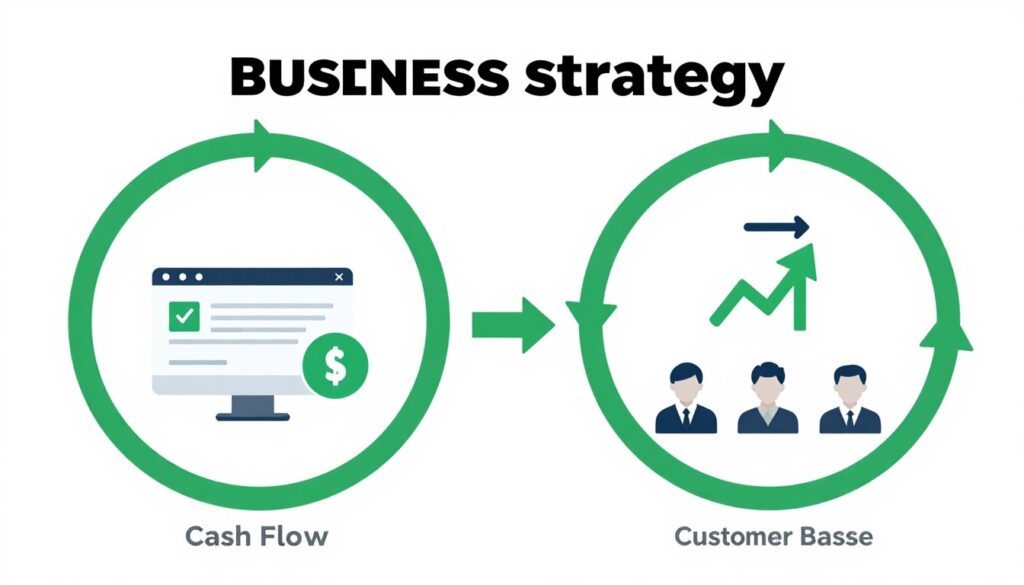
Why choose one model when you can leverage both strategically? The hybrid approach offers compelling advantages that neither model provides independently.
Strategy #1: Use Affiliate Income to Fund SaaS Development
Building a profitable affiliate site first creates the financial runway to develop SaaS products without external funding or financial stress.
The De-Risking Approach
Start with affiliate marketing to establish income, then gradually shift toward SaaS:
- Months 0-12: Build affiliate site in your area of expertise
- Months 12-24: Scale to $3,000-$8,000 monthly affiliate income
- Months 24-30: Identify SaaS opportunity based on audience needs
- Months 30-42: Use affiliate income to fund SaaS development
- Month 42+: Launch SaaS to existing audience with built-in distribution
This timeline removes the desperate pressure of burning savings while building an unproven product. Your affiliate income covers living expenses and development costs.
Built-In Market Validation
Your affiliate audience provides free market research. Their questions, pain points, and engagement patterns reveal product opportunities.
You’re not guessing what to build—you’re solving problems your audience explicitly expresses. This dramatically increases product-market fit probability.
Strategy #2: Leverage SaaS for Affiliate Site Authority
Running a SaaS product in your niche establishes unmatched expertise for affiliate content credibility.
When you operate project management software and write project management tool comparisons, readers trust your insights differently than generic affiliate reviewers.
This authority compounds over time:
- Higher search rankings due to perceived expertise
- Better conversion rates from authentic recommendations
- Easier link building as industry resource
- Speaking opportunities and partnerships that drive traffic
Strategy #3: Use Affiliate Sites as SaaS Marketing Channels
Affiliate content sites become owned distribution channels for your SaaS product without additional customer acquisition costs.
Rather than spending $500-$2,000 per customer on paid advertising, you acquire customers through content you already created. Your CAC drops dramatically while maintaining high-quality targeted traffic.
The economics become exceptional:
- Affiliate commissions from competitor products: $4,000/month
- SaaS customers acquired through owned content: 30 customers × $99/month = $2,970/month MRR
- Combined monthly revenue: $6,970
- Marketing costs: Minimal beyond content creation
Strategy #4: SaaS Partner Programs as Affiliate Income
If you build a SaaS product, creating your own affiliate program attracts marketers who promote your product for recurring commissions.
This flips the model—you become the merchant offering commissions rather than the affiliate earning them. You control commission rates, cookie durations, and program terms.
Successful SaaS affiliate programs become significant customer acquisition channels. Some SaaS companies generate 20-40% of new customers through partner referrals.
Real Implementation Example
Consider this specific hybrid sequence:
Year 1: Launch WordPress tutorial site, earn $2,000/month promoting hosting and themes through affiliate programs.
Year 2: Scale to $8,000/month through expanded content and email list of 10,000 subscribers.
Year 3: Identify specific pain point: WordPress site speed optimization. Use $50,000 from affiliate earnings to develop automated optimization plugin.
Year 4: Launch plugin as SaaS at $29/month. Convert 200 subscribers to paying customers ($5,800 MRR). Continue earning $8,000/month from affiliates.
Year 5: Scale SaaS to 600 customers ($17,400 MRR) plus maintain $10,000/month affiliate income. Total monthly revenue: $27,400.
The affiliate foundation funded development, provided distribution, and validated market demand—eliminating the three biggest SaaS failure risks.
Managing Two Business Models
The hybrid approach demands excellent time management and prioritization.
Recommended allocation once both are operational:
- SaaS product and support: 25-30 hours weekly
- Affiliate content creation: 10-15 hours weekly
- Marketing across both: 10-15 hours weekly
- Business operations: 5-10 hours weekly
This remains demanding but more sustainable than pure SaaS development while offering greater upside than pure affiliate marketing.
Infrastructure Requirements for Hybrid Model
Running both an affiliate content platform and a SaaS application requires robust hosting infrastructure that can handle different workload types.
Your affiliate site needs fast page loads for SEO and user experience. Your SaaS platform requires reliable uptime and scalable resources for customer applications.
Rather than managing separate hosting providers, consider unified hosting solutions that can support multiple projects efficiently. Whether you’re running WordPress for content plus a separate application, or hosting everything on scalable cloud infrastructure, choose platforms designed for growth.
Explore hosting options that support both content websites and application hosting needs as you build your hybrid business model.
When Hybrid Makes Most Sense
The hybrid approach fits specific circumstances:
- You have technical skills to eventually build SaaS but need income first
- You’re in a niche where you can identify specific software needs
- You want to validate SaaS ideas before full commitment
- You prefer diversified income streams over single-model risk
- You have time to manage both businesses (or funds to hire help)
Don’t pursue hybrid if you’re already overwhelmed with one model or if the businesses don’t have natural synergy.
Deep Dive: Affiliate Marketing Websites in 2026

Let’s examine exactly how affiliate marketing works in 2026, including best practices, niche selection, and monetization strategies.
How Affiliate Marketing Actually Works
The core mechanism remains straightforward despite platform complexity:
- Join affiliate programs for products you want to promote
- Receive unique tracking links for each product
- Create content that attracts people searching for solutions
- Embed your affiliate links within helpful content
- Earn commissions when visitors click links and purchase
The sophistication comes in execution, not concept. Success requires strategic niche selection, excellent content creation, and smart traffic generation.
Best Affiliate Marketing Niches in 2026
Not all niches offer equal opportunity. The most profitable categories share specific characteristics: high commission rates, recurring payments, and strong search demand.
SaaS and Software Tools
Software affiliate programs dominate profitability rankings due to recurring commission structures.
Top subcategories:
- Marketing automation platforms: 20-40% monthly recurring commissions
- Email marketing tools: 30-50% recurring on subscription value
- Project management software: 20-35% monthly commissions
- AI writing and content tools: 25-40% recurring
- Web hosting and website builders: $50-$200 per sale plus renewals
A single customer referred to a $99/month tool at 30% commission generates $29.70 monthly for as long as they subscribe—potentially years of income from one referral.
Financial Services and Investing
Credit cards, investment platforms, and banking products offer high one-time commissions:
- Credit card approvals: $100-$300 per approval
- Investment platform sign-ups: $50-$150 per funded account
- Business banking accounts: $200-$500 per approval
The challenge: intense competition and strict compliance requirements. This niche demands expertise and significant authority to rank competitively.
Health and Wellness
Supplements, fitness programs, and health products maintain consistent demand:
- Supplement sales: 10-20% per sale
- Fitness programs: 30-50% on digital courses
- Health tech devices: 5-15% per sale
Success requires careful compliance with health claims regulations and building trust through evidence-based recommendations.
Online Education and Courses
Digital education products offer generous commissions on high-value purchases:
- Online courses: 30-50% on purchases ranging from $200-$2,000
- Membership sites: 30-40% recurring monthly
- Certification programs: $200-$1,000 per enrollment
Commission Structure Types Explained
Understanding payment models helps select optimal programs:
One-Time Commissions
You earn once when a customer makes their first purchase. Common in physical products and some digital goods.
Advantages: Immediate payout, simpler tracking
Disadvantages: Must constantly acquire new customers to maintain income
Recurring Commissions
You earn every month (or billing period) that the customer remains subscribed. Standard in SaaS affiliate programs.
Advantages: Compound income growth, passive revenue stream, higher lifetime value per customer
Disadvantages: Customer churn reduces ongoing income, delayed full earning potential
Lifetime Commissions
Some programs pay you for all future purchases the customer makes, not just their first.
Advantages: Maximum long-term value, benefits from customer lifetime spending
Disadvantages: Rare program structure, often lower percentage rates
Hybrid Models
Combination of upfront bonus plus recurring payments. Example: $100 for initial sale plus 20% monthly recurring.
Advantages: Immediate cash flow plus long-term income
Disadvantages: Usually requires higher-value products
Traffic Strategies for Affiliate Sites in 2026
Generating qualified visitors determines your income ceiling. Multiple channels reduce dependency risk.
Organic Search (SEO)
Search engine optimization remains the primary traffic source for most affiliate marketers.
Key components:
- Comprehensive keyword research targeting commercial intent queries
- In-depth content that answers questions thoroughly
- Technical SEO optimization for crawling and indexing
- Quality backlink building through outreach and content promotion
- Regular content updates to maintain relevance
SEO delivers the highest-quality traffic with purchase intent but requires 6-12 months to gain traction.
Email Marketing
Building an email list creates owned traffic independent of search engines.
Effective strategies:
- Offer valuable lead magnets (guides, checklists, tools) for email sign-ups
- Segment subscribers based on interests and behavior
- Send regular valuable content mixed with promotional offers
- Maintain 80/20 ratio: 80% pure value, 20% affiliate promotions
Email converts at 2-5x higher rates than cold traffic and provides consistent revenue during SEO fluctuations.
Social Media and Community
Platform-specific audiences offer additional traffic sources:
- YouTube: Video reviews and tutorials with affiliate links in descriptions
- Pinterest: Visual content for product recommendations
- Reddit: Genuine participation in relevant subreddits (no spam)
- Facebook Groups: Build communities around your niche topic
Paid Advertising
Some affiliates profitably run paid campaigns once they’ve optimized conversions:
- Google Ads targeting high-intent keywords
- Facebook/Instagram ads for specific demographics
- Native advertising on relevant platforms
Caution: Many affiliate programs prohibit paid search advertising. Always check terms before spending money on ads.
Realistic ROI Statistics
Industry benchmarks for affiliate marketing return on investment:
- Businesses report earning $6.50-$15 for every $1 spent on affiliate marketing
- Top-performing affiliates achieve 300-500% ROI on content creation investment
- Recurring commission programs deliver 5-10x lifetime value versus one-time commissions
- Email marketing to existing subscribers converts at $42 per $1 spent (general marketing stat applicable to affiliates)
Your actual ROI depends heavily on niche selection, content quality, and traffic generation effectiveness.
Getting Started: First Steps
If you’re choosing affiliate marketing, begin with these practical actions:
- Select a niche where you have genuine interest or expertise
- Research 3-5 high-quality affiliate programs in that niche
- Set up WordPress website with reliable hosting infrastructure
- Create 10-15 foundational content pieces covering core topics
- Apply to affiliate programs once content demonstrates quality
- Implement email opt-in to begin building your list
- Publish consistently while learning SEO fundamentals
For detailed guidance on optimizing your WordPress site for affiliate marketing, review comprehensive SEO best practices that can significantly improve your rankings and conversions.
Deep Dive: SaaS Business Model in 2026
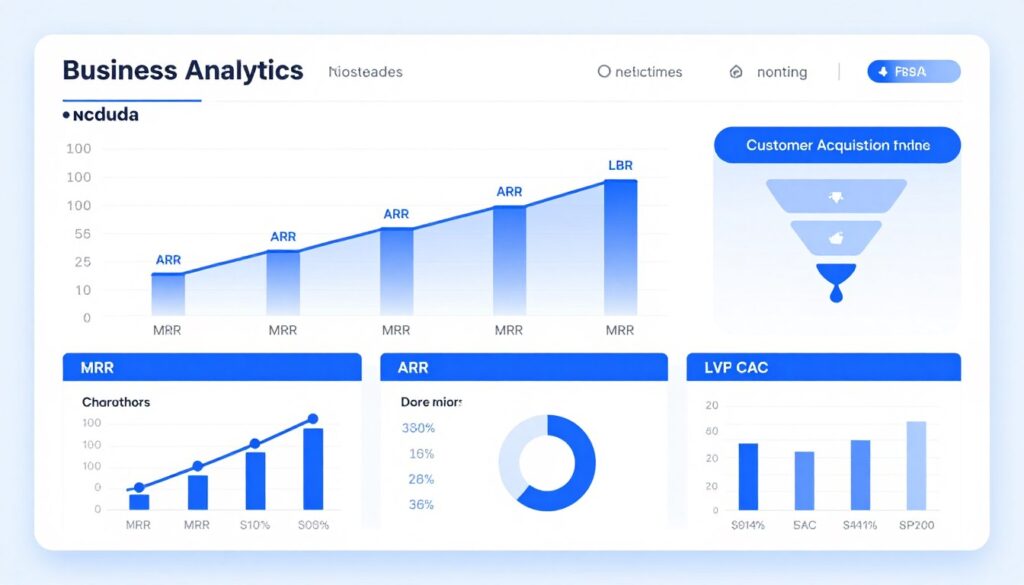
Let’s dissect the SaaS business model mechanics, from pricing strategies to critical metrics that determine success or failure.
Common SaaS Pricing Models
How you charge customers fundamentally impacts growth trajectory and target market.
Tiered Subscription Pricing
Most SaaS companies offer multiple pricing tiers with increasing feature access:
- Basic: $29-49/month with core features
- Professional: $99-199/month with advanced capabilities
- Enterprise: $499-999+/month with full feature set
This model allows customers to start small and upgrade as needs grow, maximizing customer lifetime value through expansion revenue.
Usage-Based Pricing
Charge customers based on consumption metrics like API calls, users, storage, or transactions.
Examples:
- Email marketing platforms charging per contact or emails sent
- Cloud storage services pricing per gigabyte stored
- Payment processors charging per transaction
Advantage: Aligns cost with value received, reduces barrier to entry
Disadvantage: Revenue becomes less predictable
Freemium Model
Offer limited functionality free permanently, charge for premium features or higher usage limits.
This approach drives user acquisition through zero-cost entry while converting a percentage to paid plans.
Successful freemium requires:
- Free tier valuable enough to attract users
- Clear upgrade path to paid features
- Conversion rate of 2-5% from free to paid
- Unit economics that work despite supporting many free users
Per-Seat Pricing
Charge based on the number of team members or user accounts.
Common in collaboration tools, project management software, and team communication platforms.
Advantage: Natural expansion revenue as teams grow
Disadvantage: May limit adoption in large organizations seeking unlimited seats
Critical SaaS Metrics Explained
Running a SaaS business requires obsessive focus on specific performance indicators.
Monthly Recurring Revenue (MRR)
The predictable revenue you expect to receive every month from active subscriptions.
Formula: Total number of customers × Average revenue per customer
Track MRR growth rate monthly. Healthy SaaS companies grow MRR by 10-20% monthly in early stages, stabilizing to 5-10% monthly as they mature.
Annual Recurring Revenue (ARR)
MRR multiplied by 12, representing annualized revenue run rate.
Investment and acquisition decisions use ARR as the primary valuation metric. SaaS companies typically sell for 8-12x ARR depending on growth rate and market position.
Customer Acquisition Cost (CAC)
The total cost to acquire a new paying customer, including marketing, sales, and overhead.
Formula: (Total marketing + sales expenses) ÷ Number of new customers acquired
Lower CAC enables faster growth. Optimize by improving conversion rates, reducing ad costs, or building organic acquisition channels.
Lifetime Value (LTV)
The total revenue you expect from a customer over their entire relationship with your product.
Formula: Average revenue per customer × Average customer lifespan in months
Example: $99/month × 24-month average retention = $2,376 LTV
LTV:CAC Ratio
The relationship between customer lifetime value and acquisition cost determines business viability.
- 3:1 or higher: Healthy, sustainable business
- 2:1 to 3:1: Marginal, needs optimization
- Below 2:1: Unsustainable unit economics
You’re losing money if you spend $500 acquiring a customer worth only $800 over their lifetime.
Churn Rate
The percentage of customers who cancel subscriptions each month.
Formula: (Customers lost in month ÷ Total customers at month start) × 100
Benchmarks:
- Consumer SaaS: 5-7% monthly churn acceptable
- Business SaaS: 2-3% monthly churn target
- Enterprise SaaS: Under 1% monthly churn expected
High churn creates a “leaky bucket” where you constantly replace lost customers rather than growing net customer base.
Net Revenue Retention (NRR)
Measures revenue retention from existing customers including expansions, upgrades, downgrades, and churn.
NRR above 100% means your existing customer base generates more revenue over time even without acquiring new customers—the holy grail of SaaS.
SaaS Growth Benchmarks for 2026
Understanding normal growth trajectories helps set realistic expectations:
| Stage | ARR Range | Typical MRR Growth Rate | Team Size |
| Pre-Product-Market Fit | $0-$100K | Highly variable | 1-3 people |
| Early Traction | $100K-$1M | 10-20% monthly | 3-10 people |
| Growth | $1M-$10M | 5-15% monthly | 10-50 people |
| Scale | $10M+ | 3-10% monthly | 50-500+ people |
Why Most SaaS Companies Fail
Understanding common failure modes helps you avoid them:
Insufficient Market Size
Building for too narrow a market limits revenue ceiling below viability threshold. Your total addressable market should support at minimum $10-50M potential revenue.
Poor Product-Market Fit
Creating solutions people don’t want badly enough to pay for. Symptoms include high churn, low conversion rates, and difficulty articulating clear value propositions.
Inadequate Funding/Runway
Running out of money before achieving sustainable growth. Most successful SaaS companies required more capital and time than initially projected.
Inability to Acquire Customers Profitably
Discovering that customer acquisition costs exceed customer lifetime value. This death spiral burns through capital without path to profitability.
Founder Conflict or Burnout
The intense pressure and long timeline to success causes team breakdowns or individual burnout leading to shutdown.
Building for Success: Critical Early Decisions
Several foundational choices significantly impact your probability of success:
Market Selection
Choose markets that are:
- Large enough to support meaningful revenue
- Growing rather than contracting
- Underserved by existing solutions
- Willing to pay for solutions (not expecting everything free)
Pricing Strategy
Price high enough to support healthy unit economics. Many SaaS founders underprice initially, making profitability impossible even with strong traction.
Distribution Channel
Identify your primary customer acquisition channel before building:
- Content marketing and SEO
- Paid advertising
- Sales team outreach
- Partner and affiliate programs
- Product-led growth
Technology Stack
Build on proven infrastructure that scales. Don’t reinvent fundamental components. Focus engineering effort on unique value propositions.
Whether you’re building a SaaS MVP or scaling to thousands of users, reliable cloud infrastructure and application hosting become critical operational requirements. Review cloud hosting options designed for SaaS applications that need to scale efficiently.
The Reality Check
SaaS offers extraordinary potential for founders who can navigate its challenges. But the path demands:
- Significant capital or technical ability to build cheaply
- Deep market understanding and customer empathy
- Resilience through inevitable setbacks and pivots
- Business acumen across product, marketing, and operations
- Timeline patience measured in years, not months
If you possess these characteristics and resources, SaaS provides one of the most rewarding entrepreneurial paths available.
Final Verdict & Recommendations: Which Model Should You Choose?

After examining every angle, let’s deliver clear recommendations based on your specific situation.
Overall Winner Determination
No single model “wins” universally. The optimal choice depends entirely on individual circumstances, goals, and resources.
However, we can identify clear winners for specific scenarios:
For Accessibility and Risk Management: Affiliate Marketing Wins
If your primary concerns are:
- Minimizing financial risk
- Starting with limited capital ($500-$3,000)
- Building while employed full-time
- Achieving genuine passive income
- Avoiding technical complexity
Affiliate marketing provides the most sensible path. You can launch quickly, learn incrementally, and achieve positive cash flow within 6-12 months without catastrophic downside risk.
For Maximum Upside Potential: SaaS Wins
If your priorities include:
- Building maximum enterprise value
- Creating exponential revenue potential
- Pursuing investor funding and exits
- Building a team and company culture
- Tolerating high risk for high reward
SaaS offers unmatched upside for founders with technical skills, business acumen, and sufficient capital or fundraising ability. The 10% who succeed build life-changing wealth.
Scenario-Based Recommendations
Let’s get specific about which model fits different founder profiles:
Scenario #1: Full-Time Employee Seeking Side Income
Situation: You work 40-50 hours weekly at your job and have 15-20 hours for a side project. Budget: $1,000-$3,000 to invest.
Recommendation: Affiliate marketing
Reasoning: You can’t commit to SaaS’s demanding timeline while employed. Affiliate marketing fits weekend and evening work while building an asset that could eventually replace your job.
Begin with thorough niche research. Choose topics you understand well. Publish consistently while learning SEO fundamentals.
Scenario #2: Technical Founder with 12-Month Runway
Situation: You’re a software developer with coding skills and $60,000 saved for a year of full-time entrepreneurship.
Recommendation: SaaS with affiliate content as distribution
Reasoning: Your technical skills eliminate the largest SaaS expense (development). Your runway provides sufficient time to achieve product-market fit if you move efficiently.
Build content marketing into your launch strategy. Create educational content about your target problem space, embedding affiliate links to current solutions. This generates income during development while building your audience.
Scenario #3: Non-Technical Founder with Limited Budget
Situation: You have business skills but can’t code. Budget: $5,000 available for business investment.
Recommendation: Affiliate marketing initially, potentially SaaS later
Reasoning: $5,000 won’t fund SaaS development with hiring. Your path should start with affiliate marketing to build income, audience, and expertise.
As affiliate revenue grows, you gain options: continue scaling affiliate business, use profits to fund SaaS development, or build credibility to raise funding for SaaS if you identify the right opportunity.
Scenario #4: Experienced Marketer with Industry Expertise
Situation: You’ve worked in a specific industry for 5+ years and understand customer problems deeply. Moderate budget: $20,000-40,000 available.
Recommendation: SaaS targeting your industry vertical
Reasoning: Your industry knowledge dramatically improves your odds of achieving product-market fit. You can validate ideas through industry connections before building.
Partner with a technical co-founder rather than hiring contractors. Your domain expertise plus their technical execution creates a balanced founding team.
Scenario #5: Recent Graduate with Time but No Capital
Situation: Fresh out of college with minimal savings but abundant time and energy. Budget: Under $500.
Recommendation: Affiliate marketing while developing skills
Reasoning: You lack capital for SaaS but have time to invest in building an affiliate business. This generates income while developing valuable skills (content marketing, SEO, conversion optimization) that position you for future opportunities.
Consider this an education investment. The skills you develop have market value beyond your affiliate site.
The Decision Framework
Use these questions to guide your choice:
Choose Affiliate Marketing If:
- Your available budget is under $10,000
- You want passive income with minimal ongoing time
- You prefer low-risk ventures
- You enjoy content creation and writing
- You’re building while employed elsewhere
- You want quick path to profitability (12-18 months)
- You lack technical development skills
- You’re comfortable with income ceiling of $50-200K monthly
Choose SaaS If:
- You have $50,000+ capital or can raise funding
- You accept high risk for exponential upside potential
- You have technical skills or co-founder who does
- You can commit full-time for 2-3+ years
- You want to build a team and company
- You’re targeting $1M+ annual revenue potential
- You have identified specific market problem through experience
- You tolerate 90% failure probability for 10x outcome if successful
The Hybrid Sweet Spot
For many founders, the optimal path combines both models sequentially or simultaneously:
Path 1: Affiliate → SaaS (De-risked approach)
- Build affiliate income to $5-10K monthly
- Use cash flow to fund SaaS development
- Leverage affiliate audience for SaaS distribution
- Maintain affiliate income as backup revenue
Path 2: SaaS with Affiliate Content Marketing
- Build educational content in your SaaS niche
- Monetize with competitor affiliate programs
- Generate income during product development
- Convert content audience to SaaS customers at launch
Action Items Based on Your Choice
If You Choose Affiliate Marketing:
- Select your niche based on interest, expertise, and commission potential
- Set up WordPress website on reliable hosting infrastructure
- Research 5-10 high-quality affiliate programs to join
- Create content calendar for first 20 articles
- Learn SEO fundamentals through free resources
- Publish first 10 articles before applying to affiliate programs
- Implement email opt-in to begin building your list
- Commit to 6-month consistent publishing schedule
If You Choose SaaS:
- Validate market demand through customer research
- Define your MVP feature set ruthlessly (minimum viable, not perfect)
- Secure funding or allocate personal capital with clear runway
- Find technical co-founder if you can’t code
- Build landing page and start collecting early interest
- Develop MVP in 3-6 months maximum
- Launch to first 10-50 beta customers for feedback
- Iterate rapidly based on actual user behavior
Your Foundation Starts with Reliable Hosting
Whether you choose affiliate marketing, SaaS, or a hybrid approach, your digital infrastructure determines your success. Don’t let slow hosting or downtime limit your growth potential.
Get started with code AFFILIATE2026 for affiliate sites or SAAS2026 for SaaS platforms. Fast NVMe storage, 99.9% uptime, and scalable resources as you grow.
Step-by-Step Guide: How to Start Each Model in 2026
Abstract recommendations mean nothing without practical implementation guidance. Here are concrete step-by-step processes for launching each business model.
Launching Your Affiliate Marketing Website
Phase 1: Foundation (Weeks 1-2)
Step 1: Choose Your Niche
Select a topic intersection of your knowledge, your interest, and market demand. Validate with keyword research tools showing search volume for relevant terms.
Step 2: Purchase Domain and Hosting
Choose a brandable domain name (avoid exact-match keyword domains). Select reliable WordPress hosting optimized for speed and performance.
Step 3: Install WordPress and Essential Plugins
Set up WordPress with these essential plugins:
- SEO plugin (Rank Math or Yoast)
- Caching plugin for speed
- Security plugin
- Analytics tracking
- Email opt-in forms
Step 4: Choose Professional Theme
Select a fast-loading, mobile-responsive theme designed for content-heavy sites. GeneratePress, Astra, or Kadence offer excellent free options.
Phase 2: Content Foundation (Weeks 3-8)
Step 5: Conduct Comprehensive Keyword Research
Identify 50-100 keywords your target audience searches for. Mix informational and commercial intent queries. Focus on keywords with realistic ranking potential for new sites.
Step 6: Create Content Calendar
Plan your first 20-30 articles across:
- Product reviews and comparisons (40%)
- How-to guides and tutorials (40%)
- Industry news and opinion pieces (20%)
Step 7: Write and Publish Initial Content
Create 10-15 comprehensive articles before applying to affiliate programs. This demonstrates quality to program managers and builds foundation for SEO.
Target 2,000-3,000 words per article for competitive topics. Use AI writing tools to accelerate creation but add personal insights and testing experience.
Step 8: Implement Email Collection
Add opt-in forms offering valuable lead magnets (checklists, guides, templates) in exchange for email addresses.
Phase 3: Monetization Setup (Weeks 9-12)
Step 9: Apply to Affiliate Programs
Join 5-10 relevant programs:
- Direct merchant programs for products you’ll promote
- Affiliate networks like ShareASale, CJ Affiliate, Impact
- Niche-specific programs with best commission rates
Step 10: Add Affiliate Links to Content
Integrate affiliate links naturally within existing content. Use link management plugins to organize and track links efficiently.
Step 11: Create Cornerstone Content
Develop 3-5 comprehensive resources that target high-value keywords and serve as link-worthy assets.
Phase 4: Growth and Optimization (Months 4-12)
Step 12: Consistent Publishing Schedule
Maintain regular content creation—minimum 2-4 articles weekly for competitive niches.
Step 13: Build Backlinks
Pursue quality backlinks through:
- Guest posting on relevant blogs
- Creating link-worthy original research or data
- Broken link building outreach
- Resource page link building
Step 14: Optimize Conversions
Test different affiliate link placements, call-to-action copy, and comparison table formats to maximize click-through rates.
Step 15: Diversify Traffic Sources
Reduce Google dependency by building:
- Email list to 1,000+ subscribers
- Social media presence
- YouTube channel if appropriate
- Paid traffic campaigns for high-converting content
Launching Your SaaS Business
Phase 1: Validation (Months 1-3)
Step 1: Identify Specific Problem
Define the exact problem you’re solving for whom. Be specific—”help small businesses” is too broad; “help 5-20 person marketing agencies automate client reporting” is specific.
Step 2: Research Market and Competition
Analyze existing solutions. Identify their strengths and weaknesses. Find underserved segments or use cases.
Step 3: Validate Demand
Before building anything, confirm people will pay:
- Interview 20-50 potential customers about their pain points
- Create landing page describing your solution
- Drive traffic to gauge interest and collect emails
- Attempt to pre-sell to validate payment willingness
Step 4: Define Your MVP
List every feature you want. Then ruthlessly cut to absolute minimum needed to solve the core problem. Your MVP should be embarrassingly simple.
Phase 2: Development (Months 3-9)
Step 5: Choose Technology Stack
Select proven technologies you or your team know well. Don’t experiment with cutting-edge frameworks on your first SaaS.
Step 6: Build MVP
Develop the minimum feature set as quickly as possible. Target 3-6 month timeline maximum. Perfect is the enemy of launched.
Step 7: Set Up Infrastructure
Implement:
- Reliable cloud hosting with scalability
- Payment processing (Stripe recommended)
- Analytics and error tracking
- Customer support system
- Basic marketing website
Phase 3: Launch and Iteration (Months 9-18)
Step 8: Beta Launch to Early Adopters
Release to first 10-50 customers who provided feedback during validation. Offer discounted pricing for early adopters who tolerate bugs and missing features.
Step 9: Gather Intensive Feedback
Talk to every early customer extensively. Watch them use your product. Understand where they struggle.
Step 10: Iterate Rapidly
Ship improvements weekly based on actual user behavior, not your assumptions about what they need.
Step 11: Achieve Product-Market Fit
You know you have product-market fit when:
- Customers actively use your product regularly
- Churn rate drops below 5% monthly
- Customers refer others organically
- You struggle to keep up with demand
Phase 4: Growth (Months 18+)
Step 12: Scale Customer Acquisition
Double down on channels that work:
- Content marketing if your SEO drives signups
- Paid advertising if unit economics allow
- Sales team if deal sizes justify
- Partner program if affiliates convert well
Step 13: Optimize Pricing and Packaging
Test higher prices. Add premium tiers. Implement usage-based elements. Most SaaS companies underprice initially.
Step 14: Reduce Churn
Implement:
- Improved onboarding to drive activation
- Customer success outreach for at-risk accounts
- Feature development based on churn feedback
- Failed payment recovery systems
Step 15: Build Sustainable Business
Transition from growth-at-all-costs to sustainable unit economics. Achieve profitability or clear path to profitability within 24-36 months.
Common Mistakes to Avoid
Affiliate Marketing Mistakes:
- Choosing overly competitive niches without unique angles
- Creating thin content just for affiliate commissions
- Putting all traffic eggs in SEO basket without diversification
- Promoting products you haven’t personally tested
- Neglecting email list building from day one
- Giving up before 12-month mark when most see traction
SaaS Mistakes:
- Building for months without customer validation
- Underestimating capital requirements by 50-100%
- Pricing too low to achieve sustainable economics
- Focusing on features instead of customer outcomes
- Neglecting sales and marketing until product is “perfect”
- Trying to serve everyone instead of specific segment
- Burning capital on paid acquisition before optimizing conversion
Frequently Asked Questions About Affiliate Marketing vs SaaS in 2026
Can affiliate marketing still make money in 2026 with increased competition?
Yes, affiliate marketing remains profitable in 2026, but success requires strategic niche selection and quality content that demonstrates genuine expertise.
The key is avoiding saturated broad niches and instead targeting specific micro-niches or building strong personal brand authority. Successful affiliates combine AI efficiency with real testing experience and unique insights that generic content cannot replicate.
Recurring commission SaaS affiliate programs offer particularly strong earning potential with compound income growth from each customer referred.
Is the SaaS market too saturated to launch new products successfully?
While many SaaS categories have multiple competitors, opportunities exist for focused vertical solutions and AI-first approaches to existing problems.
Success requires extreme niche focus rather than building generic horizontal tools. Target specific industries, use cases, or underserved segments that larger competitors ignore.
The best opportunities in 2026 involve building AI-native products that solve problems differently than traditional SaaS solutions.
How long until I can expect profitability in each model?
Affiliate marketing typically reaches profitability within 6-12 months of consistent effort. Most affiliates see first meaningful revenue (0+ monthly) around month 6-9, scaling to ,000-5,000 monthly by month 12-18.
SaaS businesses require 18-36 months to profitability on average. Initial revenue usually appears within 6-12 months, but positive cash flow takes much longer due to development costs, customer acquisition expenses, and infrastructure investments.
Which model requires more technical skills?
SaaS demands significantly more technical expertise. You need software development skills to build the product, or substantial capital to hire developers.
Affiliate marketing requires only basic WordPress management and SEO understanding—both learnable through free online resources within weeks. No coding knowledge necessary for successful affiliate businesses.
Can I run both an affiliate site and SaaS business simultaneously?
Yes, and this hybrid approach offers strategic advantages. Many successful entrepreneurs use affiliate sites to fund SaaS development, build audiences for product launches, and create owned distribution channels.
However, managing both demands excellent time management. Plan for 50-70 hours weekly to effectively operate both models simultaneously. Alternatively, build affiliate income first, then use it to fund SaaS development sequentially.
What are realistic first-year earnings for each model?
Affiliate marketing realistic first-year range:
Frequently Asked Questions About Affiliate Marketing vs SaaS in 2026
Can affiliate marketing still make money in 2026 with increased competition?
Yes, affiliate marketing remains profitable in 2026, but success requires strategic niche selection and quality content that demonstrates genuine expertise.
The key is avoiding saturated broad niches and instead targeting specific micro-niches or building strong personal brand authority. Successful affiliates combine AI efficiency with real testing experience and unique insights that generic content cannot replicate.
Recurring commission SaaS affiliate programs offer particularly strong earning potential with compound income growth from each customer referred.
Is the SaaS market too saturated to launch new products successfully?
While many SaaS categories have multiple competitors, opportunities exist for focused vertical solutions and AI-first approaches to existing problems.
Success requires extreme niche focus rather than building generic horizontal tools. Target specific industries, use cases, or underserved segments that larger competitors ignore.
The best opportunities in 2026 involve building AI-native products that solve problems differently than traditional SaaS solutions.
How long until I can expect profitability in each model?
Affiliate marketing typically reaches profitability within 6-12 months of consistent effort. Most affiliates see first meaningful revenue ($500+ monthly) around month 6-9, scaling to $2,000-5,000 monthly by month 12-18.
SaaS businesses require 18-36 months to profitability on average. Initial revenue usually appears within 6-12 months, but positive cash flow takes much longer due to development costs, customer acquisition expenses, and infrastructure investments.
Which model requires more technical skills?
SaaS demands significantly more technical expertise. You need software development skills to build the product, or substantial capital to hire developers.
Affiliate marketing requires only basic WordPress management and SEO understanding—both learnable through free online resources within weeks. No coding knowledge necessary for successful affiliate businesses.
Can I run both an affiliate site and SaaS business simultaneously?
Yes, and this hybrid approach offers strategic advantages. Many successful entrepreneurs use affiliate sites to fund SaaS development, build audiences for product launches, and create owned distribution channels.
However, managing both demands excellent time management. Plan for 50-70 hours weekly to effectively operate both models simultaneously. Alternatively, build affiliate income first, then use it to fund SaaS development sequentially.
What are realistic first-year earnings for each model?
Affiliate marketing realistic first-year range: $0-$8,000 monthly by month 12. Median successful affiliate earns $2,000-4,000 monthly after one year of consistent work.
SaaS realistic first-year range: $0-$10,000 MRR by month 12, though many remain pre-revenue. The distribution is extremely wide—some reach $50,000 MRR within a year, while most generate under $2,000 monthly.
Which model has better work-life balance?
Affiliate marketing offers superior work-life balance, especially once established. You can build affiliate sites part-time while employed and achieve genuine passive income where the business operates with minimal weekly attention.
SaaS businesses demand full-time commitment with 60-80 hour weeks being standard. Customer support, product development, and business operations create continuous demands on your time. True passive income isn’t achievable with SaaS.
How much capital do I need to start each business model?
Affiliate marketing: $300-$3,500 covers everything needed—domain, hosting, theme, basic tools, and initial content if outsourced. Many successful affiliates start with under $500 total investment.
SaaS business: $50,000-$250,000 represents realistic range depending on complexity and whether you’re technical. Even bootstrapped solo technical founders should budget $30,000-50,000 minimum for tools, infrastructure, and runway.
What’s the failure rate for each model?
Affiliate marketing: Approximately 60-70% of affiliate marketers never reach $1,000 monthly income. However, failure carries minimal financial consequence—you lose time and modest investment but don’t accumulate debt.
SaaS businesses: 90% fail completely, often after consuming $50,000-$500,000 in capital. Failure is more consequential both financially and personally given the time and resources invested.
Can AI tools replace the need for expertise in affiliate marketing?
No. AI accelerates content creation but cannot replace genuine expertise and personal experience. Search engines have become highly sophisticated at detecting AI-generated content lacking original insights.
Successful affiliate marketing in 2026 requires combining AI efficiency with real product testing, unique perspectives, and demonstrable expertise. Pure AI content without human expertise increasingly fails to rank or convert.
Which model is better for passive income?
Affiliate marketing delivers genuinely passive income once established. Sites can generate $5,000-$20,000 monthly with 5-10 hours of monthly maintenance.
SaaS provides recurring revenue but not passive income. You must continuously support customers, fix bugs, and develop features. The business demands ongoing active management even at maturity.
What happens if Google changes its algorithm and I lose traffic?
Algorithm updates can significantly impact affiliate sites dependent solely on organic search traffic. This risk requires mitigation through traffic diversification.
Build email lists, social media audiences, YouTube channels, and paid advertising funnels. Sites with multiple traffic sources weather algorithm changes far better than those dependent only on SEO.
Is it possible to sell an affiliate website or SaaS business?
Both models create sellable assets. Affiliate sites typically sell for 30-40x monthly profit. A site earning $5,000 monthly profit might sell for $150,000-$200,000.
SaaS businesses sell for 8-12x Annual Recurring Revenue. A company with $1M ARR might sell for $8-12M depending on growth rate, churn, and market position. Exit values are substantially higher for SaaS but require years to build.
Do I need a team for either business model?
Affiliate marketing can be run entirely solo. Many six-figure affiliate marketers operate alone, outsourcing content creation as needed but handling strategy and optimization personally.
SaaS businesses typically require teams as they scale. Solo technical founders can build MVPs alone, but growth usually requires hiring developers, customer support, sales, and marketing personnel.
Which model is better for complete beginners with no experience?
Affiliate marketing is significantly more beginner-friendly. The learning curve is gentle, mistakes cost little, and you can start with minimal skills while learning through practice.
SaaS requires extensive knowledge across product development, business operations, and marketing. The steep learning curve, high capital requirements, and severe consequences of mistakes make it poorly suited for complete beginners.
How do recurring commissions in affiliate marketing compare to SaaS subscription revenue?
Recurring affiliate commissions from SaaS programs create similar income patterns to owning a SaaS business but without operational burden. You earn 20-70% of customer subscription value monthly for their lifetime.
The key difference: as an affiliate, you don’t control commission rates or terms. The merchant can change or eliminate programs. SaaS owners control all business terms but shoulder all operational responsibility.
What role does content marketing play in each business model?
Content marketing is the primary business model for affiliates. Your content attracts traffic, builds authority, and converts visitors into affiliate sales.
For SaaS businesses, content marketing serves as one customer acquisition channel among many (paid ads, sales teams, partnerships). However, it’s often the most cost-effective long-term acquisition strategy.
Can I start with affiliate marketing and transition to SaaS later?
Absolutely. This sequential hybrid approach is actually one of the smartest paths. Build affiliate income for financial stability, develop industry expertise, grow an audience, then use all three advantages to launch a SaaS product with dramatically higher success probability.
Many successful SaaS founders followed exactly this pattern, using affiliate income to fund development and their audience for distribution.
What ongoing costs should I expect in each model?
Affiliate marketing ongoing costs: $100-$500 monthly for established sites (hosting, tools, email marketing, occasional content outsourcing).
SaaS ongoing costs: $2,000-$20,000+ monthly depending on scale (cloud hosting, employee salaries, marketing spend, software tools, support systems). Costs scale with revenue but remain substantial even at maturity.
How important is niche selection in affiliate marketing versus SaaS?
Critical in both models but for different reasons. Affiliate marketing niche selection determines competition level, commission rates, and traffic potential. Wrong choice makes success nearly impossible.
SaaS niche selection determines market size, customer acquisition costs, and competitive intensity. Choosing too broad or too narrow a market creates insurmountable challenges regardless of execution quality.
-,000 monthly by month 12. Median successful affiliate earns ,000-4,000 monthly after one year of consistent work.
SaaS realistic first-year range:
Frequently Asked Questions About Affiliate Marketing vs SaaS in 2026
Can affiliate marketing still make money in 2026 with increased competition?
Yes, affiliate marketing remains profitable in 2026, but success requires strategic niche selection and quality content that demonstrates genuine expertise.
The key is avoiding saturated broad niches and instead targeting specific micro-niches or building strong personal brand authority. Successful affiliates combine AI efficiency with real testing experience and unique insights that generic content cannot replicate.
Recurring commission SaaS affiliate programs offer particularly strong earning potential with compound income growth from each customer referred.
Is the SaaS market too saturated to launch new products successfully?
While many SaaS categories have multiple competitors, opportunities exist for focused vertical solutions and AI-first approaches to existing problems.
Success requires extreme niche focus rather than building generic horizontal tools. Target specific industries, use cases, or underserved segments that larger competitors ignore.
The best opportunities in 2026 involve building AI-native products that solve problems differently than traditional SaaS solutions.
How long until I can expect profitability in each model?
Affiliate marketing typically reaches profitability within 6-12 months of consistent effort. Most affiliates see first meaningful revenue ($500+ monthly) around month 6-9, scaling to $2,000-5,000 monthly by month 12-18.
SaaS businesses require 18-36 months to profitability on average. Initial revenue usually appears within 6-12 months, but positive cash flow takes much longer due to development costs, customer acquisition expenses, and infrastructure investments.
Which model requires more technical skills?
SaaS demands significantly more technical expertise. You need software development skills to build the product, or substantial capital to hire developers.
Affiliate marketing requires only basic WordPress management and SEO understanding—both learnable through free online resources within weeks. No coding knowledge necessary for successful affiliate businesses.
Can I run both an affiliate site and SaaS business simultaneously?
Yes, and this hybrid approach offers strategic advantages. Many successful entrepreneurs use affiliate sites to fund SaaS development, build audiences for product launches, and create owned distribution channels.
However, managing both demands excellent time management. Plan for 50-70 hours weekly to effectively operate both models simultaneously. Alternatively, build affiliate income first, then use it to fund SaaS development sequentially.
What are realistic first-year earnings for each model?
Affiliate marketing realistic first-year range: $0-$8,000 monthly by month 12. Median successful affiliate earns $2,000-4,000 monthly after one year of consistent work.
SaaS realistic first-year range: $0-$10,000 MRR by month 12, though many remain pre-revenue. The distribution is extremely wide—some reach $50,000 MRR within a year, while most generate under $2,000 monthly.
Which model has better work-life balance?
Affiliate marketing offers superior work-life balance, especially once established. You can build affiliate sites part-time while employed and achieve genuine passive income where the business operates with minimal weekly attention.
SaaS businesses demand full-time commitment with 60-80 hour weeks being standard. Customer support, product development, and business operations create continuous demands on your time. True passive income isn’t achievable with SaaS.
How much capital do I need to start each business model?
Affiliate marketing: $300-$3,500 covers everything needed—domain, hosting, theme, basic tools, and initial content if outsourced. Many successful affiliates start with under $500 total investment.
SaaS business: $50,000-$250,000 represents realistic range depending on complexity and whether you’re technical. Even bootstrapped solo technical founders should budget $30,000-50,000 minimum for tools, infrastructure, and runway.
What’s the failure rate for each model?
Affiliate marketing: Approximately 60-70% of affiliate marketers never reach $1,000 monthly income. However, failure carries minimal financial consequence—you lose time and modest investment but don’t accumulate debt.
SaaS businesses: 90% fail completely, often after consuming $50,000-$500,000 in capital. Failure is more consequential both financially and personally given the time and resources invested.
Can AI tools replace the need for expertise in affiliate marketing?
No. AI accelerates content creation but cannot replace genuine expertise and personal experience. Search engines have become highly sophisticated at detecting AI-generated content lacking original insights.
Successful affiliate marketing in 2026 requires combining AI efficiency with real product testing, unique perspectives, and demonstrable expertise. Pure AI content without human expertise increasingly fails to rank or convert.
Which model is better for passive income?
Affiliate marketing delivers genuinely passive income once established. Sites can generate $5,000-$20,000 monthly with 5-10 hours of monthly maintenance.
SaaS provides recurring revenue but not passive income. You must continuously support customers, fix bugs, and develop features. The business demands ongoing active management even at maturity.
What happens if Google changes its algorithm and I lose traffic?
Algorithm updates can significantly impact affiliate sites dependent solely on organic search traffic. This risk requires mitigation through traffic diversification.
Build email lists, social media audiences, YouTube channels, and paid advertising funnels. Sites with multiple traffic sources weather algorithm changes far better than those dependent only on SEO.
Is it possible to sell an affiliate website or SaaS business?
Both models create sellable assets. Affiliate sites typically sell for 30-40x monthly profit. A site earning $5,000 monthly profit might sell for $150,000-$200,000.
SaaS businesses sell for 8-12x Annual Recurring Revenue. A company with $1M ARR might sell for $8-12M depending on growth rate, churn, and market position. Exit values are substantially higher for SaaS but require years to build.
Do I need a team for either business model?
Affiliate marketing can be run entirely solo. Many six-figure affiliate marketers operate alone, outsourcing content creation as needed but handling strategy and optimization personally.
SaaS businesses typically require teams as they scale. Solo technical founders can build MVPs alone, but growth usually requires hiring developers, customer support, sales, and marketing personnel.
Which model is better for complete beginners with no experience?
Affiliate marketing is significantly more beginner-friendly. The learning curve is gentle, mistakes cost little, and you can start with minimal skills while learning through practice.
SaaS requires extensive knowledge across product development, business operations, and marketing. The steep learning curve, high capital requirements, and severe consequences of mistakes make it poorly suited for complete beginners.
How do recurring commissions in affiliate marketing compare to SaaS subscription revenue?
Recurring affiliate commissions from SaaS programs create similar income patterns to owning a SaaS business but without operational burden. You earn 20-70% of customer subscription value monthly for their lifetime.
The key difference: as an affiliate, you don’t control commission rates or terms. The merchant can change or eliminate programs. SaaS owners control all business terms but shoulder all operational responsibility.
What role does content marketing play in each business model?
Content marketing is the primary business model for affiliates. Your content attracts traffic, builds authority, and converts visitors into affiliate sales.
For SaaS businesses, content marketing serves as one customer acquisition channel among many (paid ads, sales teams, partnerships). However, it’s often the most cost-effective long-term acquisition strategy.
Can I start with affiliate marketing and transition to SaaS later?
Absolutely. This sequential hybrid approach is actually one of the smartest paths. Build affiliate income for financial stability, develop industry expertise, grow an audience, then use all three advantages to launch a SaaS product with dramatically higher success probability.
Many successful SaaS founders followed exactly this pattern, using affiliate income to fund development and their audience for distribution.
What ongoing costs should I expect in each model?
Affiliate marketing ongoing costs: $100-$500 monthly for established sites (hosting, tools, email marketing, occasional content outsourcing).
SaaS ongoing costs: $2,000-$20,000+ monthly depending on scale (cloud hosting, employee salaries, marketing spend, software tools, support systems). Costs scale with revenue but remain substantial even at maturity.
How important is niche selection in affiliate marketing versus SaaS?
Critical in both models but for different reasons. Affiliate marketing niche selection determines competition level, commission rates, and traffic potential. Wrong choice makes success nearly impossible.
SaaS niche selection determines market size, customer acquisition costs, and competitive intensity. Choosing too broad or too narrow a market creates insurmountable challenges regardless of execution quality.
-,000 MRR by month 12, though many remain pre-revenue. The distribution is extremely wide—some reach ,000 MRR within a year, while most generate under ,000 monthly.
Which model has better work-life balance?
Affiliate marketing offers superior work-life balance, especially once established. You can build affiliate sites part-time while employed and achieve genuine passive income where the business operates with minimal weekly attention.
SaaS businesses demand full-time commitment with 60-80 hour weeks being standard. Customer support, product development, and business operations create continuous demands on your time. True passive income isn’t achievable with SaaS.
How much capital do I need to start each business model?
Affiliate marketing: 0-,500 covers everything needed—domain, hosting, theme, basic tools, and initial content if outsourced. Many successful affiliates start with under 0 total investment.
SaaS business: ,000-0,000 represents realistic range depending on complexity and whether you’re technical. Even bootstrapped solo technical founders should budget ,000-50,000 minimum for tools, infrastructure, and runway.
What’s the failure rate for each model?
Affiliate marketing: Approximately 60-70% of affiliate marketers never reach
Frequently Asked Questions About Affiliate Marketing vs SaaS in 2026
Can affiliate marketing still make money in 2026 with increased competition?
Yes, affiliate marketing remains profitable in 2026, but success requires strategic niche selection and quality content that demonstrates genuine expertise.
The key is avoiding saturated broad niches and instead targeting specific micro-niches or building strong personal brand authority. Successful affiliates combine AI efficiency with real testing experience and unique insights that generic content cannot replicate.
Recurring commission SaaS affiliate programs offer particularly strong earning potential with compound income growth from each customer referred.
Is the SaaS market too saturated to launch new products successfully?
While many SaaS categories have multiple competitors, opportunities exist for focused vertical solutions and AI-first approaches to existing problems.
Success requires extreme niche focus rather than building generic horizontal tools. Target specific industries, use cases, or underserved segments that larger competitors ignore.
The best opportunities in 2026 involve building AI-native products that solve problems differently than traditional SaaS solutions.
How long until I can expect profitability in each model?
Affiliate marketing typically reaches profitability within 6-12 months of consistent effort. Most affiliates see first meaningful revenue ($500+ monthly) around month 6-9, scaling to $2,000-5,000 monthly by month 12-18.
SaaS businesses require 18-36 months to profitability on average. Initial revenue usually appears within 6-12 months, but positive cash flow takes much longer due to development costs, customer acquisition expenses, and infrastructure investments.
Which model requires more technical skills?
SaaS demands significantly more technical expertise. You need software development skills to build the product, or substantial capital to hire developers.
Affiliate marketing requires only basic WordPress management and SEO understanding—both learnable through free online resources within weeks. No coding knowledge necessary for successful affiliate businesses.
Can I run both an affiliate site and SaaS business simultaneously?
Yes, and this hybrid approach offers strategic advantages. Many successful entrepreneurs use affiliate sites to fund SaaS development, build audiences for product launches, and create owned distribution channels.
However, managing both demands excellent time management. Plan for 50-70 hours weekly to effectively operate both models simultaneously. Alternatively, build affiliate income first, then use it to fund SaaS development sequentially.
What are realistic first-year earnings for each model?
Affiliate marketing realistic first-year range: $0-$8,000 monthly by month 12. Median successful affiliate earns $2,000-4,000 monthly after one year of consistent work.
SaaS realistic first-year range: $0-$10,000 MRR by month 12, though many remain pre-revenue. The distribution is extremely wide—some reach $50,000 MRR within a year, while most generate under $2,000 monthly.
Which model has better work-life balance?
Affiliate marketing offers superior work-life balance, especially once established. You can build affiliate sites part-time while employed and achieve genuine passive income where the business operates with minimal weekly attention.
SaaS businesses demand full-time commitment with 60-80 hour weeks being standard. Customer support, product development, and business operations create continuous demands on your time. True passive income isn’t achievable with SaaS.
How much capital do I need to start each business model?
Affiliate marketing: $300-$3,500 covers everything needed—domain, hosting, theme, basic tools, and initial content if outsourced. Many successful affiliates start with under $500 total investment.
SaaS business: $50,000-$250,000 represents realistic range depending on complexity and whether you’re technical. Even bootstrapped solo technical founders should budget $30,000-50,000 minimum for tools, infrastructure, and runway.
What’s the failure rate for each model?
Affiliate marketing: Approximately 60-70% of affiliate marketers never reach $1,000 monthly income. However, failure carries minimal financial consequence—you lose time and modest investment but don’t accumulate debt.
SaaS businesses: 90% fail completely, often after consuming $50,000-$500,000 in capital. Failure is more consequential both financially and personally given the time and resources invested.
Can AI tools replace the need for expertise in affiliate marketing?
No. AI accelerates content creation but cannot replace genuine expertise and personal experience. Search engines have become highly sophisticated at detecting AI-generated content lacking original insights.
Successful affiliate marketing in 2026 requires combining AI efficiency with real product testing, unique perspectives, and demonstrable expertise. Pure AI content without human expertise increasingly fails to rank or convert.
Which model is better for passive income?
Affiliate marketing delivers genuinely passive income once established. Sites can generate $5,000-$20,000 monthly with 5-10 hours of monthly maintenance.
SaaS provides recurring revenue but not passive income. You must continuously support customers, fix bugs, and develop features. The business demands ongoing active management even at maturity.
What happens if Google changes its algorithm and I lose traffic?
Algorithm updates can significantly impact affiliate sites dependent solely on organic search traffic. This risk requires mitigation through traffic diversification.
Build email lists, social media audiences, YouTube channels, and paid advertising funnels. Sites with multiple traffic sources weather algorithm changes far better than those dependent only on SEO.
Is it possible to sell an affiliate website or SaaS business?
Both models create sellable assets. Affiliate sites typically sell for 30-40x monthly profit. A site earning $5,000 monthly profit might sell for $150,000-$200,000.
SaaS businesses sell for 8-12x Annual Recurring Revenue. A company with $1M ARR might sell for $8-12M depending on growth rate, churn, and market position. Exit values are substantially higher for SaaS but require years to build.
Do I need a team for either business model?
Affiliate marketing can be run entirely solo. Many six-figure affiliate marketers operate alone, outsourcing content creation as needed but handling strategy and optimization personally.
SaaS businesses typically require teams as they scale. Solo technical founders can build MVPs alone, but growth usually requires hiring developers, customer support, sales, and marketing personnel.
Which model is better for complete beginners with no experience?
Affiliate marketing is significantly more beginner-friendly. The learning curve is gentle, mistakes cost little, and you can start with minimal skills while learning through practice.
SaaS requires extensive knowledge across product development, business operations, and marketing. The steep learning curve, high capital requirements, and severe consequences of mistakes make it poorly suited for complete beginners.
How do recurring commissions in affiliate marketing compare to SaaS subscription revenue?
Recurring affiliate commissions from SaaS programs create similar income patterns to owning a SaaS business but without operational burden. You earn 20-70% of customer subscription value monthly for their lifetime.
The key difference: as an affiliate, you don’t control commission rates or terms. The merchant can change or eliminate programs. SaaS owners control all business terms but shoulder all operational responsibility.
What role does content marketing play in each business model?
Content marketing is the primary business model for affiliates. Your content attracts traffic, builds authority, and converts visitors into affiliate sales.
For SaaS businesses, content marketing serves as one customer acquisition channel among many (paid ads, sales teams, partnerships). However, it’s often the most cost-effective long-term acquisition strategy.
Can I start with affiliate marketing and transition to SaaS later?
Absolutely. This sequential hybrid approach is actually one of the smartest paths. Build affiliate income for financial stability, develop industry expertise, grow an audience, then use all three advantages to launch a SaaS product with dramatically higher success probability.
Many successful SaaS founders followed exactly this pattern, using affiliate income to fund development and their audience for distribution.
What ongoing costs should I expect in each model?
Affiliate marketing ongoing costs: $100-$500 monthly for established sites (hosting, tools, email marketing, occasional content outsourcing).
SaaS ongoing costs: $2,000-$20,000+ monthly depending on scale (cloud hosting, employee salaries, marketing spend, software tools, support systems). Costs scale with revenue but remain substantial even at maturity.
How important is niche selection in affiliate marketing versus SaaS?
Critical in both models but for different reasons. Affiliate marketing niche selection determines competition level, commission rates, and traffic potential. Wrong choice makes success nearly impossible.
SaaS niche selection determines market size, customer acquisition costs, and competitive intensity. Choosing too broad or too narrow a market creates insurmountable challenges regardless of execution quality.
,000 monthly income. However, failure carries minimal financial consequence—you lose time and modest investment but don’t accumulate debt.
SaaS businesses: 90% fail completely, often after consuming ,000-0,000 in capital. Failure is more consequential both financially and personally given the time and resources invested.
Can AI tools replace the need for expertise in affiliate marketing?
No. AI accelerates content creation but cannot replace genuine expertise and personal experience. Search engines have become highly sophisticated at detecting AI-generated content lacking original insights.
Successful affiliate marketing in 2026 requires combining AI efficiency with real product testing, unique perspectives, and demonstrable expertise. Pure AI content without human expertise increasingly fails to rank or convert.
Which model is better for passive income?
Affiliate marketing delivers genuinely passive income once established. Sites can generate ,000-,000 monthly with 5-10 hours of monthly maintenance.
SaaS provides recurring revenue but not passive income. You must continuously support customers, fix bugs, and develop features. The business demands ongoing active management even at maturity.
What happens if Google changes its algorithm and I lose traffic?
Algorithm updates can significantly impact affiliate sites dependent solely on organic search traffic. This risk requires mitigation through traffic diversification.
Build email lists, social media audiences, YouTube channels, and paid advertising funnels. Sites with multiple traffic sources weather algorithm changes far better than those dependent only on SEO.
Is it possible to sell an affiliate website or SaaS business?
Both models create sellable assets. Affiliate sites typically sell for 30-40x monthly profit. A site earning ,000 monthly profit might sell for 0,000-0,000.
SaaS businesses sell for 8-12x Annual Recurring Revenue. A company with
Frequently Asked Questions About Affiliate Marketing vs SaaS in 2026
Can affiliate marketing still make money in 2026 with increased competition?
Yes, affiliate marketing remains profitable in 2026, but success requires strategic niche selection and quality content that demonstrates genuine expertise.
The key is avoiding saturated broad niches and instead targeting specific micro-niches or building strong personal brand authority. Successful affiliates combine AI efficiency with real testing experience and unique insights that generic content cannot replicate.
Recurring commission SaaS affiliate programs offer particularly strong earning potential with compound income growth from each customer referred.
Is the SaaS market too saturated to launch new products successfully?
While many SaaS categories have multiple competitors, opportunities exist for focused vertical solutions and AI-first approaches to existing problems.
Success requires extreme niche focus rather than building generic horizontal tools. Target specific industries, use cases, or underserved segments that larger competitors ignore.
The best opportunities in 2026 involve building AI-native products that solve problems differently than traditional SaaS solutions.
How long until I can expect profitability in each model?
Affiliate marketing typically reaches profitability within 6-12 months of consistent effort. Most affiliates see first meaningful revenue ($500+ monthly) around month 6-9, scaling to $2,000-5,000 monthly by month 12-18.
SaaS businesses require 18-36 months to profitability on average. Initial revenue usually appears within 6-12 months, but positive cash flow takes much longer due to development costs, customer acquisition expenses, and infrastructure investments.
Which model requires more technical skills?
SaaS demands significantly more technical expertise. You need software development skills to build the product, or substantial capital to hire developers.
Affiliate marketing requires only basic WordPress management and SEO understanding—both learnable through free online resources within weeks. No coding knowledge necessary for successful affiliate businesses.
Can I run both an affiliate site and SaaS business simultaneously?
Yes, and this hybrid approach offers strategic advantages. Many successful entrepreneurs use affiliate sites to fund SaaS development, build audiences for product launches, and create owned distribution channels.
However, managing both demands excellent time management. Plan for 50-70 hours weekly to effectively operate both models simultaneously. Alternatively, build affiliate income first, then use it to fund SaaS development sequentially.
What are realistic first-year earnings for each model?
Affiliate marketing realistic first-year range: $0-$8,000 monthly by month 12. Median successful affiliate earns $2,000-4,000 monthly after one year of consistent work.
SaaS realistic first-year range: $0-$10,000 MRR by month 12, though many remain pre-revenue. The distribution is extremely wide—some reach $50,000 MRR within a year, while most generate under $2,000 monthly.
Which model has better work-life balance?
Affiliate marketing offers superior work-life balance, especially once established. You can build affiliate sites part-time while employed and achieve genuine passive income where the business operates with minimal weekly attention.
SaaS businesses demand full-time commitment with 60-80 hour weeks being standard. Customer support, product development, and business operations create continuous demands on your time. True passive income isn’t achievable with SaaS.
How much capital do I need to start each business model?
Affiliate marketing: $300-$3,500 covers everything needed—domain, hosting, theme, basic tools, and initial content if outsourced. Many successful affiliates start with under $500 total investment.
SaaS business: $50,000-$250,000 represents realistic range depending on complexity and whether you’re technical. Even bootstrapped solo technical founders should budget $30,000-50,000 minimum for tools, infrastructure, and runway.
What’s the failure rate for each model?
Affiliate marketing: Approximately 60-70% of affiliate marketers never reach $1,000 monthly income. However, failure carries minimal financial consequence—you lose time and modest investment but don’t accumulate debt.
SaaS businesses: 90% fail completely, often after consuming $50,000-$500,000 in capital. Failure is more consequential both financially and personally given the time and resources invested.
Can AI tools replace the need for expertise in affiliate marketing?
No. AI accelerates content creation but cannot replace genuine expertise and personal experience. Search engines have become highly sophisticated at detecting AI-generated content lacking original insights.
Successful affiliate marketing in 2026 requires combining AI efficiency with real product testing, unique perspectives, and demonstrable expertise. Pure AI content without human expertise increasingly fails to rank or convert.
Which model is better for passive income?
Affiliate marketing delivers genuinely passive income once established. Sites can generate $5,000-$20,000 monthly with 5-10 hours of monthly maintenance.
SaaS provides recurring revenue but not passive income. You must continuously support customers, fix bugs, and develop features. The business demands ongoing active management even at maturity.
What happens if Google changes its algorithm and I lose traffic?
Algorithm updates can significantly impact affiliate sites dependent solely on organic search traffic. This risk requires mitigation through traffic diversification.
Build email lists, social media audiences, YouTube channels, and paid advertising funnels. Sites with multiple traffic sources weather algorithm changes far better than those dependent only on SEO.
Is it possible to sell an affiliate website or SaaS business?
Both models create sellable assets. Affiliate sites typically sell for 30-40x monthly profit. A site earning $5,000 monthly profit might sell for $150,000-$200,000.
SaaS businesses sell for 8-12x Annual Recurring Revenue. A company with $1M ARR might sell for $8-12M depending on growth rate, churn, and market position. Exit values are substantially higher for SaaS but require years to build.
Do I need a team for either business model?
Affiliate marketing can be run entirely solo. Many six-figure affiliate marketers operate alone, outsourcing content creation as needed but handling strategy and optimization personally.
SaaS businesses typically require teams as they scale. Solo technical founders can build MVPs alone, but growth usually requires hiring developers, customer support, sales, and marketing personnel.
Which model is better for complete beginners with no experience?
Affiliate marketing is significantly more beginner-friendly. The learning curve is gentle, mistakes cost little, and you can start with minimal skills while learning through practice.
SaaS requires extensive knowledge across product development, business operations, and marketing. The steep learning curve, high capital requirements, and severe consequences of mistakes make it poorly suited for complete beginners.
How do recurring commissions in affiliate marketing compare to SaaS subscription revenue?
Recurring affiliate commissions from SaaS programs create similar income patterns to owning a SaaS business but without operational burden. You earn 20-70% of customer subscription value monthly for their lifetime.
The key difference: as an affiliate, you don’t control commission rates or terms. The merchant can change or eliminate programs. SaaS owners control all business terms but shoulder all operational responsibility.
What role does content marketing play in each business model?
Content marketing is the primary business model for affiliates. Your content attracts traffic, builds authority, and converts visitors into affiliate sales.
For SaaS businesses, content marketing serves as one customer acquisition channel among many (paid ads, sales teams, partnerships). However, it’s often the most cost-effective long-term acquisition strategy.
Can I start with affiliate marketing and transition to SaaS later?
Absolutely. This sequential hybrid approach is actually one of the smartest paths. Build affiliate income for financial stability, develop industry expertise, grow an audience, then use all three advantages to launch a SaaS product with dramatically higher success probability.
Many successful SaaS founders followed exactly this pattern, using affiliate income to fund development and their audience for distribution.
What ongoing costs should I expect in each model?
Affiliate marketing ongoing costs: $100-$500 monthly for established sites (hosting, tools, email marketing, occasional content outsourcing).
SaaS ongoing costs: $2,000-$20,000+ monthly depending on scale (cloud hosting, employee salaries, marketing spend, software tools, support systems). Costs scale with revenue but remain substantial even at maturity.
How important is niche selection in affiliate marketing versus SaaS?
Critical in both models but for different reasons. Affiliate marketing niche selection determines competition level, commission rates, and traffic potential. Wrong choice makes success nearly impossible.
SaaS niche selection determines market size, customer acquisition costs, and competitive intensity. Choosing too broad or too narrow a market creates insurmountable challenges regardless of execution quality.
M ARR might sell for -12M depending on growth rate, churn, and market position. Exit values are substantially higher for SaaS but require years to build.
Do I need a team for either business model?
Affiliate marketing can be run entirely solo. Many six-figure affiliate marketers operate alone, outsourcing content creation as needed but handling strategy and optimization personally.
SaaS businesses typically require teams as they scale. Solo technical founders can build MVPs alone, but growth usually requires hiring developers, customer support, sales, and marketing personnel.
Which model is better for complete beginners with no experience?
Affiliate marketing is significantly more beginner-friendly. The learning curve is gentle, mistakes cost little, and you can start with minimal skills while learning through practice.
SaaS requires extensive knowledge across product development, business operations, and marketing. The steep learning curve, high capital requirements, and severe consequences of mistakes make it poorly suited for complete beginners.
How do recurring commissions in affiliate marketing compare to SaaS subscription revenue?
Recurring affiliate commissions from SaaS programs create similar income patterns to owning a SaaS business but without operational burden. You earn 20-70% of customer subscription value monthly for their lifetime.
The key difference: as an affiliate, you don’t control commission rates or terms. The merchant can change or eliminate programs. SaaS owners control all business terms but shoulder all operational responsibility.
What role does content marketing play in each business model?
Content marketing is the primary business model for affiliates. Your content attracts traffic, builds authority, and converts visitors into affiliate sales.
For SaaS businesses, content marketing serves as one customer acquisition channel among many (paid ads, sales teams, partnerships). However, it’s often the most cost-effective long-term acquisition strategy.
Can I start with affiliate marketing and transition to SaaS later?
Absolutely. This sequential hybrid approach is actually one of the smartest paths. Build affiliate income for financial stability, develop industry expertise, grow an audience, then use all three advantages to launch a SaaS product with dramatically higher success probability.
Many successful SaaS founders followed exactly this pattern, using affiliate income to fund development and their audience for distribution.
What ongoing costs should I expect in each model?
Affiliate marketing ongoing costs: 0-0 monthly for established sites (hosting, tools, email marketing, occasional content outsourcing).
SaaS ongoing costs: ,000-,000+ monthly depending on scale (cloud hosting, employee salaries, marketing spend, software tools, support systems). Costs scale with revenue but remain substantial even at maturity.
How important is niche selection in affiliate marketing versus SaaS?
Critical in both models but for different reasons. Affiliate marketing niche selection determines competition level, commission rates, and traffic potential. Wrong choice makes success nearly impossible.
SaaS niche selection determines market size, customer acquisition costs, and competitive intensity. Choosing too broad or too narrow a market creates insurmountable challenges regardless of execution quality.
Conclusion: Making Your Decision and Taking Action

We’ve examined every angle of the affiliate marketing versus SaaS debate. The truth is simple: no universal winner exists.
Your optimal path depends entirely on your unique combination of capital, skills, risk tolerance, time availability, and goals.
The Clear Patterns
Affiliate marketing offers the most accessible entry point to online business. With minimal investment, you can build genuine passive income while maintaining employment security. The risk remains low while delivering meaningful supplemental or full-time income for those who persist through the initial 6-12 month building phase.
SaaS provides exponentially higher ceilings for founders willing to accept extreme risk. The 10% who succeed build life-changing wealth and sellable companies worth millions. However, the 90% who fail often lose substantial capital and years of effort.
Your Next Steps
Stop researching and start building. Choose the model aligned with your situation using the scenario frameworks provided earlier.
If you’re still uncertain, default to affiliate marketing. You can always transition to SaaS later using the hybrid approach once you’ve built income and expertise.
The Foundation for Either Path
Regardless of which model you choose, reliable infrastructure forms your foundation. Slow websites lose rankings and customers. Downtime destroys credibility and revenue.
Whether you’re building an affiliate content empire or launching the next breakthrough SaaS platform, your hosting infrastructure determines how effectively you can execute your vision.
Don’t compromise on the technical foundation that supports everything you’ll build.
Launch Your Business on Infrastructure Built for Growth
Stop planning and start building. Choose NVMe-powered hosting that delivers the speed, reliability, and scalability your business deserves. Whether you’re creating your first affiliate site or launching your SaaS MVP, get the infrastructure that supports your ambition.
Special 2026 launch pricing available. Use code AFFILIATE2026 for affiliate projects or SAAS2026 for SaaS applications. 99.9% uptime guarantee. 24/7 expert support. Scale effortlessly as your income grows.
Your journey to online business success starts with a single decision. Make it today.
Both affiliate marketing and SaaS have created thousands of successful entrepreneurs in 2026. You can become one of them—but only if you take action.
The perfect plan executed imperfectly beats the perfect plan never started. Choose your model, set up your foundation, and begin building.
Your future income is waiting on the other side of your decision to start.