

Turning your website into a revenue-generating platform requires choosing the right monetization strategies. With countless options available, entrepreneurs and website owners face a critical decision that impacts their income potential and user experience.
The path to generating income online depends on understanding four primary website monetization models. Each approach offers unique advantages and challenges that align differently with various business types and audience needs.
This comprehensive guide examines display advertising, affiliate marketing, SaaS products, and e-commerce models. You’ll discover how each strategy works, their revenue potential, and which model fits your specific situation best.
Table of Contents:
Find Your Perfect Monetization Match
Take our free 2-minute assessment to discover which monetization model aligns best with your website, audience, and goals. Get personalized recommendations instantly.
Understanding Website Monetization Models
Website monetization represents the process of converting web traffic into revenue streams. Successful monetization balances earning potential with maintaining quality user experience and audience trust.
Different models serve different purposes based on website type, traffic volume, and audience characteristics. Understanding these fundamentals helps business owners make informed decisions about their monetization strategy.
What Makes a Monetization Model Effective
Effective monetization strategies share common characteristics that drive success. They align with audience needs while supporting business growth objectives through sustainable revenue generation.
Audience Alignment
The model must match your visitors’ expectations and behaviors. Misaligned strategies damage user experience and reduce engagement over time.
- Understanding visitor intent and needs
- Matching monetization to content value
- Respecting audience trust and preferences
- Maintaining authentic relationships with users
Scalability Potential
Your chosen model should grow with your business without proportional increases in effort. Scalability determines long-term revenue potential and sustainability.
- Revenue growth without linear effort increases
- Automation opportunities for efficiency
- Market expansion possibilities
- Technology leverage for scale
Implementation Resources
Consider the time, money, and technical skills required to launch and maintain each model. Resource requirements vary significantly across monetization approaches.
- Initial setup costs and complexity
- Ongoing maintenance requirements
- Technical expertise needed
- Time investment for optimization
Revenue Predictability
Some models offer more stable income while others fluctuate based on market conditions and seasonality. Predictability impacts financial planning and business stability.
- Income consistency and reliability
- Seasonal variation impacts
- Market dependency factors
- Control over revenue levers
Key Metrics for Monetization Success
Tracking the right metrics helps optimize your monetization strategy over time. These performance indicators reveal what works and where improvements can generate better results.
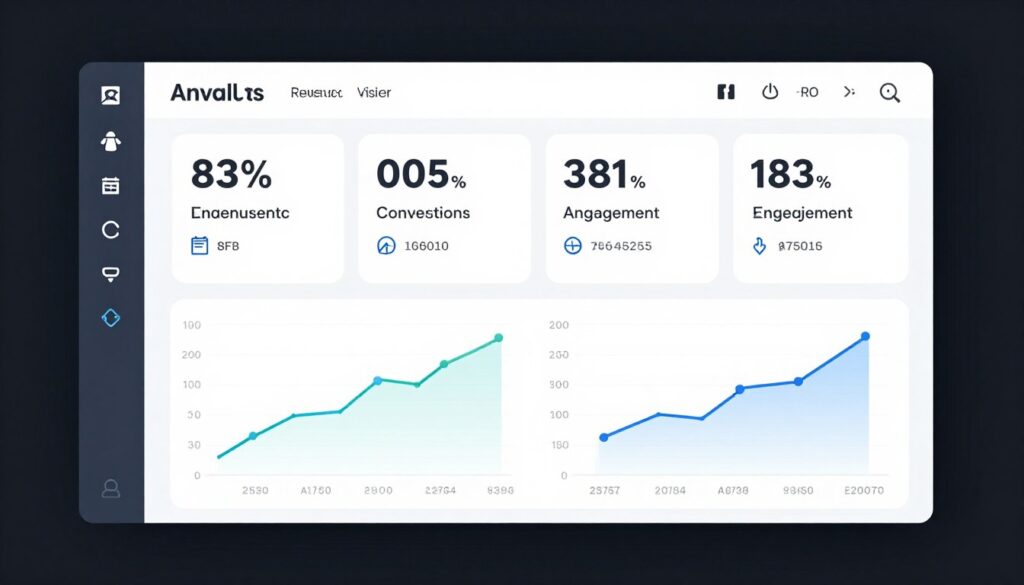
| Metric | What It Measures | Why It Matters | Target Range |
| Revenue Per Visitor (RPV) | Average income generated per site visitor | Indicates overall monetization efficiency | $0.01 – $0.50+ |
| Conversion Rate | Percentage of visitors taking desired action | Shows effectiveness of monetization funnel | 2% – 5%+ |
| Customer Lifetime Value (CLV) | Total revenue expected from customer relationship | Guides customer acquisition spending | Varies by model |
| Engagement Rate | User interaction depth and frequency | Correlates with monetization opportunities | 40% – 70%+ |
| Churn Rate | Customer or subscriber loss rate | Impacts recurring revenue stability | Below 5% monthly |
Display Advertising: The Traditional Revenue Model
Display advertising represents the most accessible monetization strategy for new website owners. This model generates income by showing ads to visitors, earning revenue through impressions or clicks.
Platforms like Google AdSense, Media.net, and Ezoic connect publishers with advertisers automatically. The technology handles ad placement, targeting, and payment processing without requiring direct advertiser relationships.
How Display Advertising Works
Ad networks serve as intermediaries between website owners and advertisers. They analyze your content and audience to display relevant ads that maximize revenue while maintaining user experience.
Revenue generation happens through two primary models. Cost-per-impression (CPM) pays based on ad views, while cost-per-click (CPC) compensates when visitors click advertisements. Most platforms use dynamic combinations of both.
Important: Ad revenue depends heavily on traffic volume, niche profitability, and audience geography. High-value niches like finance and technology command higher ad rates than general entertainment content.
Advantages and Disadvantages
Advantages
- Extremely simple implementation process requiring minimal technical skills
- No product creation or inventory management needed
- Passive income generation from existing traffic
- Works with virtually any content type or niche
- Automated optimization through machine learning algorithms
- No customer service requirements or support obligations
- Multiple ad network options for testing and optimization
Disadvantages
- Requires substantial traffic volume for meaningful income
- Potentially negative impact on user experience and engagement
- Ad blocker software reduces revenue potential significantly
- Limited control over which ads appear on your site
- Revenue fluctuates based on advertiser demand and seasonality
- Lower earning potential compared to other monetization models
- Dependence on third-party platforms and their policies
Revenue Potential and Scalability
Display advertising typically generates between $1 and $20 per thousand pageviews (RPM) depending on niche and audience quality. Finance, legal, and B2B technology niches command premium rates while entertainment and lifestyle content earns less.
Scaling ad revenue requires increasing traffic volume significantly. A website needs approximately 50,000 monthly visitors to generate $500-1,000 in monthly ad revenue at average rates.
Best Practices for Display Advertising Success
Optimizing ad performance requires strategic placement and continuous testing. Balance revenue generation with user experience to maintain audience engagement and return visits.
- Place ads in high-visibility areas without disrupting content flow or readability
- Test different ad formats and placements to identify optimal configurations
- Monitor user engagement metrics to ensure ads don’t damage experience
- Focus on creating quality content that attracts valuable, engaged audiences
- Implement responsive ad units that work across all device types
- Comply with ad network policies to avoid account suspension
- Consider premium ad networks once traffic reaches qualification thresholds
- Use heat mapping tools to understand user attention patterns
Google AdSense
The most popular ad network offering easy setup and reliable payments. Best for beginners with straightforward implementation and broad advertiser demand.
- Minimum traffic: Low entry requirements
- Payment threshold: $100
- Ad formats: Display, text, video, native
- Approval difficulty: Moderate
Ezoic
AI-powered platform that optimizes ad placements automatically. Requires 10,000+ monthly visits but typically doubles ad revenue through machine learning.
- Minimum traffic: 10,000 monthly sessions
- Payment threshold: $20
- Ad formats: All formats with AI testing
- Approval difficulty: Moderate to high
Mediavine
Premium ad network requiring 50,000+ monthly sessions. Offers exceptional support, high CPMs, and exclusive advertiser relationships for qualified publishers.
- Minimum traffic: 50,000 monthly sessions
- Payment threshold: $25
- Ad formats: Premium display and video
- Approval difficulty: High
Affiliate Marketing: Commission-Based Monetization
Affiliate marketing enables website owners to earn commissions by promoting other companies’ products or services. This performance-based model rewards publishers for driving sales or specific actions through their content and recommendations.
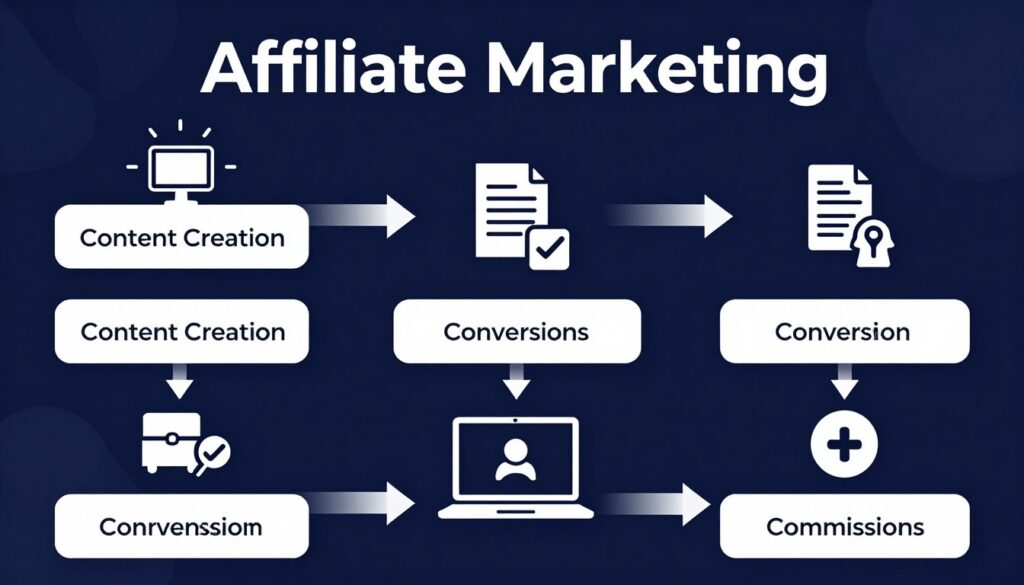
Publishers join affiliate programs, receive unique tracking links, and earn money when visitors complete purchases or desired actions. The model requires no product creation, inventory management, or customer service responsibilities.
How Affiliate Marketing Generates Revenue
Affiliate programs compensate publishers through various commission structures. Pay-per-sale offers percentage-based commissions on purchases, while pay-per-lead rewards generating qualified leads or sign-ups regardless of immediate purchases.
Commission rates vary dramatically by industry and product type. Digital products often pay 30-50% commissions, while physical goods typically offer 1-10%. High-ticket items like software subscriptions or financial services can generate hundreds of dollars per conversion.
Popular Affiliate Networks
Affiliate networks aggregate thousands of programs into single platforms. They simplify management by providing unified dashboards, consolidated payments, and standardized tracking across multiple merchant partnerships.
- Amazon Associates – Broad product selection, low commissions (1-10%)
- ShareASale – Mid-market focus, diverse merchant categories
- ClickBank – Digital products, high commission rates (50%+)
- CJ Affiliate – Enterprise brands, established merchants
- Impact – Growing network, technology-focused merchants
- Awin – International reach, European market strength
Advantages and Disadvantages
Advantages
- Higher earning potential per visitor compared to display ads
- No product development, inventory, or fulfillment requirements
- Flexible promotion of multiple products and services simultaneously
- Builds trust through authentic recommendations and reviews
- Works well with existing content marketing strategies
- Scalable income through content library expansion
- Passive income from evergreen content over time
Disadvantages
- Requires audience trust and credibility development
- Success depends on product selection and merchant reliability
- Commission structures can change without notice
- Competitive niches make differentiation challenging
- Earnings depend on merchant conversion rates beyond your control
- Cookie duration limits attribution windows
- FTC disclosure requirements add compliance obligations
Revenue Potential and Implementation
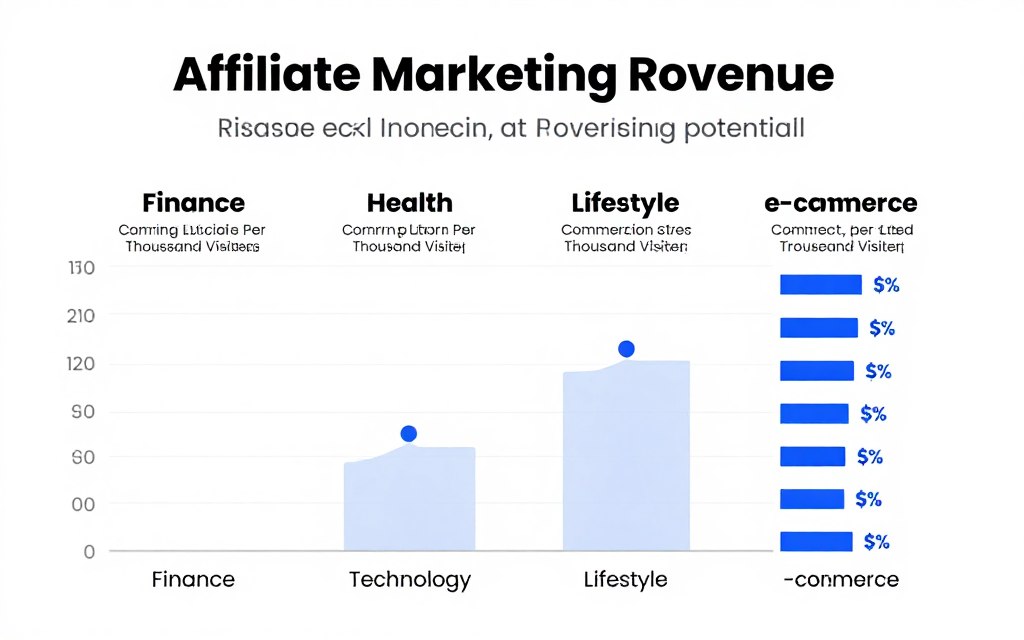
Affiliate marketing revenue potential exceeds display advertising significantly. Well-optimized affiliate sites generate $10-100+ per thousand visitors depending on niche selection, audience quality, and product alignment.
Implementation complexity sits between display ads and product creation. Success requires understanding your audience deeply, selecting appropriate products, and creating compelling content that drives conversions naturally without appearing overly promotional.
Pro Tip: Focus on promoting products you genuinely use and recommend. Authenticity converts better than generic sales pitches, and it builds long-term audience trust that compounds over time.
Strategic Approaches for Affiliate Success
Successful affiliate marketers focus on serving their audience first and monetization second. This approach builds authority and trust that translates into higher conversion rates and sustainable income growth.
- Choose products aligned with audience needs and interests – Survey your readers, analyze their questions, and identify genuine problems your recommendations can solve effectively.
- Create comprehensive comparison and review content – Detailed analysis helps readers make informed decisions while naturally incorporating affiliate links in valuable contexts.
- Disclose affiliate relationships transparently – Clear disclosures build trust and comply with regulations while maintaining credibility with your audience.
- Test products before recommending them – First-hand experience enables authentic reviews and detailed insights that generic promotion cannot match.
- Optimize for buyer-intent keywords – Target search terms indicating purchase readiness rather than just informational queries for higher conversion rates.
- Build email lists to nurture relationships – Direct communication channels enable ongoing recommendations and increase lifetime value from each audience member.
- Track performance across products and platforms – Data-driven optimization identifies top performers and eliminates underperforming partnerships efficiently.
SaaS Model: Software as a Service Revenue
The SaaS monetization model involves creating and selling software products through subscription-based access. This approach represents the highest revenue potential but requires significant upfront investment in product development and ongoing maintenance.
SaaS products solve specific problems for targeted user segments through web-based applications. Customers pay recurring fees for continued access, creating predictable revenue streams and high customer lifetime value compared to one-time purchases.
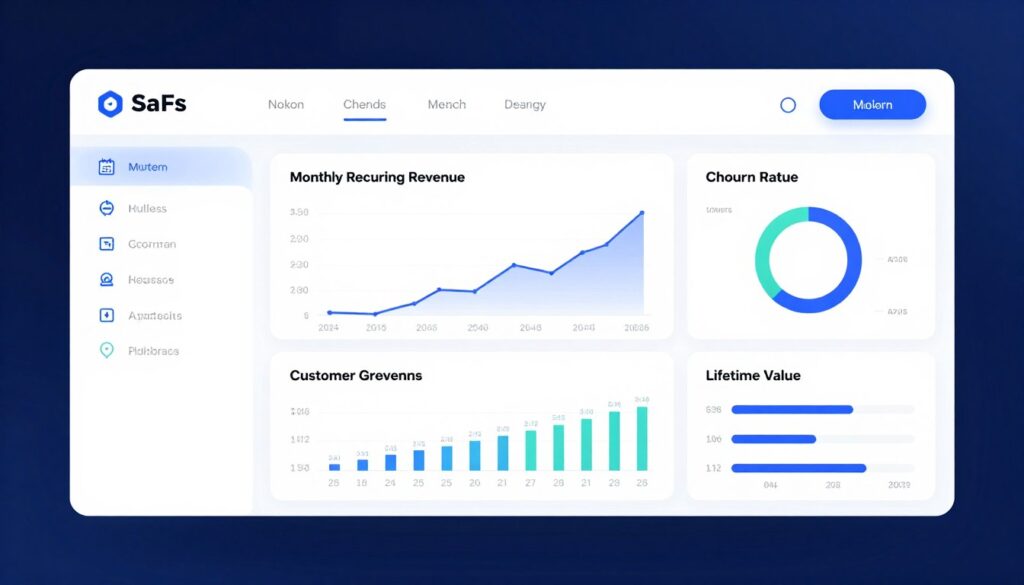
How SaaS Monetization Works
SaaS companies generate revenue through tiered subscription plans offering different feature sets and usage limits. Common pricing structures include per-user pricing, usage-based billing, or flat-rate access with feature restrictions across tiers.
The subscription model creates recurring revenue that compounds over time as customer base expands. Annual plans often offer discounts while securing longer commitment periods and improving cash flow predictability for business planning.
- Low entry price to reduce friction
- Core features for individual users
- Limited usage or seats included
- Self-service onboarding process
- Community-based support only
- Designed for acquisition and trial
Starter Tier Strategy
- Primary revenue driver for most SaaS
- Advanced features and integrations
- Higher usage limits and seats
- Email support with faster response
- Targeting small business segment
- Best value positioning for conversions
Professional Tier Strategy
- Custom pricing and negotiations
- Unlimited or very high limits
- Premium features and customization
- Dedicated account management
- Priority support and training
- Highest lifetime value customers
Enterprise Tier Strategy
Advantages and Disadvantages
Advantages
- Recurring revenue creates predictable income and business value
- High profit margins once development costs are recovered
- Scalability with minimal incremental costs per customer
- Direct customer relationships enable feedback loops
- Compounding growth as customer base expands
- High customer lifetime value justifies acquisition costs
- Continuous improvement opportunities based on usage data
Disadvantages
- Significant upfront development and infrastructure investment
- Technical expertise required for building and maintaining product
- Ongoing customer support and success obligations
- Churn management critical for sustainable growth
- Competitive markets require continuous innovation
- Security and compliance responsibilities increase complexity
- Longer path to profitability compared to other models
Revenue Potential and Growth Trajectory
SaaS businesses often follow a J-curve revenue pattern with initial losses during development and customer acquisition phases. Profitability emerges as recurring revenue compounds and customer acquisition costs are amortized across lifetime value.
Successful SaaS companies achieve 80-90% gross margins once product-market fit is established. Average revenue per account ranges from $50-500 monthly for SMB-focused products to thousands monthly for enterprise solutions.
Essential Elements for SaaS Success
Building a successful SaaS business requires more than great software. Product-market fit, customer acquisition efficiency, and retention optimization determine long-term viability and growth potential.
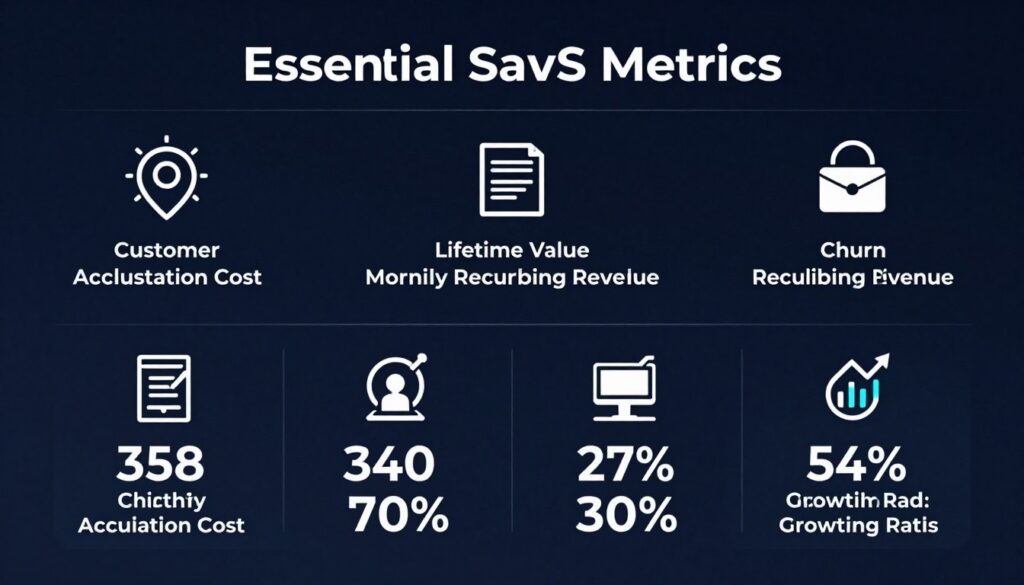
Critical Success Factors
These foundational elements separate thriving SaaS businesses from struggling ventures. Focus on these priorities during development and early growth stages.
- Solving genuine pain points with measurable value
- Simple onboarding that demonstrates value quickly
- Regular feature updates based on user feedback
- Proactive customer success preventing churn
- Scalable infrastructure supporting growth
- Clear differentiation from competitive alternatives
- Effective customer acquisition channels
SaaS Monetization Best Practices
Optimizing SaaS revenue requires balancing customer acquisition, retention, and expansion revenue. Focus on reducing churn while increasing average revenue per user through upsells and feature adoption.
- Implement usage-based alerts that prevent surprise billing and reduce churn
- Create clear upgrade paths that highlight additional value at higher tiers
- Offer annual plans with discounts to improve cash flow and reduce churn
- Build freemium or trial experiences that demonstrate product value quickly
- Invest in customer success to identify and prevent churn risks early
- Use data analytics to identify expansion opportunities within existing accounts
- Develop integration partnerships that increase product stickiness
- Implement Net Promoter Score tracking to identify promoters and detractors
Development Platforms
Modern no-code and low-code platforms accelerate SaaS development without requiring extensive technical teams or massive budgets.
- Bubble – Visual programming for web apps
- Webflow – Design-focused app building
- Retool – Internal tool development
- Softr – No-code SaaS builder
Payment Processing
Specialized billing platforms handle subscription management, invoicing, and revenue recognition for recurring business models.
- Stripe – Developer-friendly payments
- Chargebee – Subscription management
- Paddle – Merchant of record solution
- FastSpring – Global commerce platform
Analytics Tools
Understanding user behavior and product usage patterns drives informed decisions about feature development and optimization priorities.
- Mixpanel – Product analytics platform
- Amplitude – Behavioral analysis
- Heap – Automatic event tracking
- ChartMogul – Subscription analytics
E-commerce: Selling Physical and Digital Products
E-commerce monetization involves selling products directly to customers through your website. This model encompasses both physical goods requiring inventory and fulfillment, and digital products delivered electronically with minimal overhead.
Online stores generate revenue through direct sales with complete control over pricing, branding, and customer relationships. Success requires understanding product sourcing, inventory management, order fulfillment, and customer service operations.
E-commerce Revenue Models Explained
E-commerce encompasses several distinct business models with different operational requirements. Choosing the right approach depends on your resources, expertise, and target market characteristics.
Traditional Inventory
Purchase products wholesale and maintain inventory. Highest control and profit margins but requires capital investment and storage space.
- Full control over quality and fulfillment
- Higher profit margins per unit
- Requires upfront capital investment
- Inventory risk and storage costs
Dropshipping
Partner with suppliers who ship directly to customers. Low startup costs but thinner margins and less control over customer experience.
- Minimal startup capital required
- No inventory or warehousing needs
- Lower profit margins per sale
- Limited control over fulfillment
Print on Demand
Design custom products manufactured only when ordered. Perfect for creative entrepreneurs but limited to specific product categories.
- No inventory investment required
- Focus on design and marketing
- Limited product category options
- Moderate profit margins
Advantages and Disadvantages
Advantages
- Complete control over product selection and pricing strategy
- Direct customer relationships enable brand building
- Scalable revenue through marketing optimization
- Multiple product lines diversify income sources
- Customer data ownership for remarketing opportunities
- Premium positioning opportunities through branding
- Expansion into wholesale channels over time
Disadvantages
- Inventory management complexity and capital requirements
- Fulfillment logistics and shipping coordination needed
- Customer service obligations across sales lifecycle
- Payment processing fees reduce profit margins
- Returns and refunds create operational overhead
- Competition from marketplaces and established retailers
- Seasonal demand fluctuations impact cash flow
Revenue Potential and Profitability
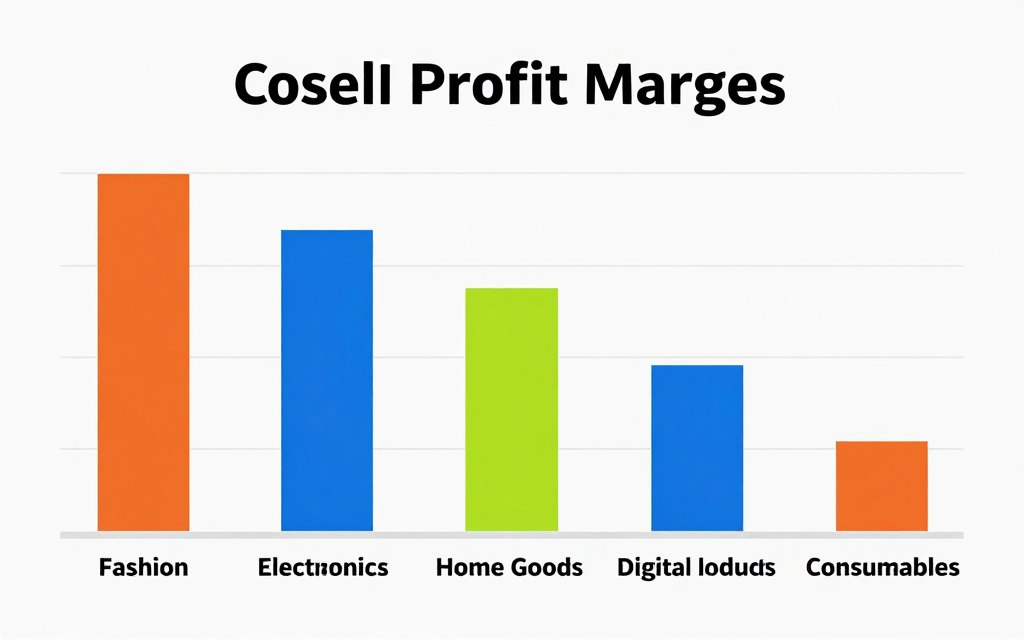
E-commerce profit margins vary dramatically by product category and business model. Physical products typically generate 30-50% gross margins before operational expenses, while digital products can achieve 80-95% margins with minimal delivery costs.
Average order value and customer lifetime value determine overall profitability. Successful e-commerce businesses focus on maximizing these metrics through product bundling, upsells, and repeat purchase encouragement.
| Business Model | Startup Cost | Gross Margin | Complexity | Best For |
| Traditional Inventory | $5,000 – $50,000+ | 40-60% | High | Serious entrepreneurs with capital |
| Dropshipping | $500 – $2,000 | 15-30% | Low | Testing product ideas |
| Print on Demand | $100 – $1,000 | 25-40% | Low | Creative professionals |
| Digital Products | $100 – $5,000 | 80-95% | Medium | Experts and educators |
| Subscription Boxes | $2,000 – $10,000 | 40-50% | High | Niche communities |
E-commerce Success Strategies
Building a profitable e-commerce business requires more than listing products online. Strategic product selection, conversion optimization, and customer retention drive sustainable growth and profitability.
- Select products with healthy margins and demand validation – Research competition, pricing dynamics, and market size before committing to product lines.
- Invest in professional product photography and descriptions – Visual quality directly impacts conversion rates and reduces return rates significantly.
- Optimize checkout process to minimize cart abandonment – Remove friction points, offer guest checkout, and provide multiple payment options.
- Implement email marketing for abandoned cart recovery – Automated sequences recover 10-30% of abandoned carts with minimal effort.
- Build customer loyalty programs for repeat purchases – Retention costs less than acquisition while increasing lifetime value substantially.
- Use retargeting ads to re-engage interested visitors – Pixel-based remarketing converts prospects who need additional touchpoints.
- Provide exceptional customer service to generate referrals – Word-of-mouth remains the most cost-effective customer acquisition channel.
- Analyze data to identify bestsellers and eliminate losers – Focus inventory and marketing on proven winners rather than spreading resources thin.
Critical Consideration: E-commerce requires understanding sales tax obligations, payment processing regulations, and shipping restrictions. Consult legal and financial professionals to ensure compliance with applicable laws and requirements in your jurisdiction.
Essential E-commerce Platforms and Tools
Choosing the right platform significantly impacts your operational efficiency and growth potential. Consider features, pricing, scalability, and integration options when evaluating e-commerce solutions.
Shopify
Most popular e-commerce platform offering comprehensive features, extensive app ecosystem, and beginner-friendly interface. Ideal for businesses of all sizes.
- Pricing: $29-299/month
- Transaction fees: 0.5-2% plus payment processing
- Best for: General e-commerce businesses
- Learning curve: Low to medium
WooCommerce
Open-source WordPress plugin providing maximum customization flexibility. Free core software but requires hosting and technical knowledge.
- Pricing: Free plugin, hosting costs apply
- Transaction fees: Payment processor only
- Best for: WordPress users wanting control
- Learning curve: Medium to high
BigCommerce
Enterprise-grade platform with powerful built-in features and no transaction fees. Stronger SEO capabilities than competitors for organic traffic.
- Pricing: $29-299/month
- Transaction fees: None
- Best for: Scaling businesses
- Learning curve: Medium
Comprehensive Model Comparison
Understanding how these monetization models compare across key dimensions helps identify the best fit for your specific situation. Each approach offers distinct advantages that align with different business goals and resources.
This comprehensive comparison evaluates all four models across critical success factors. Use these insights to narrow your options based on your priorities and constraints.
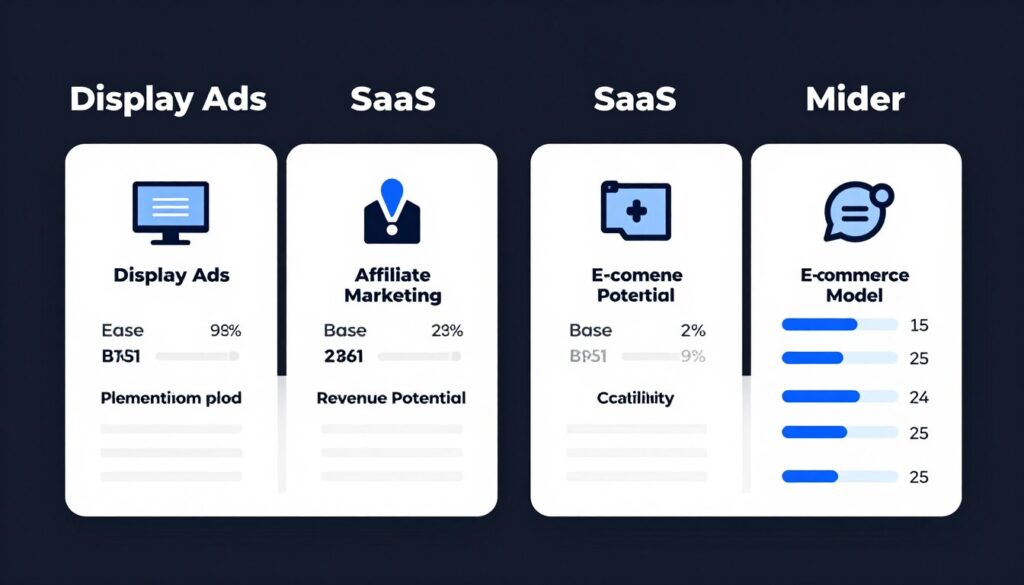
Startup Requirements Comparison
Initial investment and technical requirements vary dramatically across monetization strategies. Understanding these barriers helps set realistic expectations and timeline projections.
| Model | Initial Investment | Technical Skills | Time to First Revenue | Content Requirements |
| Display Advertising | $100-500 | Basic | 1-3 months | High volume needed |
| Affiliate Marketing | $200-1,000 | Basic to Intermediate | 2-6 months | Quality over quantity |
| SaaS | $5,000-50,000+ | Advanced | 6-18 months | Product documentation |
| E-commerce | $500-10,000 | Intermediate | 1-4 months | Product descriptions |
Revenue and Scalability Analysis
Long-term earning potential and growth trajectories differ significantly across models. Consider both near-term income needs and long-term wealth-building objectives when evaluating options.
Risk Assessment by Model
Each monetization approach carries distinct risk profiles affecting business sustainability. Understanding these risks enables better planning and mitigation strategies.
- Display advertising – minimal investment
- Affiliate marketing – no inventory risk
- Low barrier to entry enables testing
- Platform dependency is main concern
- Income volatility manageable
- Easy to pivot if unsuccessful
Low Risk Models
- E-commerce dropshipping – moderate investment
- Digital product creation – time investment
- Customer service obligations increase
- Competition impacts profitability
- Marketing costs can escalate quickly
- Inventory risk if holding stock
Medium Risk Models
- SaaS development – significant capital
- Traditional e-commerce – inventory costs
- Technical expertise requirements high
- Long path to profitability expected
- Competitive markets demand innovation
- Operational complexity increases costs
High Risk Models
Hybrid Monetization Approaches
Many successful websites combine multiple monetization models to diversify revenue streams and maximize earning potential. Strategic combinations leverage synergies while spreading risk across different income sources.
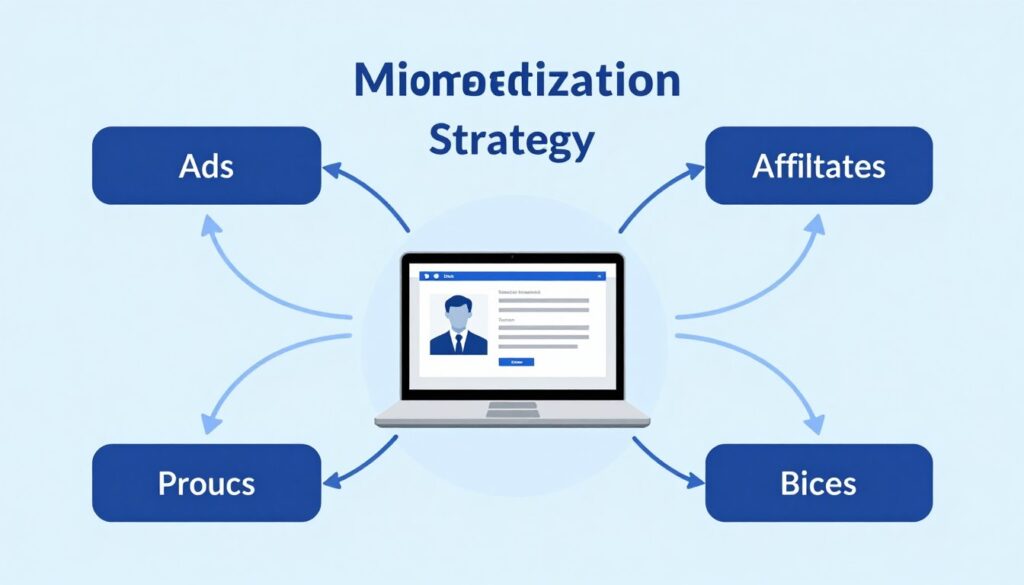
- Content sites using display ads plus affiliate marketing for complementary income
- SaaS companies implementing freemium models with advertising for free users
- E-commerce stores adding affiliate products to expand catalog without inventory
- Information products complementing service businesses for passive revenue
- Membership sites combining subscriptions with e-commerce for additional value
- Software tools offering both self-service SaaS and done-for-you services
Get Your Personalized Monetization Plan
Our interactive comparison tool analyzes your website type, traffic, audience, and goals to recommend the optimal monetization strategy. Get specific platform recommendations and implementation guidance customized to your situation.
Choosing the Right Monetization Model
Selecting the optimal monetization strategy requires honest assessment of your resources, skills, audience, and business objectives. The wrong choice wastes time and money while the right fit accelerates growth and profitability.
This decision framework guides you through key considerations that determine model suitability. Answer these questions thoughtfully to identify your best path forward.
Critical Decision Factors
Several fundamental factors determine which monetization model aligns best with your specific circumstances. Evaluate each factor honestly to narrow your options effectively.
Your Resources
- Available startup capital amount
- Time commitment capacity weekly
- Technical skills and expertise
- Existing audience or starting fresh
- Content creation capabilities
- Support network access
Your Audience
- Current traffic volume levels
- Audience demographics and interests
- Geographic distribution of visitors
- Purchase intent and buying power
- Content consumption preferences
- Platform and device usage
Your Goals
- Revenue timeline requirements
- Passive versus active income preference
- Scalability importance ranking
- Control versus convenience tradeoff
- Long-term business building intent
- Risk tolerance assessment
Model Selection by Website Type
Different website categories naturally align with specific monetization approaches. Understanding these patterns helps identify promising starting points for your strategy.
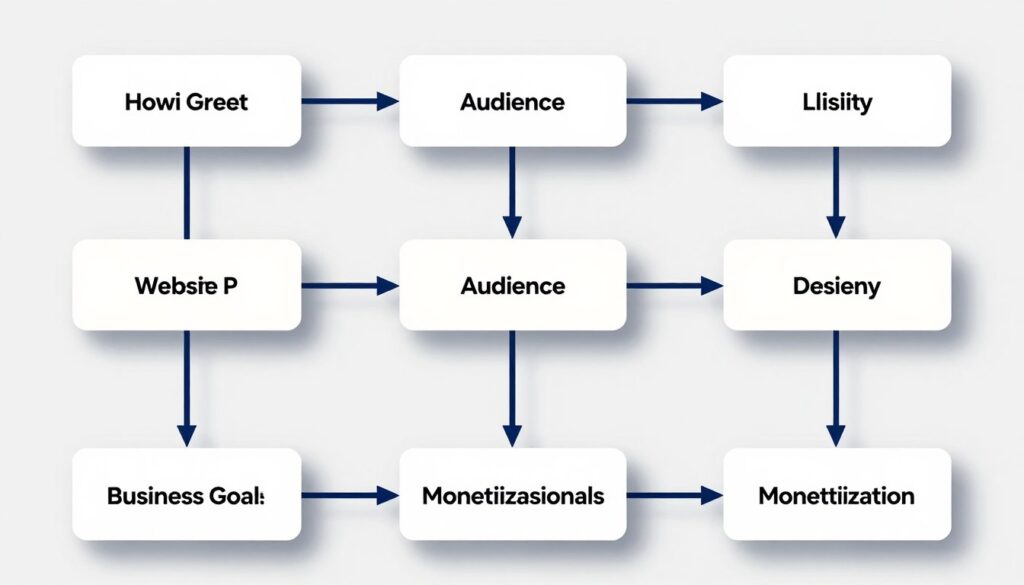
| Website Type | Primary Model | Secondary Model | Success Factors |
| Content Blog | Display Ads or Affiliate | Digital Products | High traffic volume, engaged audience |
| Review Site | Affiliate Marketing | Display Ads | Buyer intent keywords, trust building |
| Software Tool | SaaS Subscription | Affiliate Marketing | Problem solving, user retention |
| Online Store | E-commerce Sales | Affiliate Products | Product selection, conversion optimization |
| Educational Platform | Course Sales or SaaS | Affiliate Marketing | Expertise demonstration, student success |
| Community Forum | Membership Subscription | Display Ads | Active engagement, exclusive value |
Traffic Volume Considerations
Your current or projected traffic significantly impacts which monetization models make sense. Some strategies require substantial volume while others work with smaller, highly-targeted audiences.
Low Traffic (Under 10,000 Monthly)
Focus on high-value monetization that doesn’t depend on massive volume. Quality over quantity drives revenue at this stage.
- Affiliate marketing for buyer-intent content
- High-ticket digital products or courses
- Freelance services and consultation
- Premium e-commerce with unique products
- Avoid display ads at this traffic level
High Traffic (Over 50,000 Monthly)
Leverage volume-based monetization while maintaining quality. Multiple revenue streams become viable and recommended.
- Display ads through premium networks
- Affiliate marketing across content library
- Sponsored content opportunities
- Email list monetization strategies
- Hybrid approaches for diversification
Implementation Roadmap
Successful monetization requires systematic implementation rather than random experimentation. Follow this proven framework to launch your chosen strategy effectively.
- Validate demand before building – Test interest through surveys, competitor research, or minimum viable offerings before major investment.
- Start with one model and optimize – Master a single approach before adding complexity through multiple revenue streams.
- Set measurable goals and track progress – Define specific metrics for success and monitor performance consistently.
- Build required infrastructure systematically – Implement necessary tools, platforms, and processes in logical sequence.
- Create compelling content or products – Invest in quality that serves audience needs better than alternatives.
- Promote strategically to target audience – Focus marketing efforts on channels where your ideal customers gather.
- Analyze data and iterate based on results – Let performance metrics guide optimization decisions rather than assumptions.
- Scale what works and eliminate what doesn’t – Double down on successful elements while cutting underperformers quickly.
“The best monetization strategy is the one you’ll actually implement consistently. Perfection planning wastes more opportunities than imperfect action ever will.”
Optimization and Growth Strategies
Launching your monetization model represents just the beginning of the journey. Continuous optimization and strategic growth initiatives compound results over time, dramatically increasing revenue without proportional effort increases.
These advanced strategies work across all monetization models to maximize performance and accelerate business growth. Implement them systematically after establishing baseline operations.
Conversion Rate Optimization Tactics
Small improvements in conversion rates create massive revenue impacts over time. Focus on eliminating friction and strengthening value communication throughout the customer journey.
- Simplify navigation to reduce clicks between entry and conversion points
- Strengthen headlines and value propositions with specific benefits
- Add social proof through testimonials, case studies, and usage statistics
- Implement exit-intent popups capturing abandoning visitors strategically
- A/B test critical elements like headlines, CTAs, and pricing displays
- Optimize page load speed to reduce bounce rates and improve experience
- Create urgency through limited-time offers or scarcity messaging
- Remove unnecessary form fields that create conversion friction
- Use retargeting pixels to re-engage interested but unconverted visitors
Traffic Generation Methods
Sustainable growth requires diversified traffic sources rather than dependence on single channels. Build momentum across multiple platforms while identifying your most efficient acquisition channels.
Organic Search
SEO provides long-term compounding benefits through free, targeted traffic from search engines. Highest ROI but requires patience.
- Keyword research and targeting
- Quality content creation consistently
- Technical SEO optimization
- Link building and authority development
Paid Advertising
Paid channels offer immediate traffic and rapid testing capabilities. Higher costs but faster results and scaling potential.
- Google Ads for high-intent searches
- Facebook and Instagram for targeting
- Native advertising for content promotion
- Retargeting campaigns for conversions
Content Marketing
Distribution across multiple platforms builds brand awareness while driving traffic through valuable content delivery.
- Email marketing to owned audience
- Social media presence and engagement
- Guest posting on relevant sites
- YouTube or podcast content
Revenue Diversification Approaches
Multiple revenue streams provide stability while maximizing earning potential from existing traffic. Add complementary models strategically without diluting focus on primary monetization.
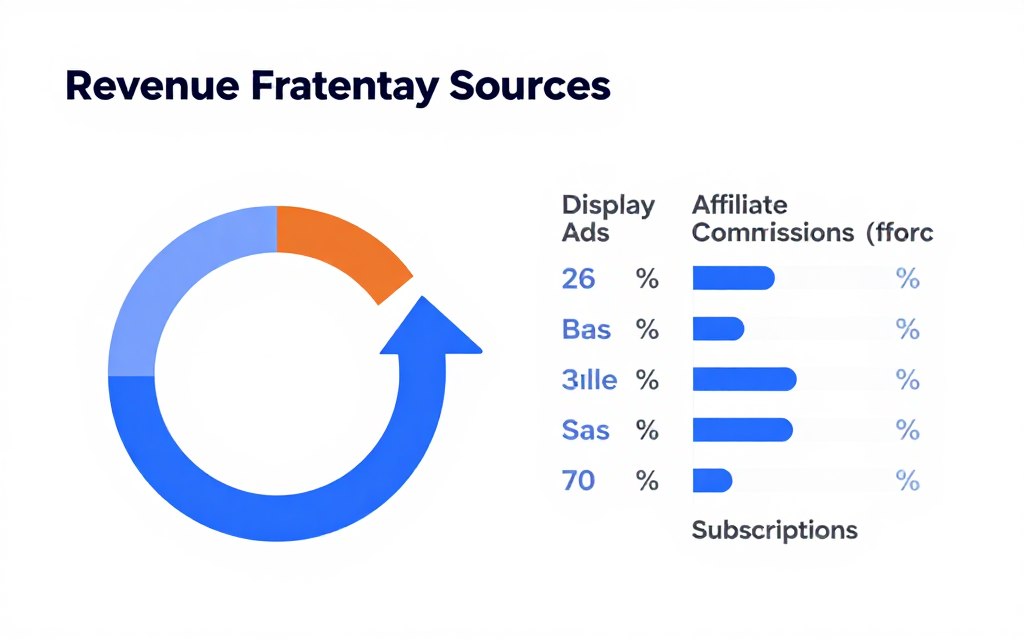
Strategic Tip: Add new revenue streams only after mastering your primary model. Premature diversification spreads resources too thin and prevents excellence in any single area. Achieve consistent four-figure monthly revenue before expanding.
Automation and Efficiency Tools
Strategic automation eliminates repetitive tasks while maintaining quality and consistency. Focus your limited time on high-value activities that require human judgment and creativity.
Marketing Automation
Email sequences, social scheduling, and lead nurturing run automatically, converting prospects while you focus on content creation and strategy.
- Email marketing platforms
- Social media schedulers
- CRM systems for lead management
- Landing page builders
Analytics Platforms
Comprehensive tracking reveals performance trends and optimization opportunities without manual data compilation or spreadsheet management.
- Google Analytics for traffic analysis
- Heatmap tools for behavior insight
- Conversion tracking systems
- A/B testing platforms
Operations Management
Project management, team collaboration, and workflow automation streamline operations as your business grows and complexity increases.
- Project management software
- Team communication platforms
- Workflow automation tools
- File sharing and collaboration
Common Monetization Mistakes to Avoid
Understanding typical pitfalls helps entrepreneurs avoid costly errors that delay success or damage audience relationships. Learn from others’ mistakes rather than repeating them yourself.
These common errors appear repeatedly across monetization attempts. Awareness prevents these problems while accelerating your path to sustainable revenue.
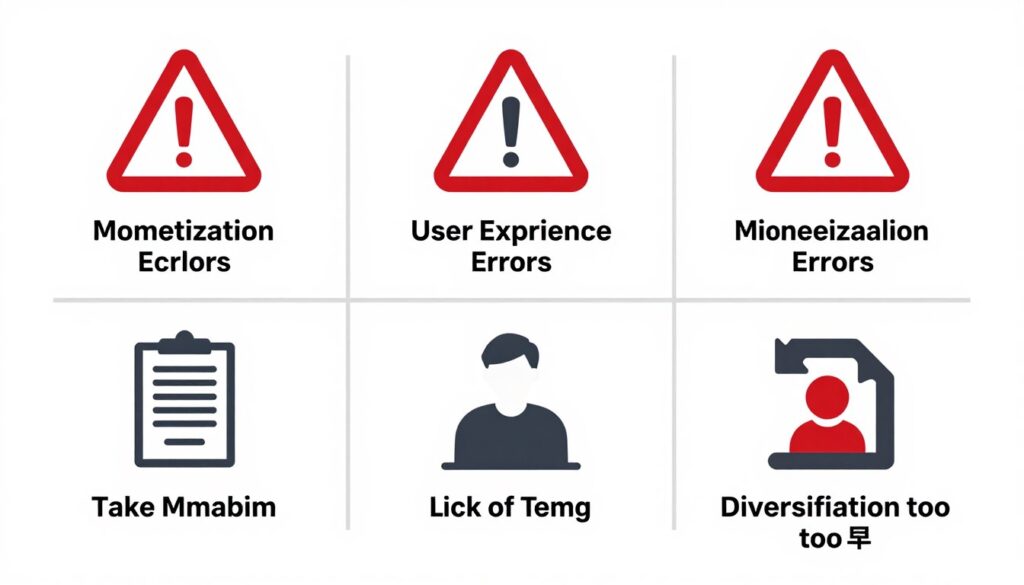
Critical Errors That Sabotage Success
Certain mistakes prove more damaging than others, potentially destroying businesses or audience trust. Avoid these critical errors at all costs.
Premature Optimization
Attempting to optimize before achieving baseline success wastes time on insignificant details. Establish fundamentals before refinement.
- Launch before perfecting every detail
- Focus on core value proposition first
- Get real user feedback early
- Iterate based on actual data
Ignoring User Experience
Aggressive monetization that damages experience drives audiences away permanently. Balance revenue with maintaining trust and satisfaction.
- Test monetization impact on metrics
- Monitor bounce rates and engagement
- Prioritize long-term relationships
- Respect audience preferences and feedback
Chasing Every Opportunity
Trying too many monetization methods simultaneously prevents mastery of any single approach. Focus creates better results than scattered efforts.
- Master one model completely first
- Avoid shiny object syndrome
- Evaluate opportunity costs carefully
- Add revenue streams strategically
Neglecting Audience Building
Focusing solely on monetization without building audience relationships creates unsustainable business models. Value creation must precede value extraction.
- Prioritize providing genuine value
- Build email lists and communities
- Create consistent quality content
- Establish trust before selling
Insufficient Traffic Analysis
Implementing monetization without understanding audience characteristics leads to mismatched strategies. Know your visitors before choosing models.
- Study audience demographics thoroughly
- Identify visitor intent and needs
- Understand traffic sources and quality
- Analyze behavior patterns consistently
Unrealistic Revenue Expectations
Expecting overnight success leads to premature abandonment of viable strategies. Most monetization requires 6-12 months for meaningful results.
- Set realistic timeline expectations
- Understand typical ramp-up periods
- Plan for initial low returns
- Commit to consistent execution
Warning Signs Your Strategy Isn’t Working
Recognizing failure signals early enables pivots before wasting excessive time and resources. Monitor these indicators to catch problems quickly.
- Declining engagement metrics like time on site and pages per session
- Increasing bounce rates after implementing monetization elements
- Negative feedback from audience about ads or offers
- Stagnant revenue despite increasing traffic consistently
- High customer acquisition costs exceeding lifetime value
- Poor conversion rates below industry benchmarks persistently
- Cannibalization where new revenue replaces existing income
Action Required: If you recognize multiple warning signs, pause new initiatives and analyze existing data thoroughly. Identify the root cause before making additional changes that might compound problems. Sometimes the issue is execution rather than strategy selection.
Future Trends in Website Monetization
The monetization landscape evolves continuously as technology advances and consumer behaviors shift. Understanding emerging trends helps future-proof your strategy and capitalize on new opportunities early.
These developing patterns will shape monetization approaches over the next several years. Position yourself strategically to leverage these changes as they mature.

Emerging Technologies and Opportunities
New technologies create fresh monetization possibilities while disrupting traditional models. Early adopters gain competitive advantages during transition periods.
- AI-powered personalization increasing conversion rates through dynamic content
- Blockchain enabling new micropayment and royalty distribution models
- Web3 technologies creating decentralized monetization opportunities
- Voice search optimization changing discovery and purchase patterns
- Augmented reality enhancing product visualization for e-commerce
- Progressive web apps improving mobile monetization experiences
- Privacy-focused advertising adapting to cookie deprecation
Shifting Consumer Preferences
Audience expectations and behaviors continue evolving, requiring monetization adaptation. Staying ahead of these shifts maintains competitiveness and relevance.
Research Insight: Studies show 80% of consumers prefer subscription models over ownership for digital products, while 65% will pay premium prices for exceptional experiences. These preferences favor SaaS and high-quality e-commerce over purely ad-supported models.
Privacy concerns increasingly influence monetization effectiveness. First-party data strategies and transparent value exchange become competitive advantages as third-party tracking diminishes.
Taking Action on Your Monetization Strategy
Understanding monetization models provides the knowledge foundation, but execution determines actual results. The gap between knowing and doing separates successful entrepreneurs from perpetual researchers.
Your next steps should focus on implementing one primary monetization strategy systematically. Start with the model that best aligns with your current resources, audience characteristics, and business goals identified throughout this guide.
Your Monetization Action Plan
Successful implementation requires breaking down your chosen strategy into manageable steps with clear milestones. This structured approach prevents overwhelm while maintaining momentum toward your revenue goals.
- Select your primary monetization model based on the decision framework and self-assessment completed earlier in this guide.
- Set specific revenue targets and timelines that are ambitious yet realistic given your starting point and available resources.
- Create detailed implementation checklist breaking down major milestones into weekly action items you can complete consistently.
- Invest in necessary tools and infrastructure required for your chosen model without overspending on unnecessary features initially.
- Launch your minimum viable monetization rather than waiting for perfect conditions that never materialize naturally.
- Track key performance metrics religiously to understand what works and where optimization opportunities exist within your strategy.
- Iterate based on real data and feedback from actual users rather than assumptions or anecdotal evidence from others.
- Scale successful elements systematically while maintaining the quality and user experience that enabled initial success.
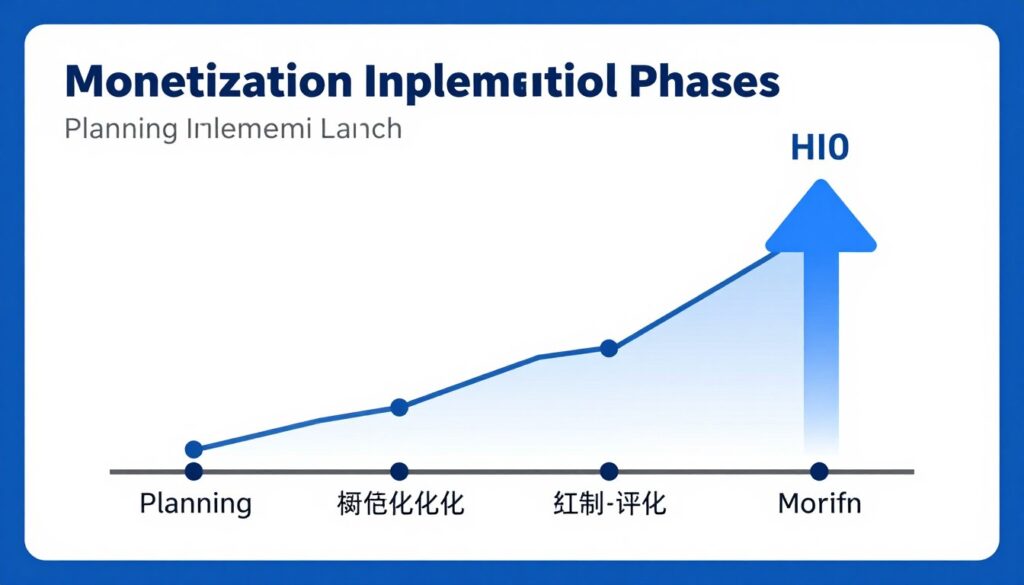
Key Takeaways for Success
Remember these fundamental principles as you build your monetization strategy. They apply regardless of which specific model you choose to implement.
- Audience value creation must precede revenue extraction always
- Consistency over time beats sporadic intensity every time
- Data-driven decisions outperform gut feelings significantly
- User experience protection ensures long-term sustainability
- Testing and optimization compound results dramatically
- Focus on one model before diversifying revenue streams
- Revenue follows traffic and engagement naturally over time
- Authenticity builds trust that converts better than hype
- Systems and automation enable scaling beyond personal effort
- Patience during ramp-up periods separates success from failure
The path to meaningful website revenue requires commitment, strategic thinking, and consistent execution. Start today with clear direction rather than waiting for perfect conditions.
Ready to Build Your Monetization Strategy?
Get personalized guidance for your specific situation. Our monetization experts will analyze your website, audience, and goals to create a custom implementation roadmap. Book your free 30-minute strategy session and start generating income from your website.
Frequently Asked Questions
These common questions address typical concerns and confusion points about website monetization. The answers provide practical guidance for real-world implementation challenges.
How much traffic do I need before monetizing my website?
The required traffic varies by monetization model. Display advertising typically needs 10,000+ monthly visitors for meaningful income, while affiliate marketing can generate revenue with just 1,000-5,000 targeted visitors. SaaS and e-commerce models work with even lower traffic if visitors match your target customer profile. Focus on audience quality and alignment rather than arbitrary traffic thresholds.
Can I use multiple monetization models simultaneously?
Yes, but start with one primary model first. Master a single approach before adding complementary revenue streams. Successful websites often combine display ads with affiliate marketing, or e-commerce with affiliate products. Avoid spreading efforts too thin during early stages, as focus produces better results than scattered implementation across multiple models.
How long does it take to generate meaningful revenue?
Timeline expectations vary by model. Display advertising and affiliate marketing typically produce first dollars within 1-3 months but require 6-12 months for substantial income. SaaS products need 12-24 months from concept to profitability. E-commerce can generate quick wins within months but scaling takes longer. Consistent execution matters more than timeline optimization.
What monetization model works best for small traffic websites?
Affiliate marketing and high-ticket digital products work best with limited traffic. These models rely on conversion quality rather than volume. Focus on buyer-intent keywords and solving expensive problems. Service offerings also work well at low traffic levels, converting even dozens of monthly visitors into paying clients through consultation or done-for-you services.
How do I avoid damaging user experience with monetization?
Monitor engagement metrics continuously after implementing monetization elements. Track bounce rate, time on site, and pages per session. If metrics decline significantly, reduce monetization aggressiveness. Prioritize native integration that serves users rather than interrupting them. Always disclose affiliate relationships transparently and recommend only products you genuinely endorse.
Should I focus on passive or active income strategies?
Balance both approaches strategically. Active income through services or consulting generates quick revenue while you build passive streams. Use active income to fund passive model development. Over time, shift toward more passive revenue through products, subscriptions, or affiliate commissions. The ideal mix depends on your lifestyle goals and patience for delayed gratification.
What tools are essential for starting website monetization?
Essential tools vary by model but generally include Google Analytics for tracking, email marketing platform for audience building, and payment processor for transactions. Display ad publishers need ad network accounts. Affiliate marketers require tracking software. SaaS needs billing platform and hosting. Start minimal and add tools as specific needs emerge rather than over-investing upfront.
How do I know if my monetization strategy is working?
Track revenue per visitor, conversion rates, and customer lifetime value consistently. Compare against industry benchmarks for your model and niche. Monitor trends rather than absolute numbers initially. Expect gradual improvement over 6-12 months. If metrics stagnate or decline after this period despite optimization efforts, consider pivoting to different monetization approach or audience targeting.