

In a world of economic uncertainty, smart investing for the future isn’t just a good idea—it’s essential for long-term financial security. Whether you’re just starting your career or planning for retirement, understanding how to make your money work for you can mean the difference between financial stress and financial freedom. This guide will walk you through proven investment strategies, help you avoid common pitfalls, and provide actionable steps to begin your journey toward financial independence.
Table of Contents:
Core Principles of Smart Investing for the Future
Successful investing isn’t about getting lucky or timing the market perfectly. It’s about following time-tested principles that have helped generations of investors build wealth steadily over time. Let’s explore these fundamental concepts that form the foundation of smart investing.
Starting Early: The Power of Compound Interest
Perhaps the most powerful force in investing is compound interest—what Einstein allegedly called “the eighth wonder of the world.” When you invest early, your returns generate their own returns, creating a snowball effect that can dramatically increase your wealth over time.
| Starting Age | Monthly Investment | Value at Age 65 | Total Invested | Investment Gain |
| 25 | $500 | $1,116,612 | $240,000 | $876,612 |
| 35 | $500 | $557,174 | $180,000 | $377,174 |
| 45 | $500 | $238,576 | $120,000 | $118,576 |
As the table shows, starting just 10 years earlier can nearly double your investment gains, even though you’re only investing 33% more money. This demonstrates why beginning your investment journey as early as possible is crucial for maximizing your returns.
Diversification: Don’t Put All Your Eggs in One Basket
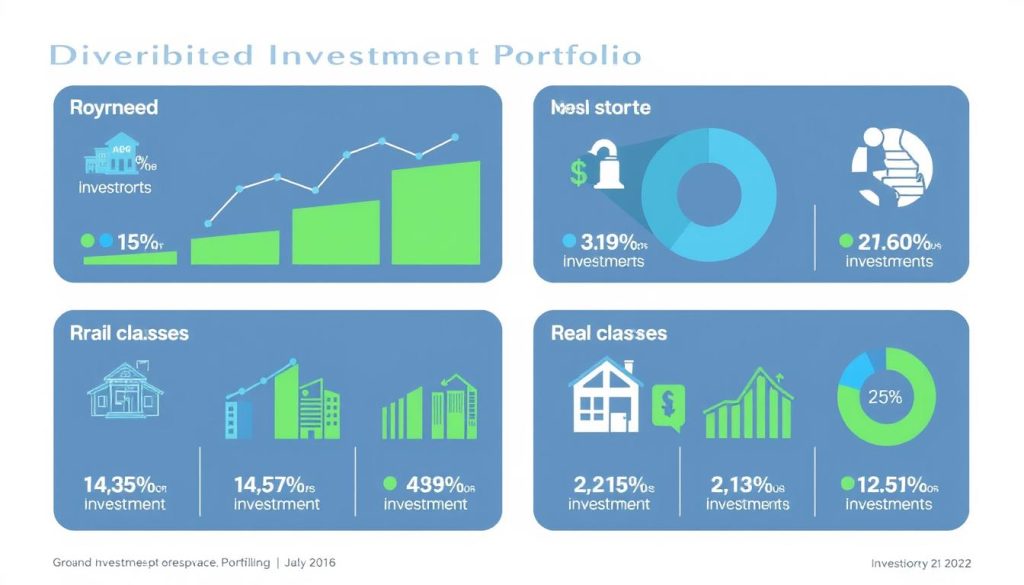
Diversification is a risk management strategy that involves spreading your investments across various asset classes to reduce exposure to any single investment. A well-diversified portfolio might include stocks, bonds, real estate, and perhaps alternative investments like commodities or precious metals.
Benefits of Diversification
- Reduces overall portfolio risk
- Smooths out returns over time
- Protects against market sector downturns
- Provides exposure to different growth opportunities
- Helps maintain emotional discipline during market volatility
Risks of Poor Diversification
- Concentrated losses during sector downturns
- Missed opportunities in other performing sectors
- Higher overall portfolio volatility
- Emotional decision-making during market swings
- Potential for permanent capital loss
Understanding Risk Tolerance
Your risk tolerance is your ability to endure market volatility without making emotional decisions that could harm your long-term investment strategy. It’s influenced by factors like your age, income stability, financial goals, and personal comfort with uncertainty.
Younger investors typically have higher risk tolerance because they have more time to recover from market downturns. As you approach retirement, your risk tolerance often decreases as preservation of capital becomes more important than growth.
Long-Term Perspective vs. Short-Term Speculation
One of the most important distinctions in investing is between long-term investing and short-term speculation. While the market may fluctuate significantly in the short term, historical data shows that over longer periods, markets have consistently trended upward.

“The stock market is a device for transferring money from the impatient to the patient.”
Successful investors focus on the long-term potential of their investments rather than reacting to short-term market fluctuations. This patient approach allows you to benefit from the market’s overall upward trajectory while avoiding the pitfalls of emotional decision-making.
Ready to Start Your Investment Journey?
Take our free risk tolerance assessment to determine your ideal investment strategy.
Investment Vehicles for Future Planning
With a solid understanding of core investment principles, let’s explore the various investment vehicles that can help you achieve your financial goals. Each option has unique characteristics, tax implications, and risk-reward profiles.
Retirement Accounts: Tax-Advantaged Growth
Retirement accounts offer significant tax advantages that can dramatically increase your long-term returns. These specialized investment vehicles are designed to encourage saving for retirement by providing either tax-deferred growth or tax-free withdrawals.
Traditional 401(k)
Employer-sponsored retirement plan with pre-tax contributions that reduce your current taxable income. Withdrawals in retirement are taxed as ordinary income.
Roth IRA
Individual retirement account funded with after-tax dollars. Qualified withdrawals in retirement, including earnings, are completely tax-free.
Traditional IRA
Individual retirement account with potential tax-deductible contributions. Like a 401(k), withdrawals in retirement are taxed as ordinary income.

The key advantage of retirement accounts is the power of tax-advantaged compound growth. By either deferring taxes until retirement (when you may be in a lower tax bracket) or eliminating taxes on growth entirely, these accounts can significantly boost your retirement savings compared to taxable investment accounts.
Index Funds and ETFs: Passive Investing Made Simple
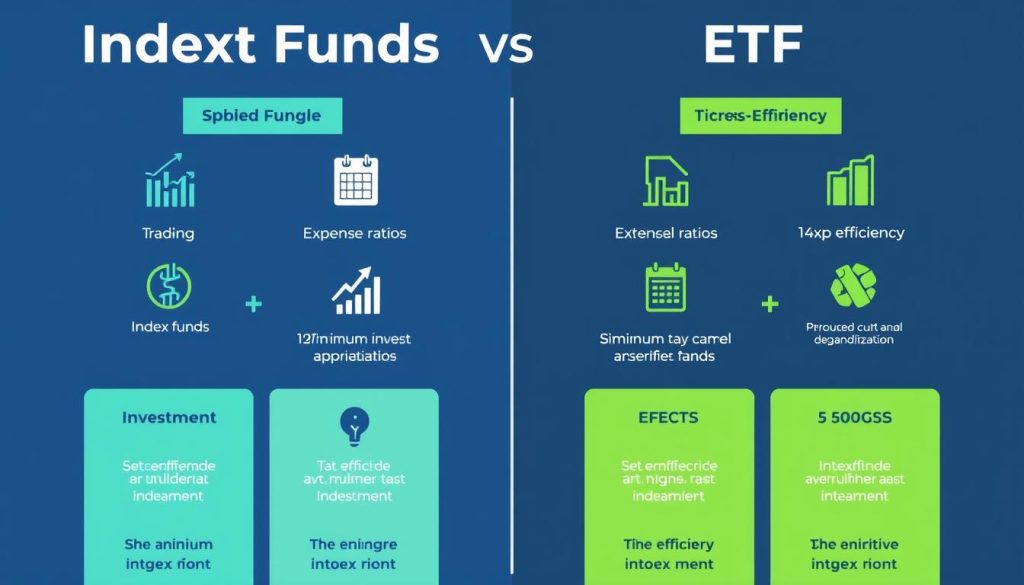
Index funds and Exchange-Traded Funds (ETFs) have revolutionized investing by providing low-cost, diversified exposure to entire markets or sectors. These passive investment vehicles track specific market indexes, such as the S&P 500 or the total U.S. stock market.
- Trade once per day at market close
- Often have minimum investment requirements
- Typically purchased directly from fund companies
- Automatically reinvest dividends
- Great for regular, automated investing
Index Funds
- Trade throughout the day like stocks
- No minimum investment beyond share price
- Purchased through brokerages
- Often more tax-efficient than mutual funds
- Ideal for lump-sum investments
ETFs
Both index funds and ETFs offer significant advantages for long-term investors, including broad diversification, low costs, and tax efficiency. These characteristics make them excellent core holdings for most investment portfolios.
Real Estate Investment Options
Real estate has long been a pillar of wealth creation, offering both potential appreciation and income generation. Today’s investors have multiple ways to add real estate to their portfolios without the hassles of direct property ownership.

REITs
Real Estate Investment Trusts are companies that own, operate, or finance income-producing real estate. They trade like stocks and distribute at least 90% of their taxable income as dividends.
Real Estate Crowdfunding
Online platforms that allow investors to pool money to invest in real estate projects, often with lower minimum investments than traditional real estate.
Rental Properties
Direct ownership of residential or commercial properties that generate monthly rental income and potential appreciation over time.
Real estate can provide portfolio diversification, as it often moves independently of stock and bond markets. Additionally, real estate investments can offer inflation protection, as property values and rents typically increase with inflation.
Emerging Technologies and Sustainable Investments
Forward-thinking investors are increasingly looking toward emerging technologies and sustainable investments that address global challenges while potentially delivering strong returns.

Emerging Technology Sectors
- Artificial Intelligence and Machine Learning
- Renewable Energy Technologies
- Biotechnology and Genomics
- Quantum Computing
- Robotics and Automation
ESG Investment Approaches
- Environmental focus (climate change, resource conservation)
- Social considerations (labor practices, community relations)
- Governance factors (executive compensation, board diversity)
- Impact investing (targeting specific social/environmental outcomes)
- Sustainable thematic investing (clean energy, water)
While these forward-looking investments can offer growth potential, they often come with higher volatility and risk. Consider allocating a portion of your portfolio to these opportunities while maintaining a foundation of more established investments.
Explore Sustainable Investment Options
Download our free guide to ESG investing and discover how to align your portfolio with your values.
Practical Steps to Begin Your Investment Journey
Understanding investment principles and options is important, but taking action is what ultimately builds wealth. Here’s a practical roadmap to help you start your investment journey with confidence.
Assessing Your Financial Situation
Before investing, it’s crucial to understand your current financial position. This assessment will help you determine how much you can invest and identify any financial issues that need addressing first.

Setting Clear Investment Goals and Timelines
Effective investing requires clear objectives and timeframes. Different goals require different investment approaches, risk levels, and account types.
| Goal Type | Timeframe | Suggested Investments | Recommended Accounts |
| Short-term (e.g., vacation, down payment) | 0-3 years | High-yield savings, CDs, short-term bonds | High-yield savings, taxable brokerage |
| Medium-term (e.g., home purchase, education) | 3-10 years | Balanced mix of stocks and bonds | 529 plans (education), taxable brokerage |
| Long-term (e.g., retirement, legacy) | 10+ years | Primarily stocks, real estate | 401(k), IRA, Roth IRA |
When setting investment goals, use the SMART framework: Specific, Measurable, Achievable, Relevant, and Time-bound. For example, instead of “save for retirement,” your goal might be “accumulate $1.5 million in retirement accounts by age 65.”
Choosing the Right Investment Platform
Today’s investors have more platform options than ever before, from traditional brokerages to robo-advisors and specialized apps. The right choice depends on your preferences, investment knowledge, and desired level of involvement.

Traditional Brokerages
Established firms offering full-service or discount brokerage services with comprehensive investment options and often research tools.
Best for: Investors wanting comprehensive options and possibly human advice.
Robo-Advisors
Automated platforms that create and manage diversified portfolios based on your goals and risk tolerance, often at lower costs.
Best for: Hands-off investors seeking professional management without high fees.
Investment Apps
Mobile-first platforms that simplify investing with features like fractional shares and automatic round-ups.
Best for: New investors starting with small amounts and preferring mobile interfaces.
When selecting a platform, consider factors like fees, available investment options, educational resources, user interface, customer service, and account minimums. Many investors use multiple platforms for different purposes—for example, a robo-advisor for retirement and a traditional brokerage for individual stock investments.
Implementing Dollar-Cost Averaging
Dollar-cost averaging (DCA) is a strategy where you invest a fixed amount at regular intervals, regardless of market conditions. This approach reduces the impact of market volatility and removes the pressure of trying to time the market.
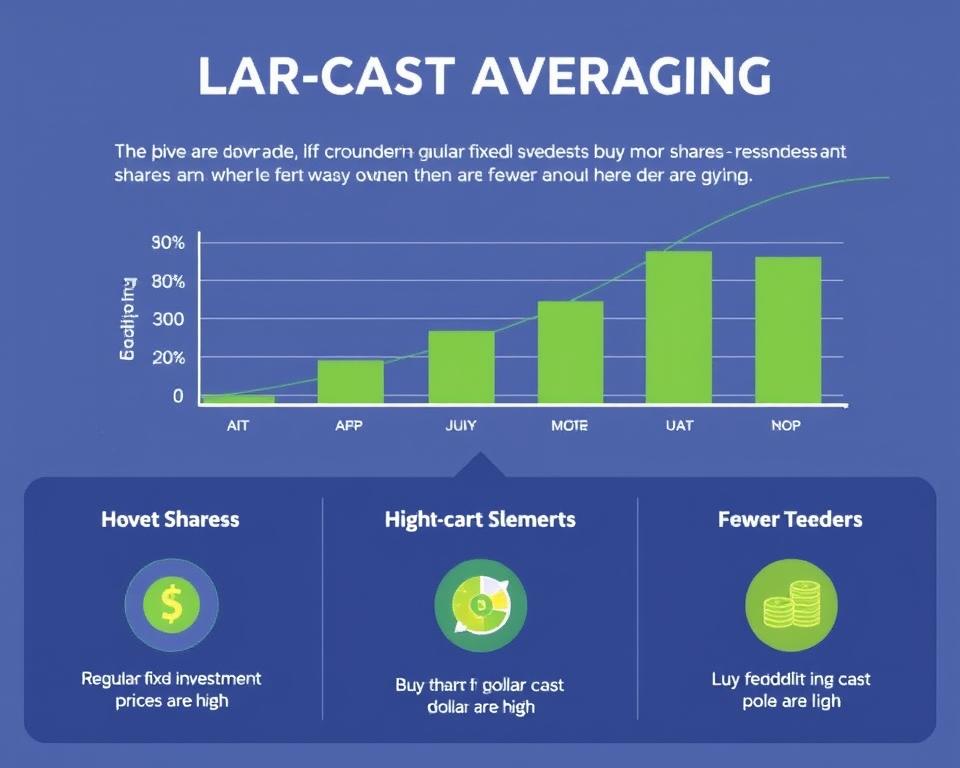
Example: Investing $500 monthly in an S&P 500 index fund rather than trying to invest a lump sum at the “perfect time.” When the market is down, your $500 buys more shares; when it’s up, you buy fewer shares. Over time, this typically results in a lower average cost per share than trying to time the market.
To implement dollar-cost averaging effectively, set up automatic investments from your bank account or paycheck. This automation not only makes the process effortless but also removes emotional decision-making from your investment strategy.
Start Your Investment Plan Today
Connect with a financial advisor who can help you create a personalized investment strategy based on your goals.
Common Investment Mistakes to Avoid
Even the most successful investors make mistakes. Learning about these common pitfalls can help you avoid them and stay on track toward your financial goals.
Emotional Investing Decisions
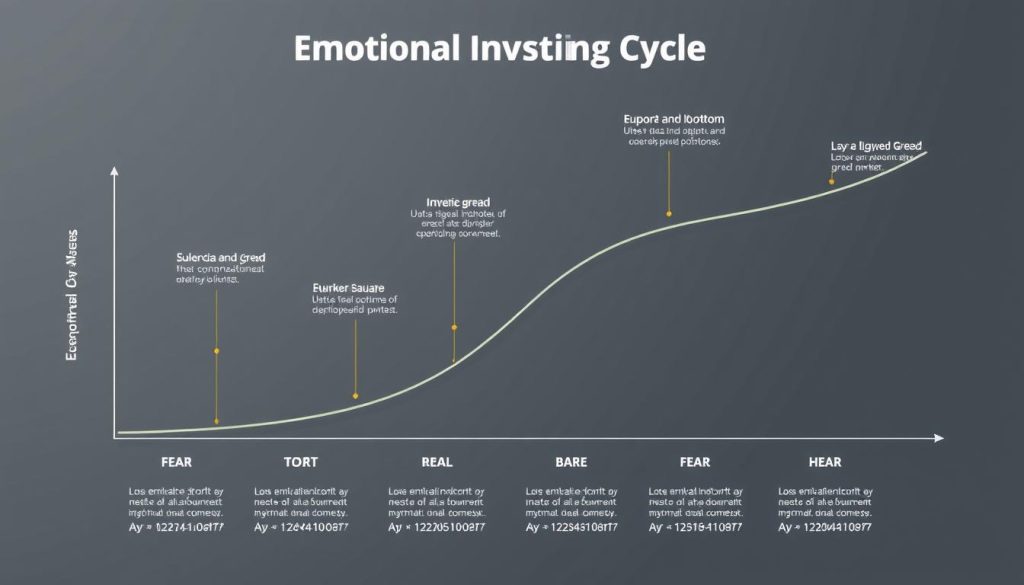
Our emotions—particularly fear and greed—can be our worst enemies when it comes to investing. Emotional decisions often lead to buying high (when everyone is optimistic) and selling low (when panic sets in).
“The investor’s chief problem—and even his worst enemy—is likely to be himself.”
To combat emotional investing, create an investment policy statement outlining your strategy, goals, and rules for buying and selling. This document serves as an objective reference point during emotional market periods.
Chasing Past Performance
Many investors make decisions based on recent performance, assuming that investments that performed well in the past will continue to do so in the future. This approach often leads to disappointment, as market leadership regularly rotates between different sectors and asset classes.
Warning: Studies consistently show that funds topping the performance charts in one period often underperform in subsequent periods. The disclaimer “past performance is not indicative of future results” exists for good reason.
Instead of chasing performance, focus on building a diversified portfolio aligned with your goals and risk tolerance. Rebalance periodically to maintain your target asset allocation rather than shifting to whatever has performed best recently.
Neglecting Fees and Expenses
Investment fees may seem small as percentages, but their impact on long-term returns can be substantial due to the compounding effect. Even a 1% difference in annual fees can reduce your portfolio value by hundreds of thousands of dollars over several decades.

Be vigilant about understanding and minimizing all investment costs, including expense ratios, trading commissions, advisory fees, and account maintenance charges. Low-cost index funds and ETFs can significantly reduce your overall investment expenses.
Failing to Rebalance Portfolios
Over time, some investments in your portfolio will outperform others, causing your asset allocation to drift from your target. Without periodic rebalancing, your portfolio may become more aggressive or conservative than intended, potentially exposing you to unwanted risk.
Rebalancing Example: If your target allocation is 70% stocks and 30% bonds, and after a strong bull market your portfolio has shifted to 80% stocks and 20% bonds, rebalancing would involve selling some stocks and buying bonds to return to your target allocation.
Set a regular schedule for reviewing and rebalancing your portfolio, such as annually or semi-annually. Alternatively, consider threshold-based rebalancing, where you adjust your portfolio when allocations drift beyond predetermined thresholds (e.g., ±5% from targets).
Future-Proofing Your Investments
The investment landscape constantly evolves with economic shifts, technological advancements, and changing social priorities. Building a future-proof portfolio means considering these long-term trends while maintaining flexibility to adapt.
Adapting to Economic Changes and Inflation
Inflation erodes purchasing power over time, making inflation protection an essential component of long-term investment planning. Different asset classes respond differently to inflationary pressures.

Inflation-Protected Securities
Treasury Inflation-Protected Securities (TIPS) and I Bonds adjust their principal or interest rates based on inflation measures, providing direct inflation protection.
Real Assets
Real estate, commodities, and infrastructure investments often perform well during inflationary periods as their values tend to rise with inflation.
Quality Stocks
Companies with pricing power can pass increased costs to customers, potentially maintaining profitability during inflationary periods.
Building inflation resilience into your portfolio becomes increasingly important as your investment horizon lengthens. A diversified approach including both traditional inflation hedges and growth-oriented investments provides the best protection against various economic scenarios.
ESG Considerations in Modern Investing
Environmental, Social, and Governance (ESG) factors are increasingly recognized as important considerations for long-term investment success. Companies with strong ESG practices may be better positioned to navigate future regulatory changes, consumer preferences, and resource constraints.
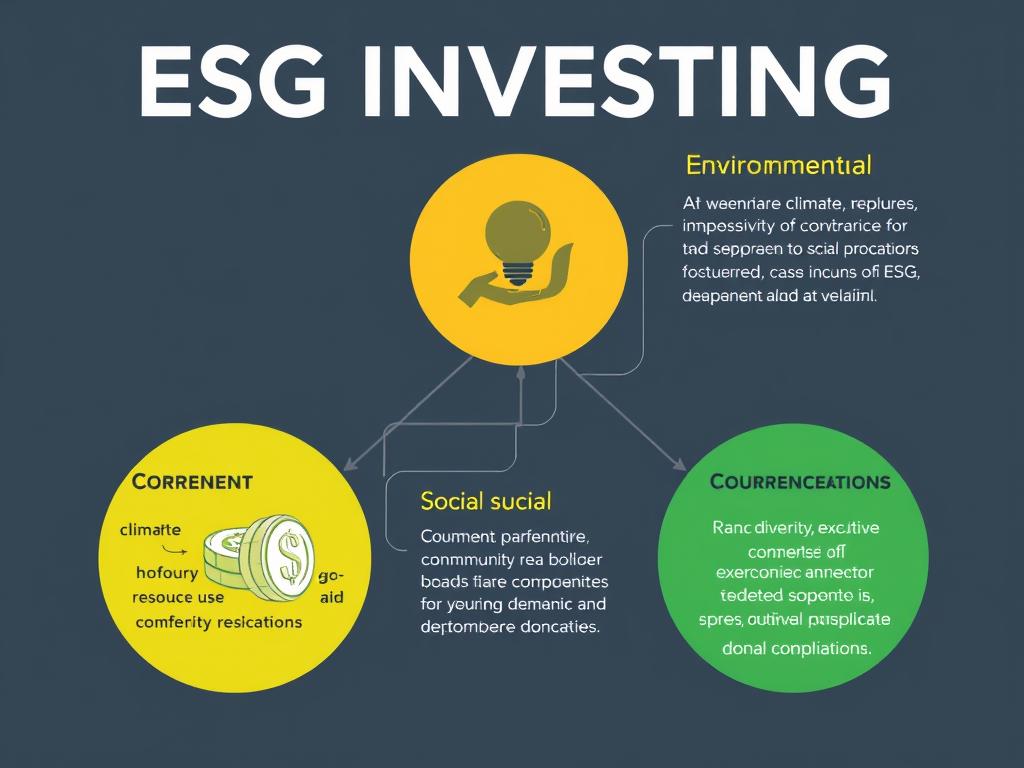
Research suggests that incorporating ESG factors into investment analysis can help identify companies with more sustainable business models and potentially lower long-term risks. Many investors now seek both competitive financial returns and positive societal impact through their investment choices.
Technological Disruption and Investment Opportunities
Technological innovation continues to transform industries at an accelerating pace. Understanding these disruptive trends can help investors identify both opportunities and risks in their portfolios.
Potential Investment Opportunities
- Artificial intelligence and machine learning
- Clean energy technologies
- Digital healthcare solutions
- Cybersecurity services
- Blockchain applications
Industries Facing Disruption
- Traditional retail
- Fossil fuel production
- Traditional banking
- Transportation
- Traditional media
While technological disruption creates exciting investment opportunities, it also introduces significant risks. A balanced approach might include both established companies adapting to technological change and innovative disruptors leading the transformation.
Stay Ahead of Investment Trends
Subscribe to our quarterly investment insights newsletter for expert analysis on emerging market trends and opportunities.
Conclusion: Your Path to Smart Investing for the Future
Smart investing for the future isn’t about finding get-rich-quick schemes or timing the market perfectly. It’s about following time-tested principles, maintaining discipline through market cycles, and making informed decisions aligned with your personal goals.
Key Takeaways for Smart Investing
- Start early to harness the power of compound interest
- Diversify broadly across asset classes to manage risk
- Understand your risk tolerance and invest accordingly
- Keep costs low to maximize your long-term returns
- Maintain a long-term perspective despite market fluctuations
- Rebalance regularly to maintain your target asset allocation
- Consider future trends when building your portfolio
Remember that successful investing is a marathon, not a sprint. By focusing on the fundamentals outlined in this guide and taking consistent action over time, you can build wealth steadily and work toward achieving your most important financial goals.
The most important step is simply to begin. Whether you start with a small monthly investment in an index fund or develop a comprehensive financial plan with a professional advisor, taking that first step puts you on the path toward financial security and independence.
How much money do I need to start investing?
You can start investing with almost any amount. Many brokerages offer no-minimum accounts, and fractional shares allow you to invest in expensive stocks with just a few dollars. Starting with even $50-100 per month can build significant wealth over time thanks to compound growth.
Is it better to pay off debt or invest?
It depends on the type of debt and its interest rate. Generally, high-interest debt (like credit cards) should be paid off before investing significantly, as the interest saved exceeds likely investment returns. However, low-interest debt (like mortgages) can often be paid gradually while investing simultaneously.
How do I know if I’m on track with my investments?
Regular portfolio reviews are essential. Compare your portfolio’s performance to appropriate benchmarks and assess whether you’re progressing toward your specific financial goals. Many financial advisors and robo-advisors offer tools to track your progress and make adjustments as needed.