
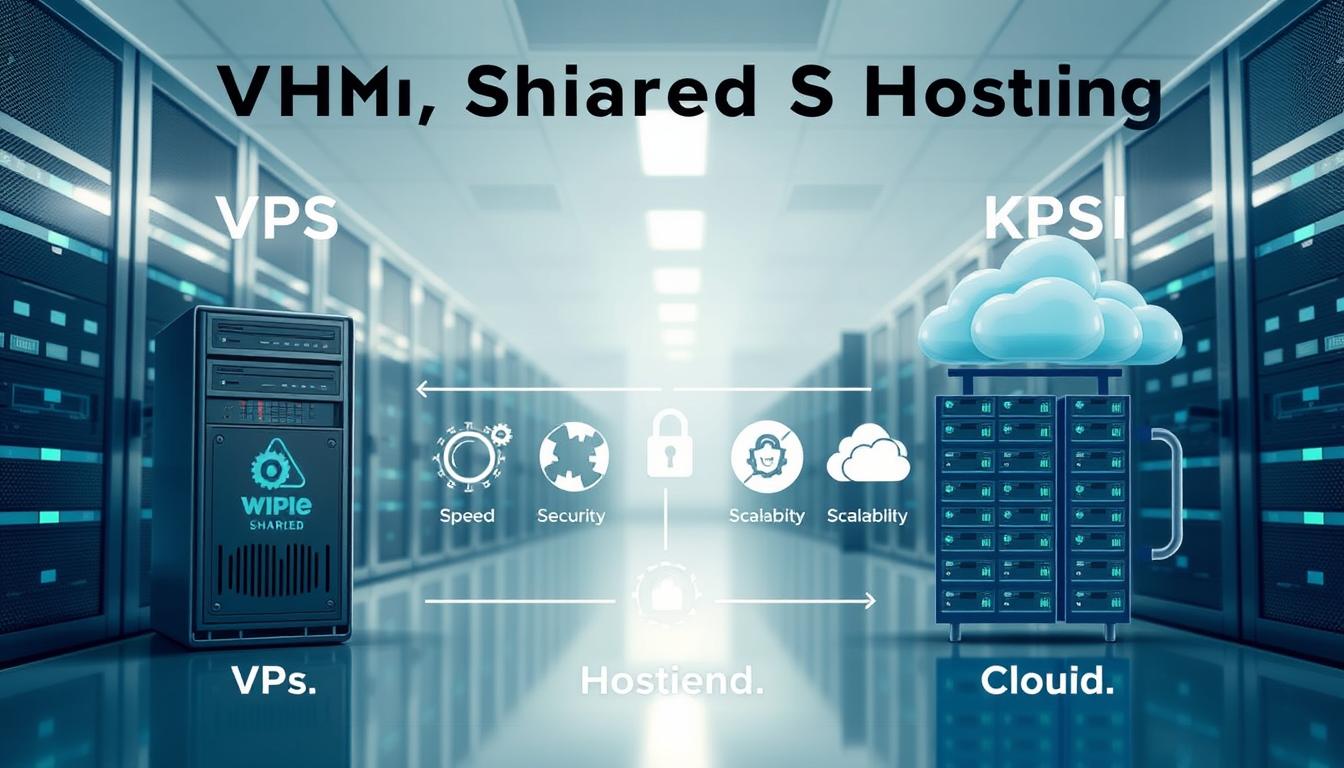
Choosing the right web host can be tough, even for experts. There are many hosting companies with different services and features. This makes it hard to decide.
The hosting type you pick affects your website’s performance, security, and how it grows. It’s important to know the differences between VPS, Shared, and Cloud Hosting. This ensures your website runs well and efficiently.
In this article, we’ll look at the main differences between these hosting options. We’ll help you decide which hosting is best for your website’s needs.
Table of Contents:
Key Takeaways
- Understand the differences between VPS, Shared, and Cloud Hosting
- Learn how to choose the best hosting for your website’s performance
- Discover the importance of scalability in web hosting
- Find out how to ensure your website’s security with the right hosting
- Explore the benefits of each hosting type for your online presence
Understanding Web Hosting Basics
Web hosting is key to your website’s success. It lets you share your site with the world. A good host makes sure your site works well and is easy to find.
What is Web Hosting?
Web hosting means renting space on a server for your website. When someone visits your site, their computer connects to the server. This lets your site show up on their screen. There are many hosting services to fit different needs and budgets.
Importance of Choosing the Right Hosting
Finding the right web host is vital. It affects your site’s performance, security, and scalability. A reliable host keeps your site up and running fast, even when lots of people visit. They also protect your site from hackers.
Types of Hosting Services Explained
There are many web hosting services, like Shared Hosting, VPS Hosting, and Cloud Hosting. Each has its own benefits and features.
| Hosting Type | Description | Key Features |
|---|---|---|
| Shared Hosting | Multiple websites share the same server and resources. | Cost-effective, easy to manage, suitable for small sites. |
| VPS Hosting | A virtual private server provides dedicated resources. | More control, scalable, better performance than shared hosting. |
| Cloud Hosting | Resources are distributed across multiple servers. | High scalability, reliability, and flexibility, ideal for large sites. |
Knowing these basics helps you choose the right web hosting. Think about your site’s needs and what each hosting type offers. This way, you can pick the best host for your online presence.
Overview of Shared Hosting
Many people and small businesses choose shared hosting for its low cost and ease. It lets multiple websites share the same server and resources. This makes it a popular choice for new sites or those on a tight budget.
Definition and Key Features
Shared hosting is known for being affordable. It’s perfect for new websites or those with small budgets. It offers shared resources like CPU, RAM, and disk space, making it simple to use.
Key Features of Shared Hosting:
- Shared server resources
- Cost-effective pricing
- Easy to manage and maintain
- Suitable for small to medium-sized websites
Pros of Shared Hosting
One big shared hosting benefit is its affordability. It’s the cheapest web hosting option, great for personal blogs, small businesses, or hobby sites. Plus, it comes with easy-to-use control panels for those who aren’t tech-savvy.
The pros of shared hosting include:
- Low cost
- User-friendly control panels
- Technical support provided by the hosting company
- Easy scalability options
Cons of Shared Hosting
Shared hosting has its downsides. Since many websites share the same server, a busy site can slow down others. This can be a problem if one site gets a lot of traffic or uses too many resources.
The cons of shared hosting include:
- Limited control over server settings
- Potential security risks due to shared environments
- Resource limitations
- Less flexibility compared to VPS or cloud hosting
To summarize, here’s a comparison table of shared hosting’s key points:
| Feature | Description | Benefit |
|---|---|---|
| Cost | Low monthly or annual fees | Affordable for small websites or blogs |
| Resource Sharing | Shared CPU, RAM, and disk space | Simplifies resource management |
| Ease of Use | User-friendly control panels | Easy website management |
When looking for best website hosting, shared hosting is a good option for beginners or those with little tech knowledge. But, it’s important to compare it with other types like VPS and cloud hosting to make the right choice.
Overview of VPS Hosting
Virtual Private Server (VPS) hosting is a hosting solution. It gives a dedicated environment in a shared server. This offers a balance between cost and performance.
What is VPS Hosting?
VPS hosting gives a virtual private server. Resources are allocated to each user. This offers more control and flexibility than shared hosting.
This is done through virtualization technology. It divides a physical server into multiple virtual servers. Each has its own operating system and resources.
Benefits of VPS Hosting
The benefits of VPS hosting include dedicated resources, enhanced security, and scalability. Users can customize their server environment. This makes it great for growing businesses and resource-intensive applications.
- Improved performance due to dedicated resources
- Enhanced security through isolation from other users
- Scalability to upgrade or downgrade resources as needed
Downsides of VPS Hosting
Despite its advantages, VPS hosting has downsides. These include higher costs compared to shared hosting and the need for technical expertise to manage the server. Users must handle server maintenance, security, and updates. This can be tough for those without experience.
- Higher cost compared to shared hosting
- Requires technical knowledge for management and maintenance
Overview of Cloud Hosting
Cloud hosting is a top choice for businesses looking for flexibility and reliability. It uses a network of virtual servers. This makes it easy to grow or shrink as needed.
How Cloud Hosting Works
Cloud hosting spreads data across many virtual servers, not just one. This boosts scalability and keeps sites up and running. Resources adjust to meet demand.
It’s built on a grid of servers. This setup boosts performance and offers strong disaster recovery. Data is stored in many places.
Advantages of Cloud Hosting
Cloud hosting is very flexible. Businesses can quickly adjust resources without downtime. It’s perfect for sites with changing traffic.
- It’s very reliable and keeps sites up and running.
- Scalability lets businesses quickly meet changing needs.
- Performance is top-notch because resources are allocated as needed.
It’s seen as one of the best hosting solutions for big businesses. It handles lots of traffic and data well.

Limitations of Cloud Hosting
Cloud hosting has some downsides. One big worry is security risks from data spread across servers. But, good cloud hosting providers have strong security.
| Hosting Type | Scalability | Reliability | Security |
|---|---|---|---|
| Cloud Hosting | High | High | Variable |
| Shared Hosting | Low | Medium | Low |
| VPS Hosting | Medium | High | High |
In summary, cloud hosting is great for businesses needing high availability. It’s flexible, reliable, and performs well. While it has some issues, its benefits are usually worth it for many companies.
Comparing Performance: VPS vs Shared vs Cloud
The hosting type you choose greatly affects your website’s speed and user experience. With the need for faster and more reliable sites growing, it’s key to know the differences between VPS, shared, and cloud hosting.
Speed and Uptime Considerations
Speed and uptime are key for a good website. VPS hosting usually offers better speed and uptime than shared hosting. It gives each user dedicated resources. On the other hand, cloud hosting uses many servers for high uptime and fast speeds, even during high traffic.
Shared hosting is cheaper but can be slow and have downtime. This is because many users share resources. But, some top shared hosting providers have improved a lot.
| Hosting Type | Average Speed | Uptime Guarantee |
|---|---|---|
| Shared Hosting | Variable | 99.9% |
| VPS Hosting | Fast | 99.99% |
| Cloud Hosting | Very Fast | 99.99% |
Resource Allocation Differences
Resource allocation varies among these hosting types. VPS hosting gives dedicated resources like RAM and CPU for consistent performance. Cloud hosting, on the other hand, dynamically allocates resources from a pool, making it scalable.
Shared hosting shares resources among users. This can cause performance issues if one site gets a lot of traffic.
“The right hosting choice can significantly enhance your website’s performance and user experience.”
Scalability Options
Scalability is crucial for growing websites. Cloud hosting is great for scaling resources up or down as needed. VPS hosting also offers scalability, but it might need manual upgrades or downgrades.
Shared hosting can limit scalability. Upgrading often means moving to a different hosting type.
In conclusion, each hosting type has its own strengths and weaknesses. Your choice should depend on your website’s needs for speed, resource allocation, and scalability.
Cost Analysis: VPS vs Shared vs Cloud
When planning your website’s hosting budget, it’s key to know the costs of VPS, shared, and cloud hosting. These costs vary based on things like how much you need, how it can grow, and what kind of service you get.
Pricing Structures Explained
The costs for VPS, shared, and cloud hosting are different. Shared hosting is the cheapest, starting at just a few dollars a month. This is because many users share the same server.
VPS hosting costs more, from $20 to $100 a month. It gives you a part of the server, offering more control and flexibility.
Cloud hosting pricing can be tricky. It’s based on what you use, like storage and bandwidth. Prices can change with your site’s traffic, making it good for sites that grow or shrink.
| Hosting Type | Starting Price | Scalability | Resource Allocation |
|---|---|---|---|
| Shared Hosting | $3-$10/month | Limited | Shared |
| VPS Hosting | $20-$100/month | Moderate | Dedicated |
| Cloud Hosting | $10-$1000+/month | High | Scalable |
Long-term Cost Considerations
Looking at long-term costs means more than just monthly fees. You should also think about renewal rates, upgrades, and extra services like backups or SSL certificates.
For example, shared hosting might seem cheap at first, but renewal rates can go up. VPS and cloud hosting often give discounts for long-term deals, which can save money over time.
Hidden Costs to Watch Out For
There are also hidden costs to watch out for. These can include fees for data transfers, extra storage, or premium support.
With cloud hosting, unexpected costs can happen if you use too many resources. It’s important to keep an eye on your usage to avoid surprise bills.
Knowing the total cost of hosting your website is key for budgeting well. By looking at both obvious and hidden costs, you can choose the best hosting for your needs and budget.
Security Features of Each Hosting Type
It’s important to know the security features of different hosting types. This helps protect your website from threats. Each type – VPS, shared, and cloud – has its own security measures to keep your online presence safe.
Shared Hosting Security Measures
Shared hosting uses several security measures to protect users. These include:
- Firewall configurations to control incoming and outgoing network traffic
- Regular software updates to patch vulnerabilities
- Malware scanning and removal tools
But, shared hosting’s nature means other users on the same server can affect your site’s security.
VPS Hosting Security Options
VPS hosting is more secure than shared hosting because it’s isolated. Key security options include:
- Dedicated resources that are not shared with other users
- Root access, allowing for customized security configurations
- Ability to install your own security software
This control and isolation make VPS a better choice for websites needing strong security.
Cloud Hosting Security Protocols
Cloud hosting uses a network of servers to host websites. It offers strong security protocols such as:
- Redundancy across multiple servers to ensure uptime
- Advanced threat detection systems
- Regular backups and snapshots for data recovery
Cloud hosting’s distributed architecture provides a high level of security against attacks.
| Hosting Type | Key Security Features | Security Level |
|---|---|---|
| Shared Hosting | Firewall configurations, regular software updates, malware scanning | Basic |
| VPS Hosting | Dedicated resources, root access, customizable security | Enhanced |
| Cloud Hosting | Redundancy, advanced threat detection, regular backups | Robust |
When picking a hosting type, think about these security features. Make sure they match your website’s needs and risk level.
User Control and Management
Choosing the right hosting type is key to managing your website well. It affects how much control you have over your site. Each hosting type offers different levels of control, shaping your user experience.
Control Panels Overview
The control panel is essential for managing your website. It lets you adjust settings, manage files, and databases. cPanel is popular for its easy-to-use design and wide range of tools.
Hosting types vary in control panel features. Shared hosting, for example, has a simple control panel. This makes it great for beginners.

Customization Options
Customizing your hosting is important for meeting your needs. VPS hosting lets you tweak server settings and choose your OS. You can also install your own software.
Cloud hosting also offers customization. It has scalable resources that adjust to your needs. This is great for businesses with changing demands.
Ease of Use for Beginners
For newbies, ease of use is crucial. Shared hosting is the easiest to start with. It often has 1-click installations for popular platforms like WordPress.
Cloud hosting is flexible but can be complex. Yet, many providers now offer easy-to-use interfaces. This makes it simpler for beginners.
Choosing hosting depends on your needs and skills. Knowing about VPS, shared, and cloud hosting helps. It ensures your website runs smoothly.
Customer Support Across Hosting Types
The quality of customer support is key, no matter the hosting type. It’s vital for fixing problems, answering questions, and keeping your site running well.
Availability of Support Channels
Hosting providers offer different ways to get help, like live chat, email, phone, and ticket-based systems. It’s important to check how many ways you can get help. Some offer 24/7 live chat, while others use email or tickets.
Response Time and Quality
How fast and good the support is matters a lot. A quick response can fix problems fast, reducing downtime and losses. Look for providers with top-notch support from experts who know their stuff.
Importance of Good Customer Support
Good support makes hosting easy. It helps you fix problems, improve your site’s speed, and keep your data safe. When picking between VPS, shared, and cloud hosting, think about the support each offers.
In short, customer support is crucial when picking a hosting type. Look at the support options, how fast they respond, and how well they help. This will help you choose the best hosting for your site.
Ideal Use Cases for Shared Hosting
Many people and businesses choose shared hosting for its ease and cost. It’s a popular choice for hosting websites.
Best Suitable Websites
Shared hosting works well for sites that don’t need lots of customization or special resources. This includes small blogs, portfolios, and informational websites. These sites mainly share content with their visitors.
Small Business and Personal Sites
Small businesses and personal sites find shared hosting a cost-effective solution. It’s perfect for sites with moderate traffic. They don’t need a lot of technical help.
Hobby Projects
Hobby projects, like fan sites or forums, do great on shared hosting. It’s easy to set up and manage. This lets developers focus on making content, not dealing with hosting issues.
As
“Shared hosting provides an accessible entry point into the world of web hosting, making it easier for newcomers to establish their online presence.”
, it’s clear that this hosting type is perfect for those seeking simplicity and value.
Ideal Use Cases for VPS Hosting
Businesses looking to grow and improve their online presence find VPS hosting very helpful. It offers a dedicated space that can be customized to fit specific needs. This makes it a great choice for many online projects.
E-commerce Websites
E-commerce sites that get a lot of traffic or need a safe place for transactions do well with VPS hosting. They can make sure their sites load quickly and stay up and running all the time. This is key for keeping customers happy and ranking well on search engines.
Also, VPS hosting makes it easy to grow your site. This means e-commerce sites can handle spikes in traffic during big sales or holidays without slowing down.
Resource-Intensive Applications
Apps that need a lot of server power, like video editing, gaming, or complex data analysis, are perfect for VPS hosting. VPS gives these apps the resources they need to run smoothly and efficiently. This avoids the slowdowns that can happen with shared hosting.
Also, VPS hosting lets you tweak server settings and install special software. This meets the unique needs of these demanding apps.
Growing Businesses
As businesses grow, they often need to update their hosting to keep up. VPS hosting is a scalable and flexible option that can grow with your business. It ensures your hosting environment keeps pace with your growth.
This flexibility, along with the better performance and security of VPS hosting, makes it perfect for businesses that are growing fast or expect to grow soon.
Ideal Use Cases for Cloud Hosting
Cloud hosting is great for many needs. It’s perfect for businesses and apps that need to grow and perform well.

Enterprises and Large Applications
Cloud hosting is perfect for enterprises and large applications. It can handle big needs. It makes sure big businesses run smoothly without problems.
Some key benefits for enterprises include:
- Scalability: Easily scale resources up or down based on demand.
- Reliability: High uptime and redundancy ensure continuous operation.
- Cost-effectiveness: Pay only for the resources used, reducing operational expenses.
Websites with Fluctuating Traffic
For websites experiencing fluctuating traffic, cloud hosting is a flexible solution. It’s great for businesses with big traffic spikes.
Key advantages include:
- Auto-scaling: Automatically adjust resources to handle traffic spikes.
- Load balancing: Distribute traffic across multiple servers to prevent overload.
- High availability: Ensure that your website remains accessible to users at all times.
Disaster Recovery Scenarios
Cloud hosting is also key for disaster recovery scenarios. It keeps data and apps safe from hardware failure or natural disasters.
The benefits of cloud hosting for disaster recovery include:
- Data redundancy: Data is replicated across multiple locations, ensuring it remains accessible.
- Quick recovery: Rapidly restore operations using cloud-based backups.
- Reduced costs: Lower costs compared to maintaining physical backup infrastructure.
In conclusion, cloud hosting is flexible, scalable, and reliable. It’s perfect for many needs, from big businesses to websites and disaster recovery.
Migration Considerations
Moving your website to a new host can be tricky. But knowing the key steps makes it easier. Whether you’re switching from shared to VPS or cloud hosting, understanding the process is key for a smooth move.
When to Migrate Hosting Types
It’s important to know when to switch your hosting. If your site gets more traffic or needs more power, it’s time to upgrade. Moving to VPS or cloud hosting can help.
Signs that it’s time to migrate include:
- Frequent downtime or slow loading times
- Increased security concerns
- The need for more control over your hosting environment
- Scalability issues
Steps to a Smooth Transition
A smooth migration needs careful planning. Here are the steps to follow:
- Assess your current hosting setup and identify the resources and configurations you need to migrate.
- Choose the right new hosting provider that meets your website’s needs.
- Backup your website thoroughly before starting the migration process.
- Test your website on the new hosting environment before making it live.
- Update your DNS settings to point to the new hosting server.
Tools and Services for Migration
Many tools and services can help with a smooth migration. These include:
- Migration plugins for popular CMS platforms like WordPress.
- Hosting provider migration services that offer free or paid migration assistance.
- Third-party migration tools that can help transfer your website’s files and databases.
Using these tools and services can make migration easier and less risky.
Environmental Impact of Hosting
As we focus more on being green, it’s key to look at web hosting’s eco-friendliness. Our online actions, like web hosting, now affect the planet. It’s time to think about this.
Carbon Footprint of Shared Hosting
Shared hosting is cheap and easy to use but has a big carbon footprint. This is because many users share the same resources. It’s not very efficient for each user.
Energy Efficiency of VPS Hosting
VPS hosting is better for the planet because it gives each user their own resources. This means less energy is used overall. It’s a smarter way to use server resources.
Renewable Energy Options in Cloud Hosting
Cloud hosting is great because it can use clean energy. Many providers are using solar and wind power. This makes cloud hosting a good choice for those who care about the environment.
| Hosting Type | Carbon Footprint | Energy Efficiency | Renewable Energy Use |
|---|---|---|---|
| Shared Hosting | High | Low | Limited |
| VPS Hosting | Medium | Medium | Variable |
| Cloud Hosting | Low | High | High |
When picking a web host, think about the planet too. It’s as important as cost and speed. Knowing how green different hosts are helps us choose wisely for our planet.
Making the Final Decision
Choosing the best hosting solution requires careful thought. You’ve looked at different hosting services. Now, it’s time to decide based on what you need.
Assessing Your Website Needs
Start by thinking about what your website needs. Consider the content you’ll host, how much traffic you expect, and any special features. This could include e-commerce or high security.
- Evaluate your current traffic and anticipate future growth.
- Consider the type of content you host and its resource requirements.
- Identify any specific features or functionalities your site needs.
Budget vs Features Evaluation
Next, balance your budget with the features you need. Hosting types vary in cost and features. Make sure you know what you’re getting for your money and if it fits your website’s needs.
| Hosting Type | Key Features | Budget Impact |
|---|---|---|
| Shared Hosting | Basic, suitable for small sites | Cost-effective, ideal for low budgets |
| VPS Hosting | Dedicated resources, more control | Moderate cost, suitable for growing sites |
| Cloud Hosting | Scalable, high uptime, flexible | Variable cost, can be cost-effective for large sites |
Future Growth Considerations
Think about your website’s future growth. A good hosting solution should meet your current needs and grow with your site. Look at the hosting type’s flexibility and scalability.
By carefully considering your website’s needs, budget, and future growth, you can make a smart choice. This choice will help your website succeed.
Conclusion: Choosing Your Hosting Type
Choosing the right hosting for your website is key. It depends on your website’s needs and how it will grow. VPS, shared, and cloud hosting each have their own good and bad points.
Key Considerations
Think about your website’s traffic, what it needs, and how it will grow. Shared hosting is good for small sites and newbies. VPS hosting gives more control and resources for businesses that are growing.
Cloud hosting is great for big companies and sites with lots of visitors. It’s very scalable and reliable.
Final Evaluation
Make a smart choice by looking at your website’s needs now and in the future. Think about your budget, how fast your site needs to be, and the support you need. Knowing what each hosting type does best will help you pick the right one for your site’s success.
In short, pick the hosting that fits your website’s needs best. This ensures your site runs well, grows easily, and is always available.